-
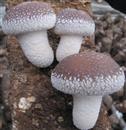
What harm does Aspergillus cause in shiitake mushroom cultivation?
What harm does Aspergillus cause to shiitake mushrooms? Please give an introduction. Aspergillus is widely distributed in soil, air, various grains and their by-products such as wheat bran, rice bran and other organic matter. The suitable temperature for Aspergillus growth is 20 to 35°C, the relative humidity is 65% to 85%, and the pH is neutral or slightly alkaline. Aspergillus is commonly found in shiitake mushroom spawn...
-
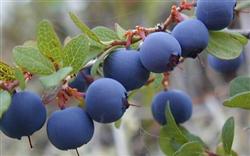
How much does temperature affect blueberry growth?
How does temperature affect blueberry growth? What temperature is suitable for blueberries? We ask fellow growers to help share guidance on the suitable temperature for blueberry growth: during the growing season, blueberries can tolerate high temperatures of 40°C to 50°C in the surrounding environment. Above this temperature range, poor water uptake by the root system leads to stunted growth and development...
-
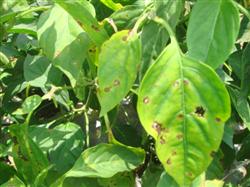
What harm does pepper anthracnose cause? Growers need to know early
What harm does pepper anthracnose cause? How to prevent and control pepper anthracnose? We also ask netizens to help introduce the harm and control methods of pepper anthracnose. The following is compiled by Zhongdiwang for everyone's reference. Harm of pepper anthracnose: Black anthracnose mostly occurs on the fruits and leaves of peppers, especially mature fruits and...
-
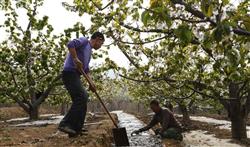
What kind of environmental conditions does sweet cherry cultivation require?
What kind of environment is good for growing sweet cherries? Here is an introduction. For the sweet cherry growing environment, you can refer to the following: 1. Suitable terrain for a cherry orchard: The orchard site for sweet cherries should be chosen on high ground that does not easily accumulate water and has a relatively low groundwater table; generally, the groundwater table during the rainy season should not exceed 80 cm. On plains, it is best to have a shelterbelt on the south side or at the north end of the village...
-
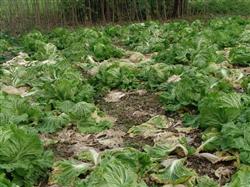
What harm does bacterial soft rot of mustard cause? Growers need to know
What harm does soft rot cause to mustard? What methods can prevent and control bacterial soft rot of mustard? We hope experienced netizens can help explain the harm of soft rot to mustard: bacterial soft rot of mustard is a bacterial disease, generally only starting to occur in the late growth stage of mustard; at the beginning of the disease, the outer leaves of the plant wilt, and can still recover in the morning and evening....
-
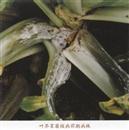
What damage does sclerotinia rot cause to wrapped-heart mustard?
What damage does sclerotinia rot cause to wrapped-heart mustard? How do you prevent and control sclerotinia rot in wrapped-heart mustard? We'd also like netizens to help explain the damage sclerotinia rot causes to wrapped-heart mustard: sclerotinia rot mostly infects starting from the stem base and the petioles of the outer leaves. Early lesions are water-soaked, grayish brown to yellowish brown, and spread rapidly in all directions, causing the diseased area to become irregularly rotted...
-
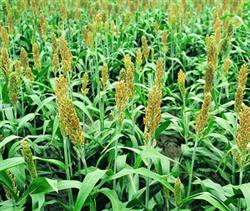
What kind of moisture conditions does sorghum need for its growth and development?
What are the moisture conditions suitable for sorghum growth and development? Here is an introduction. Sowing can be done when the soil moisture content is 15%-20%. The water requirement at the seedling stage accounts for 8%-15% of the total water requirement throughout the entire growth period. The most suitable soil moisture content is 50%-65% of the field maximum water-holding capacity. During the seedling stage, properly controlling soil moisture...
-
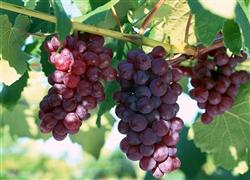
How many times a year does a grapevine fruit? Cultivation and management methods
How can you make a grapevine fruit several times a year? What techniques can achieve this? The technique for getting grapes to fruit multiple times a year falls into two methods: using secondary fruiting from winter buds and using secondary fruiting from summer-bud lateral shoots. Method one: the technique of using winter-bud lateral shoots to achieve two fruiting cycles a year uses forced growth of winter buds on the current year's shoots for a second fruiting...
-
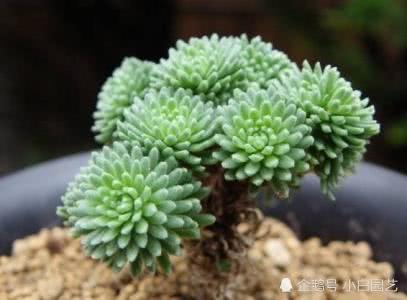
Does the Ball Pine Die After Blooming? Post-Bloom Handling and Care Methods Explained
The Ball Pine plant is short, with dense branches and leaves, lush green foliage, and a compact form. It is very easy to keep alive, so many households grow a pot of Ball Pine. As a result, the question of Ball Pine blooming has attracted widespread attention, and many people ask, Ball Pine blooming...
-
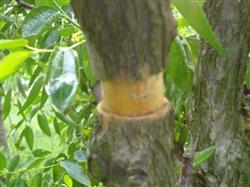
Why Doesn't the Jujube Tree Bear Fruit? An Analysis of Causes and Management Methods
Why doesn't the jujube tree bear fruit? Please explain the causes. The main reasons a jujube tree fails to bear fruit are the following three: Reason one why a jujube tree fails to bear fruit: excessive tree vigor. Solution: During the full flowering period of the jujube tree, perform ring barking (girdling) at the base of the main branches, cutting deep to the xylem, with a width of about 0.5 cm - roughly, however thick the bark is, that is how wide to cut....
条件筛选