-

Rice grown in three-dimensional cultivation with fish and ducks yields 90,000 yuan per hectare
Three-dimensional cultivation model grows rice, raises fish and ducks, earning 90,000 yuan per hectare
-

Three-dimensional cultivation of honeysuckle paves an ecological road to prosperity
Three-dimensional cultivation of honeysuckle blazes an ecological road to prosperity
-
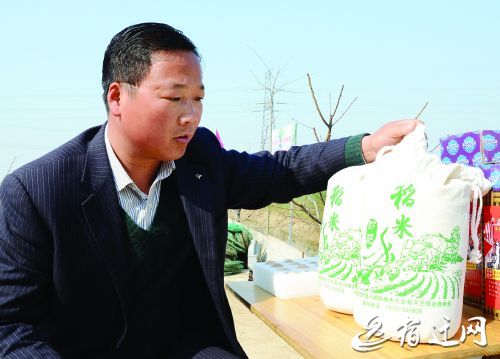
Three-dimensional planting and breeding yield rich returns: abandoned land becomes a "treasure bowl"
Three-dimensional planting and breeding yield rich returns: abandoned land becomes a "treasure bowl"
-
Construction Method for a Multi-Layer Three-Dimensional Underground Snake House
The multi-layer three-dimensional underground snake house can be used year-round. Ordinarily it serves as a habitat for snakes, and in winter it can also become an ideal hibernation site for snakes. When this snake house is used in the provinces (regions) south of the Yangtze River, its underground coolness is especially evident in the hotter summer weather. It can also be built in a semi-underground, semi-above-ground mode according to the depth of the water table in different regions, to solve the problem in the south, where water resources are abundant and the water table is shallow, that deep digging easily reaches water. In the north, where winter is especially cold, in this season it is only necessary to increase the thickness of the soil layer on top of the snake house to ensure it is below the local frost
-
Technical method for three-dimensional cultivation of edible fungi using pure crop straw
For a long time, the culture medium for edible fungus production in China has been mainly wood chips and cottonseed hulls. Excessive logging of timber has caused a shortage of forest resources; and cottonseed hulls, because of their wide range of uses and large consumption, have remained high in price. As a result, the prices of raw materials used for cultivating edible fungi have risen substantially, increasing costs. In this way, those who manage poorly often end up with poor returns, or even losses. In response to this situation, the vast number of edible fungus workers in China, after years of exploration, finally chose to use crop straw for edible fungus cultivation. At that time, the methods used were
-
High-Dimension Jujube
A rare jujube tree planted in the courtyard, a naturally mutated excellent new large-fruited fresh-eating jujube variety. It overcomes the characteristics of fresh-eating large jujube varieties: Dongzao is small in size, Xuezao has poor sweetness, and Lizao has uneven fruit sizes. This variety has large fruit, with an average single fruit weight of about 80 grams, and a maximum of up to 103 grams. The fruit color is purplish red, the peel is glossy, and the flesh is pale yellow; it is tender, crisp, sweet, and fragrant, with a soluble solids content of 28%-34%, and an excellent taste. It matures in mid-to-late October and is self-pollinating. Suitable planting areas are at latitude 2
-
Detailed Explanation of Indoor Three-Dimensional Cultivation Methods for Oyster Mushrooms in Winter
Place the plastic tubes filled with oyster mushroom spawn (cylindrical in shape) indoors or in a mushroom cellar. When the room temperature is 24°C-25°C, they can only be arranged in a single row and single layer for mycelial running. When the room temperature is around 20°C, they can be arranged in two or three rows in a single layer. When the room temperature is 10°C-15°C, they can be stacked to a height of 1 m-1.5 m, and every 10-15 days, the upper and lower positions should be swapped to make the temperature uniform in all parts and the mycelial running consistent. During this period, keep the room as dry as possible. When the indoor humidity reaches above 80%, it is best to adopt the two-level cultivation method of mycelial running above ground and fruiting underground. Maintain
-
Semi-underground three-dimensional cultivation of oyster mushrooms yields high output and good returns
Semi-underground three-dimensional bed-frame cultivation of oyster mushrooms is a new approach explored in recent years to achieve high yields and improve economic returns. According to trials, on an area of 20 sq m, with 2000 kg of substrate, the annual output of oyster mushrooms is about 2500 kg, with a biological efficiency of over 120%. The key technical points are as follows: 1. Building the greenhouse: first dig a pit 1.8 m to 2 m deep and 4 m to 5 m wide, with the length determined as needed, and place the three-dimensional bed frames inside. On top, use bamboo poles and plastic film to build an arched shed, pack the surrounding edges firmly with soil, and cover with straw mats. Leave ventilation openings of about 30 square cm on all four sides, east, west, north and south, and build a small door on the west side for workers to enter and exit.
-
Key Points of Three-Dimensional Cultivation Technology for Gastrodia elata and Soybean
Gastrodia elata is a traditional Chinese medicinal herb with effects such as benefiting qi, calming convulsions, nourishing the liver and stopping dizziness, dispelling wind-dampness, and strengthening bones and muscles. In recent years, on the basis of artificial box cultivation, we have made full use of the growth characteristics of Gastrodia elata and successfully adopted underground planting of Gastrodia elata with above-ground planting of the short-stalked crop soybean. According to investigation and measurement by the Agricultural Station of Shuidian Town, in three-dimensional cultivation of soybean and Gastrodia elata, the yield of commercial dried Gastrodia elata is 200-300 kg per mu, creating an output value of 8000-10000 yuan (calculated at 36-40 yuan/kg); the yield of soybean is 150-175 kg per mu, creating an output value of 360-
-
Shiitake mushrooms achieve three-dimensional cultivation through shelving
In recent years, my family has always been growing shiitake mushrooms in a greenhouse, but perhaps due to technical and other reasons, the returns have never been ideal. I heard that shelf-layer cultivation of shiitake mushrooms can bring considerable returns. Could you introduce the shelf-layer cultivation method for shiitake mushrooms? Tian Shuzhen, Nong'an. Hello Tian Shuzhen: Shelf-layer cultivation of shiitake mushrooms is currently a new technique for increasing shiitake mushroom yields. Below I will introduce how to choose a good site and variety, and the management points to note, for your reference: 1. Site and setup for the mushroom shed site
条件筛选