-
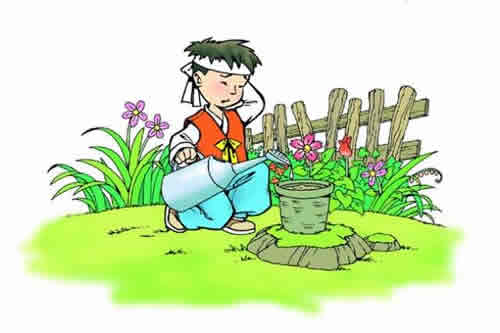
How to care for potted flowers at different stages? A complete guide to the key care points
Watering in well to settle the roots The first watering after planting is called the rooting water. The rooting water must be given generously and thoroughly. Because the newly planted soil has not fully settled, there are many air pockets in the soil, and only after thorough watering can the soil and roots fully bind together. Generally, after planting, water twice in succession; after the first watering drains down
-

Methods and Technical Points for Promoting Flower Bud Differentiation in Longan
How to Promote Flower Bud Differentiation in Longan
-
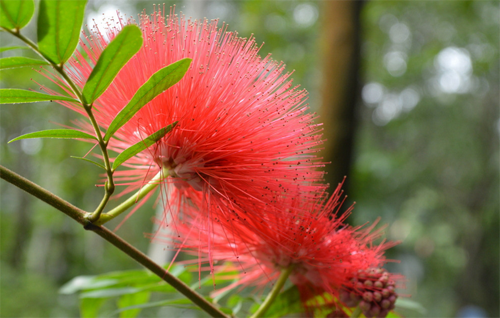
How to grow the silk tree flower, and how is it different from mimosa?
Many people love growing the silk tree flower (Albizia julibrissin). It is not only ornamental but can also be used to treat insomnia. So how do you grow it? Why do the seedlings look so much like mimosa when young, and how do you tell them apart? How to grow the silk tree flower: the red-flowered silk tree is relatively cold-tolerant and drought-tolerant
-
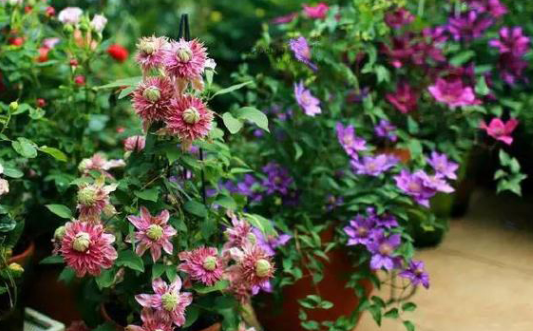
Clematis: Correct Repotting Techniques and Summer Care Methods for Different Varieties
Clematis is a common herbaceous climbing plant that can be placed on pergolas, green arbors, pillars, walls, or grown as an independent potted ornamental. It satisfies both ornamental needs and provides shade, improves the environment, and with careful care can bring you extraordinary results. How to correctly repot clematis: the timing for repotting clematis, when clematis is growing
-
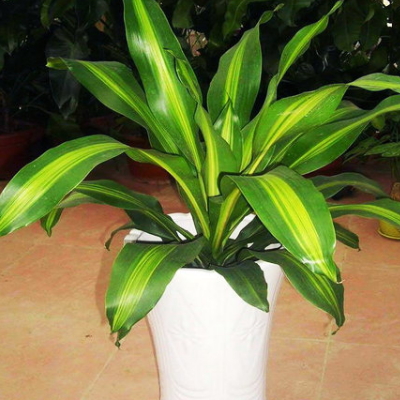
How do you care for a Brazil iron plant, and how is it different from a Yemen iron plant?
The Brazil iron plant (Dracaena fragrans) is a very attractive plant that grows up easily. How do you care for a Brazil iron plant? What is the difference between the Brazil iron plant and the Yemen iron plant? How to care for a Brazil iron plant: 1. The Brazil iron plant likes warmth, tolerates shade and fertilizer but not cold, and is suitable for growing in a loose, well-drained and fertile substrate.
-
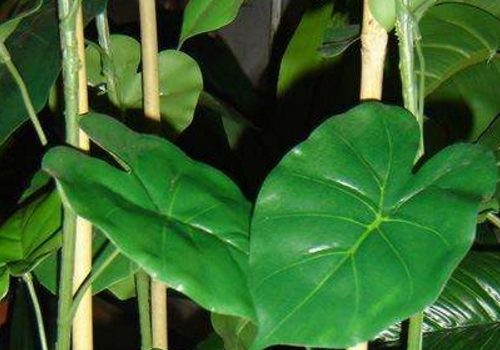
Why does Alocasia macrorrhizos get root rot and how is it different from Spathiphyllum
Alocasia macrorrhizos, many people have seen it, they just don't know its name. Why does Alocasia macrorrhizos get root rot? How is it different from Spathiphyllum? Why does Alocasia macrorrhizos get root rot: 1. Root rot in soil-grown Alocasia macrorrhizos is mainly caused by the potting soil being too wet. When the potting soil is too wet, the rhizomes of Alocasia macrorrhizos easily rot. The cause of overly wet potting soil may be that you watered too much, leading to water accumulation in the pot, or it may be that the soil is highly clayey, has poor aeration, and easily retains water on its own.
-

Rose cultivation should be carried out according to differentiated needs
Different people appreciate roses from different angles, and different rose varieties may have different uses. Therefore, rose producers need to be good at discovering these situations and actively explore cultivation methods for different rose varieties to respond to ever-changing market demands. Overall, roses have certain weaknesses
-

Disease Occurrence and Prevention Methods for Pigs at Different Feeding Stages
Disease occurrence in pigs at different feeding stages. The incidence of the three major infectious diseases of pigs. Swine fever, swine erysipelas and swine pasteurellosis are collectively known as the three major infectious diseases of pigs. In our country, the total mortality rate of affected pigs accounts for about 8% of the total raised population, and in areas with better prevention and control the pig mortality rate is also 5%. Therefore, the level of pig disease prevention and control should be raised. If the total pig mortality rate could be reduced by one percentage point each year, that would be equivalent to an additional 5 million pigs sent to market - what a huge fortune that would be. According to relevant statistics,
-
How do the immunization methods differ for different types of pigs?
Immunization of replacement gilts. Replacement gilts should be vaccinated with the following vaccines 1 month before mating, and sows after weaning should be vaccinated as follows: (1) Swine fever vaccine, 4 doses per head. (2) Swine erysipelas and swine pasteurellosis combined vaccine, 1 dose per head. (3) Swine Japanese encephalitis vaccine, 1 dose per head. (4) Porcine parvovirus vaccine, 1 dose per head (the inactivated vaccine can be given twice, with an interval of 15 days). (5) Swine pseudorabies vaccine, used according to the instructions. Immunization of farrowing pigs. Farrowing sows should be vaccinated with the following vaccines 15-40 days before farrowing: (1) Piglet Escherichia coli quadruple vaccine (K88, K99, 9
-
Detailed Explanation of Nutrient Uptake Patterns of Rice at Different Growth Stages
The nutrient uptake of rice at various growth stages differs considerably depending on the type. Double-season rice has a short growth period, especially the shortened vegetative growth period in the field, so vegetative growth and reproductive growth overlap shortly after transplanting. That is, tillering in the field begins at the same time as panicle differentiation, and the peak tillering stage occurs during panicle differentiation, thus forming a prominent nutrient uptake peak 2 to 3 weeks after transplanting; single-season rice forms two nutrient uptake peaks 2 to 3 weeks and 7 to 9 weeks after transplanting. The uptake rates of various nutrients by rice all reach
条件筛选