-
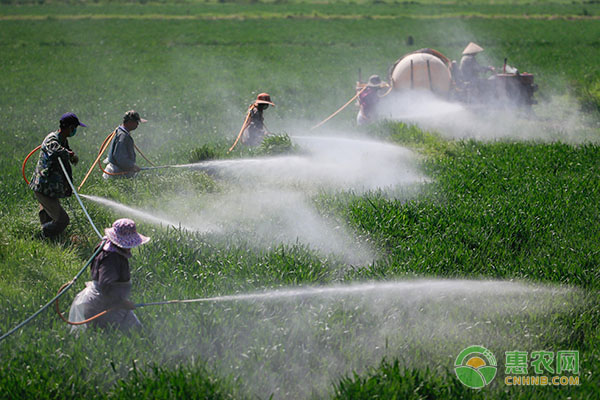
Watering times and key points for winter wheat at different stages
An introduction to the watering times and key points for winter wheat at different stages
-
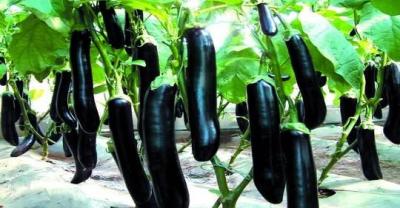
A Different Way to Eat Toast: Cheese and Veggie Toast Slices for a Quick Breakfast
Sundays are always lazy, especially in winter, when the bed just won't let me get up, so I make do with a simple, quick breakfast. A few slices of toast, some whole grains, and vegetables are more than enough!...
-

Detailed Explanation of Nutrient Uptake Patterns of Rice at Different Growth Stages
The nutrient uptake of rice at various growth stages differs considerably depending on the type. Double-season rice has a short growth period, especially the shortened vegetative growth period in the field, so vegetative growth and reproductive growth overlap shortly after transplanting. That is, tillering in the field begins at the same time as panicle differentiation, and the peak tillering stage occurs during panicle differentiation, thus forming a prominent nutrient uptake peak 2 to 3 weeks after transplanting; single-season rice forms two nutrient uptake peaks 2 to 3 weeks and 7 to 9 weeks after transplanting. The uptake rates of various nutrients by rice all reach
-
Key Points of Water Management at Different Growth Stages of Rice
Rice has relatively strict requirements for water conditions, and the water demand varies at different growth stages. To ensure stable and high yields of rice, scientific water management should be carried out according to the different growth stages. 1. Shallow water and frequent irrigation at the tillering stage. Shallow water and frequent irrigation at the tillering stage allows good light penetration to the base of the rice plants, so that sunlight can shine directly on the stems of the rice plants, raising the water temperature and soil temperature, increasing oxygen in the soil, promoting root development, improving fertilizer uptake capacity, promoting early tillering, and increasing the rate of tillers forming panicles. The depth of irrigation water should be based on weather conditions, generally 3-5 cm, and a shallow water layer should be used on cloudy and rainy days. High
-
How should the water layer be regulated at different growth stages of shallow-water lotus root?
The suitable water level for shallow-water lotus root is 10-20 cm, and the maximum water depth it can tolerate is 50 cm. In cultivation, the water layer must be well regulated according to the different growth stages of shallow-water lotus root. The general principle of water layer management for shallow-water lotus root is shallow at the front, deep in the middle, and shallow at the back. After planting the lotus root, when the standing leaves appear, maintain a shallow water layer of 4-7 cm to increase soil temperature and promote sprouting. As the stems and leaves grow vigorously, gradually deepen the water layer to 12-15 cm. After the terminal leaves appear, the plant begins to form lotus root, and the water layer is gradually lowered to a depth of 4-7 cm to promote lotus root formation.
-

Detailed Guide to Management Methods for Sunflowers at Different Growth Stages
Management of Sunflowers at Different Growth Stages
-
Planting Performance and Application Prospects of Different Simplified Rice Cultivation Methods
1 Planting performance of several simplified rice cultivation methods 1.1.1 Actual harvested yield. The actual harvested yield was highest for machine-transplanted rice, with an average yield of 9000 kg/hm2; followed by hand-transplanted rice, with an average yield of 8850 kg/hm2; third was seedling-throwing rice, with an average yield of 8700 kg/hm2; fourth was wheat-intercropped rice, with a yield of 8400 kg/hm2; direct-seeded rice had the lowest yield, averaging 8250 kg/hm2. 1.1.2 Number of panicles per unit. Direct
-
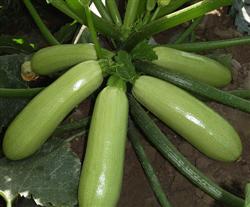
Different base fertilizers for zucchini mean different fertigation methods
In the middle and late stages of zucchini growth in a solar greenhouse, poor indoor ventilation and light transmission, a closed crop canopy, and weak photosynthetic capacity make plants prone to early senescence and low yields. In recent years, vegetable growers in Dongkan Town, Binhai County, Jiangsu, have worked out a set of vine-pressing cultivation techniques that allow the zucchini growing period to be extended from September of the first year to June of the following year, with a yield of 10,000 per mu...
-

What are the precautions during the young panicle differentiation stage of rice
Precautions during young panicle differentiation of rice
-
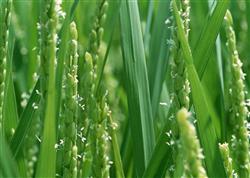
Fertilizer Requirements and Key Fertilization Techniques for Rice at Different Growth Stages
I. Fertilizer Requirements of Rice. Nitrogen, phosphorus, and potassium are the nutrient elements that rice requires in relatively large amounts while soils are relatively deficient in them. Generally, for every 100 kg of rice grain produced, about 1.6-1.9 kg of nitrogen, 0.8-1.3 kg of phosphorus, and 1.8-3.8 kg of potassium are absorbed, with a ratio of approximately 1:0.5:1.3. Nitrogen uptake is highest from the greening stage to the tillering stage...
条件筛选