Clematis: Correct Repotting Techniques and Summer Care Methods for Different Varieties
Clematis is a common herbaceous climbing plant that can be placed on pergolas, green arbors, pillars, walls, or grown as an independent potted ornamental. It satisfies both ornamental needs and provides shade, improves the environment, and with careful care can bring you extraordinary results.
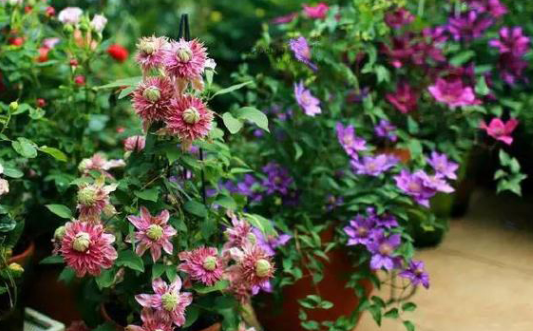
How to correctly repot clematis
1. The timing for repotting clematis
When clematis is growing, its most vigorous growth periods are in spring and autumn, and spring is also when it begins to sprout, so repotting is best done in spring.
2. The repotting method for clematis
When repotting clematis, first remove the plant from the pot. When removing the plant, it can sometimes be difficult, so you can first gently tap around the sides of the pot, which helps separate the pot from the plant. Be careful not to damage the soil or roots when removing it from the pot.
The removed plant can retain its original soil, though of course, replacing it with fresh soil is also fine. Loosen the soil, and if the roots are relatively long, prune them.
When repotting, you can decide whether to switch to a larger pot based on the plant's growth. After choosing the pot, fill it with fresh soil. You can use garden soil mixed with peat soil and plant ash, making sure to keep the soil breathable, and it is best to add a little base fertilizer. Spread out the clematis roots, place them in the pot, and then fill it with soil.
After repotting, water the clematis thoroughly once and place it in a shady area to recover.
3. Precautions for repotting clematis
When repotting clematis, what to pay attention to is the soil. The soil must ensure breathability and drainage. Adding stones or tiles can reduce the chance of water accumulation. In addition, the soil should be fertile.
After repotting clematis, what needs attention is the care during the recovery period. In the first few months after planting, make sure to water adequately and pay attention to drainage. When the branches are relatively fragile, make sure to secure them.
What are the summer care methods for different clematis varieties?
1. Clematis long-sepaled and evergreen varieties
Such as: long-sepaled (Blue Bird, Cecile, Pink Mocha). Evergreen (Spring Joy, Silver Coin, Apple Blossom). Montana (Pink Rose, Green Eyes, Giant Star).
Care: These varieties continue growing in summer, so normal care is sufficient. However, summer temperatures are high, and outdoor cultivation easily attracts crawling insects, so it is best to spray a fungicide once every half month. For long-sepaled varieties, do not water frequently; as long as new branches grow, they will bloom. For evergreen varieties, never forget to water them. Once the fibrous roots lack water, they will quickly die.
2. Clematis varieties that bloom in early spring
Such as: Andromeda, Josephine, Pink Champagne, Bee's Jubilee, Woking Beauty, Crystal Fountain, Ice Beauty, Aisha, etc.
Care: For these varieties, a large number of flowers bloom in early spring. After the flowers fade, promptly cut off the spent flowers; cutting off the branches that have already bloomed is also fine. About a month later, many new branches will grow again, and small flowers may also bloom.
After May, temperatures gradually rise, and June is the plum rain season. If the soil is not breathable and ventilation is improper, wilt disease can easily occur. It is necessary to prepare for pest and disease prevention and control.
3. Clematis varieties that go dormant in summer
Such as: Little Green, Miss Kyoko, Cassis, Fantasy Purple.
Care: After blooming, promptly cut off the spent flowers and keep some leaves and branches to increase water evaporation and avoid the occurrence of wilt disease. For a period after the flowers fade, normal care can be given, and a little rain is no problem.
When clematis leaves turn yellow and black, it indicates that the dormant period has begun. You can cut the branches short and remove the dead leaves. But it is best to prune before the end of August; pruning too late will affect normal growth.
4. Clematis varieties that bloom twice
Such as: Italian group (Purple Cloud, Violet Star, Super Jack, Margaret Hunt). Integrifolia (Rugo, Durand, Dancing Girl, A-Liu).
Care: These varieties may also bloom normally in summer. After the first bloom, cut off all the branches that have already bloomed. About a month later, new branches will grow again and produce flowers.
How to correctly care for clematis, the queen of climbing flowers
We know that clematis has the beautiful title of queen of climbing flowers, because it belongs to the category of evergreen herbaceous climbing plants, and it also has flowers. Its flowers are generally white and carry a fragrant scent, and clematis can also be used as a cut flower for exhibitions. It can climb on evergreen or deciduous trees and shrubs. Next, Succulent Garden will let everyone learn about its cultivation methods and precautions.
Clematis, which grows in hilly thickets in low mountain valleys, likes fertile and well-drained alkaline loam. It dislikes water accumulation, and it also dislikes soil that cannot retain water during summer drought. It has strong cold resistance and can withstand low temperatures of -20 degrees. If red spider mites or leaf-eating pests cause harm, it needs an environment with enhanced ventilation.
Clematis is best given more than six hours of direct light, which is very beneficial to its growth. Although it may develop some spots in hot weather, this does not hinder its good growth.
It is very sensitive to water; it cannot be too wet or too dry. Especially in high-temperature summer weather, its substrate must not be too wet. Generally, during its growth period, you can water it thoroughly once every 3-4 days, and watering should be done when the substrate has dried out but the plant has not yet wilted. When watering, absolutely do not let water accumulate, otherwise it will easily cause disease.
From late February to early March, before it sprouts new buds, we can appropriately apply a compound fertilizer to accelerate its growth. In April or June, apply a phosphate fertilizer once, which can promote flowering. At ordinary times, water-soluble fertilizer can be used, and during the peak growth season it can be sprayed 2-3 times per month.
The purpose of pruning it is actually to allow the plant to produce more flowers, and pruning can generally be done once a year. Cut off some overly dense or weak branches and let its new branches extend in all directions. The timing of pruning should be determined according to the flowering time of different varieties, but do not cut branches that have already become woody, because pruning them earlier will prevent flowering that year.
Through the detailed introduction in this article, we hope everyone can have a deeper understanding of clematis! Everyone is welcome to continue following the latest updates from Succulent Garden and learn more about flower care knowledge!
Introduction to clematis care methods
Clematis
Anyone who has seen clematis will be conquered by its beauty. However, if you want to keep it by your side, besides preparing money, taking a little time each day to care for it is also key to growing clematis well. Below, let us first understand clematis's growth habits.
1. Growth habits of clematis
It grows in hilly thickets in low mountain areas. It likes fertile, well-drained alkaline loam and dislikes water accumulation or soil that cannot retain water during summer drought. It has strong cold resistance and can withstand low temperatures of -20. If red spider mites or leaf-eating pests cause harm, ventilation needs to be enhanced.
2. Clematis care methods
Regular care will help newly planted clematis quickly adapt to the environment and become strong and floriferous. Most clematis need regular nutrient supplementation and regular watering throughout the growing season. When early spring arrives, the buds at the nodes begin to sprout, and this is a good time to prune clematis. You can choose which branches need pruning based on the state of bud development; thick, plump-budded branches should be retained as much as possible. If needed, after pruning you can apply a little fertilizer and cover with plastic mulch. Because regions differ, the arrival time of spring varies. Be patient and wait for spring to warm up; do not rush to prune and clean up. Generally, clematis planted the previous year needs heavy pruning when the first spring after planting arrives, and for large-flowered varieties that need heavy pruning every year, the branches can be cut in early spring to a height of 30 cm to 45 cm above the ground.
After pruning, apply some organic fertilizer near the root area, such as fermented okara. When fertilizing, be careful to keep a certain distance from the root branches to avoid fertilizer damaging the roots, especially the new branches about to sprout from the roots. With the root as the center, dig a circular trench outside a radius of 15 cm to 20 cm, evenly sprinkle granular fertilizer, bone meal, or fertilizer into the trench according to the recommended application rate, mix it into the soil, and finally cover with substrate. Water after fertilizing to help release the nutrients.
During the growing period, regular watering and fertilizing are very necessary. The amount of watering needs to be combined with rainfall and determined according to local soil and climate conditions. After the plant enters vigorous growth, it needs liquid fertilizer once a week. Foliar fertilizer is beneficial to leaf growth, and regularly applied liquid fertilizer will ensure abundant flowers throughout spring. When the plant has already developed buds, immediately stop fertilizing, slow the plant's growth rhythm, and let all the buds open one after another. If fertilization continues, the flowers will open prematurely, and the flower shape will be very strange and deformed, completely losing ornamental value. After the first main flowering period ends, fertilization can be restarted to give the plant sufficient nutrients and encourage more branches and buds to emerge. After Mid-Autumn Festival, the pace of fertilizer and water can gradually be slowed.
In a lush garden, a thick layer of fallen leaves can also provide nutrients to clematis. In autumn, compost can be added to the fallen leaves. In addition, a 5 cm to 10 cm thick layer of fallen leaves or bark mulch can keep the ground cool and reduce the number of waterings during summer drought. If there is no compost, you can also buy some leaf mold fertilizer. Topdressing in late autumn is very necessary and should not be ignored. This care guideline applies not only to clematis but also to other plants in the garden.
Note: In areas where winter temperatures are high and clematis cannot enter normal dormancy, fertilizing in late autumn will cause the plant to start growing immediately and fail to rest in winter, greatly reducing its performance the following year. Therefore, fertilization should not be applied in late autumn in such areas.
Clematis
3. Fertilize early-flowering or winter-flowering clematis according to their different growth characteristics
1. Early-flowering clematis. Early-flowering clematis blooms in early spring. After the flowering period, pruning and tidying can be carried out, and fertilization should be applied immediately after pruning. For varieties with a second flowering period, fertilization should be stopped when flower buds bulge, and after the second flowering season, regular fertilization should begin again until it stops in late summer and early autumn. Then, before freezing in late autumn, apply fertilizer once more and water thoroughly, allowing clematis to safely enter dormancy and overwinter.
The vigor and flowering ability of early-spring-blooming varieties are greatly related to whether they are cared for correctly. Regular fertilizing and watering are especially important for their growth. When winter soil temperatures are relatively low, root nutrient absorption weakens. But in any case, applying an appropriate amount of fertilizer in late winter or early spring is beneficial and harmless.
2. Winter-flowering clematis. Some evergreen clematis varieties that bloom in winter enter a dormant state in summer, so they do not need regular watering and fertilizing. By late summer, after the plant awakens from dormancy, regular watering and fertilizing care is needed. Varieties from dry regions such as the Mediterranean, the United States, or New Zealand do not need too much water.
If conditions allow, it would be best to keep the environmental temperature for clematis at around 20°C throughout the year, because only at such temperatures can clematis bloom with fragrant, beautiful, and large flowers.