-
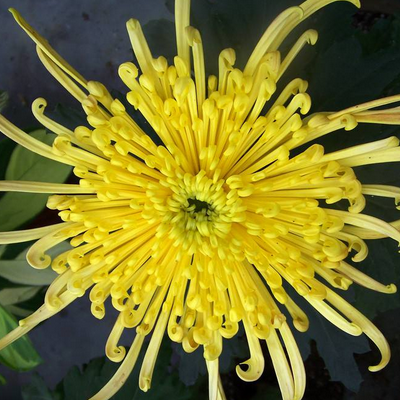
Can chrysanthemums be propagated by cuttings in August? A detailed guide to the cutting method
Chrysanthemums are the flowers of autumn and a symbol of the season, usually blooming from August to October. So can chrysanthemums be propagated by cuttings in August? How do you take chrysanthemum cuttings? Can chrysanthemums be propagated by cuttings in August: Chrysanthemums can be propagated by cuttings, but the timing and season matter for taking chrysanthemum cuttings.
-
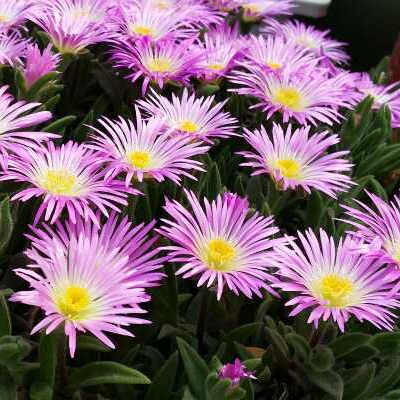
What to do if your Lampranthus spectabilis won't bloom? Detailed cutting propagation methods
Autumn leaf daisy, also known as Lampranthus spectabilis, is a succulent plant that many people grow. So what should you do if your Lampranthus spectabilis won't bloom, and how do you propagate it from cuttings? What to do if your Lampranthus spectabilis won't bloom: 1. Temperature and light. Generally, apart from slight shading in summer, it needs fairly ample light in the other seasons.
-

What is the flower language of clematis? Detailed explanation of cutting propagation methods
Clematis is very beautiful, and quite a few people grow it. What is the flower language of clematis? How do you propagate it by cuttings? What is the flower language of clematis: The flower language of clematis: noble and pure, a beautiful heart; forgive me, I am guilty because of you; deceit, poverty. The appearance of clematis is very beautiful, always showing a noble and pure taste
-
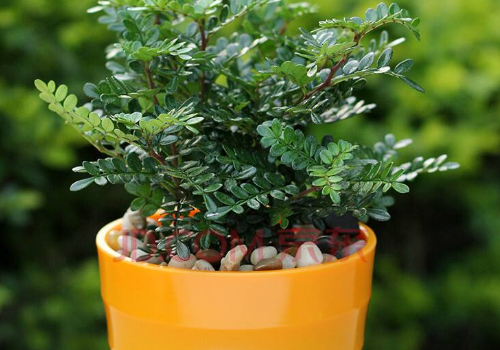
Pepperwood (Zanthoxylum beecheyanum) Cutting Propagation and Bonsai Shaping Methods
Pepperwood has many uses, so many people want to grow it nowadays. How do you propagate pepperwood from cuttings? Bonsai shaping methods: How do you propagate pepperwood from cuttings: 1. When taking cuttings of pepperwood, the choice of timing is also very important. Cuttings are best taken in spring or autumn.
-

What are the latest rice breeding technologies? A full analysis of the world's cutting-edge methods
Research on salt-tolerant rice breeding The aims of this research are: 1. To enable new salt-tolerant rice to adapt to cultivation in saline-alkali land. 2. To make full use of seawater irrigation when freshwater is scarce. Abroad, there have been reports of salt-tolerant crops such as tomato, melon and barley. Salt-tolerant rice bred by the University of Sussex in the UK can grow vigorously in the field, but the complexity of regulating salt content in the field must be recognized. Research on genetic engineering of salt-tolerant rice is quite active in the UK. Researchers insert genes from salt-tolerant rice into rice,
-
Detailed Explanation of Geranium Cutting Propagation Methods and Techniques
When propagating geraniums (Pelargonium) at home by cuttings, because their stems are fleshy and contain a lot of water, rotting often occurs, affecting the survival rate. For this reason, in practice the author combined certain improvements with heavy pruning after flowering, so that when cuttings are taken at that time, the survival rate is noticeably improved. The specific method is as follows: choose thick, strong branches, and from the stem tip downward, every 4 to 6 leaves, or measuring a length of about 7 cm to 10 cm, down to the height of the usual heavy pruning after flowering, plan in advance the division into several cuttings. Then, at 0.5 cm below the stem node, care
-
Detailed Guide to Carnation Cutting Propagation Methods and Techniques
For carnation cutting propagation, from September to March, cut healthy, slightly hardened side shoots 6 to 9 cm long from the middle of the plant and use them for cuttings. Keep the room temperature at 10°C to 13°C; roots form in about 20 days. In terms of care, apply more fertilizer during the seedling stage, and pinch off the growing tip when the seedlings are 1.5 cm tall, so that they will branch more and bloom profusely. When flowering, keep the terminal flower buds and remove the axillary flower buds. In summer, water frequently, mist the leaves once a day, avoid strong direct sunlight, and ensure good air circulation. In winter, place it indoors or in a hot
-
Detailed Explanation of Hydrangea Cutting Propagation Methods and Technical Key Points
Although hydrangea has a long history of cultivation, it remains continuously popular. However, in recent years, due to aging varieties and serious illegal propagation, the prices of finished flowers have been relatively low. The breeding of new hydrangea varieties has also, to some extent, increased market demand and enhanced the competitiveness of growers. The upcoming months of March to May are the main planting period for hydrangea seedlings, in preparation for next year's New Year's Day and Spring Festival market. Below is a focused introduction to some management key points after the arrival of rootless hydrangea seedlings for New Year's Day marketing. 1. Preparation before arrival 1.
-
Tea Plant Cutting Propagation Methods and Technical Key Points
One of the asexual propagation methods for tea plants. A portion of the vegetative organs of a tea plant is inserted into a moist, loose red-yellow soil nursery to form a new, complete plant. Tea seedlings propagated by cuttings exhibit heredity similar to the mother plant and, under the same environmental conditions, can maintain the traits and characteristics of the mother plant. Types of cuttings: these can be summarized as: stem cuttings, leaf cuttings and root cuttings. ① Stem cutting methods include long-shoot, medium-shoot, short-shoot, hoop-strip and old-stem cuttings, etc. Using a complete tea branch as a cutting for propagation
-
Detailed Explanation of Tea Plant Cutting Propagation Methods and Steps
Tea plants can be propagated from seeds, or vegetatively (also called asexual propagation) using parts of vegetative organs such as stems, leaves and roots. There are many methods of vegetative propagation, including cuttings and layering. The main vegetative propagation method used is short-stem cutting. Most tea plant varieties have both sexual and vegetative reproductive capacity. Vegetative propagation can preserve the excellent traits of superior tea varieties, produce offspring with uniform characteristics, and give a high propagation coefficient. However, it is labor-intensive, costly, and places high demands on nursery cultivation and management. I. Rooting of cuttings
条件筛选