-

Detailed Explanation of the Winter Trunk-Cutting Planting Method for Black Locust
Planting black locust by trunk cutting in late autumn and early winter has several major advantages: First, it avoids the spring tree-planting peak and the busy farming season, making full use of the winter slack period, so that planting time and quality are fully guaranteed. Second, according to the physiological characteristics of black locust, the average daily temperature required for root growth is relatively low; after leaf fall in autumn the above-ground part stops growing while the underground part continues to grow for a period, and when the leaves fall the mobile nutrients in the branches and leaves return to the trunk and roots, at which time the roots are rich in stored nutrients, which precisely gives the root system a stage for growth. Third, the plots where black locust is planted are generally
-
Detailed Explanation of Rhododendron Cutting Propagation Methods and Techniques
Plant propagation methods have always been divided into two major categories: sexual and asexual. At present, most large-scale rhododendron production uses the cutting method, which belongs to vegetative propagation. This is one of the methods that ensures the offspring are completely identical to the parent, and is a commercial route for mass-propagating identical so-called clones. 1. Propagation subjects: Roughly speaking, the species with the largest leaves require bottom heat during cutting, and the air humidity must be high. From the end of June, closed cutting beds are used, and the branches must be fully mature; only about two-year-old branches are suitable. For the short, creeping alpine rhododendrons from high mountains, cuttings are taken in autumn during propagation, and no bottom heat is needed during insertion; rooting occurs only under conditions of appropriate ventilation.
-
What to do about false rooting in rose cuttings? Teach you effective prevention methods
Autumn is a great time for softwood cuttings of roses. At present, cuttings are still the main method of propagating roses. It can not only maintain the characteristics of superior rose varieties, but also has a high propagation coefficient, a short production cycle, low input and quick results, and is still adopted by many flower growers. However, in the process of rose cuttings, "false rooting" often occurs due to lack of experience or improper methods. That is to say, 5-10 days after the rose is cut, the axillary buds on the cutting have already sprouted or produced shoots and leaves, and it looks as if it has taken root, but soon it wilts and dies. To avoid rose cut
-
Rose Winter Cutting Methods and Technical Key Points
From mid-October to early November, in conjunction with winter pruning of roses, select branches with evenly spaced internodes and plump dormant buds, remove the leaves, and cut them into 10 cm long cuttings (about 3 nodes), with the upper end cut flat and sealed with paint, and the lower end cut at an angle for later use. 2. Preparation of seedbed and nutrient bags: Choose a plot that is sheltered from the wind, faces the sun, has flat terrain, and loose soil, and make a seedbed 1 m wide, 5-6 m long, and 20-30 cm deep. Mix fully decomposed nutrient soil and fine sandy soil in equal halves to make moist nutrient soil, and treat with zinc
-
Dawn Redwood (Metasequoia glyptostroboides) Cutting Propagation Methods and Key Technical Points
Dawn redwood propagation by cuttings: from late March to early April, take cuttings and insert them immediately. Cut cuttings from 1- to 2-year-old seedling stock plants or from new shoots sprouted in the current year. Treat the lower end of the cuttings with naphthaleneacetic acid at a concentration of 0.5 per 10,000 (0.005%), soaking for 20 to 24 hours to promote rooting and improve survival. Insert about 120 cuttings per sq m. After insertion, keep the seedbed moist. New roots sprout in about 40 days; apply diluted human urine and manure once every 10 days, for 3 to 5 consecutive applications. In June, nitrogen fertilizer may be applied in small amounts several times, at 3 to 4 kg of urea per mu, diluted with water and poured on. In early August, apply phosphorus and potassium fertilizer once; per mu use
-
Detailed Explanation of Rapid Cutting Propagation Methods and Techniques for Yew
Yew is a national first-class protected plant, an evergreen tree, mostly distributed in the Northern Hemisphere. From its bark, stems, leaves and roots, a substance with special efficacy in treating cancer can be extracted - taxol. We successfully introduced yew in the spring of 1996. Its cutting propagation techniques are briefly described as follows: 1. Cutting period. In our area, yew can be propagated by cuttings 3 times a year, in March, July and November. 2. Building a cutting bed. If the number of yew cuttings is small, pots can be used; if the number is large, a cutting bed should be built. Cutting
-
How to propagate yew (Taxus) by cuttings? Detailed cutting method
The cutting method for propagating yew (Taxus) by cuttings is: insert the treated cuttings into a prepared seedbed or a substrate of vermiculite plus weathered sand (1 to 1) and sawdust, with a cutting depth of 3 to 5 cm and a plant-to-row spacing of 8 to 10 cm. After inserting, water thoroughly, and use a plastic film arch cover to retain moisture; at first, spray water 2 times a day, and after 2 weeks, once a day. Shade the same as for seed propagation. Roots form 45 to 50 days after insertion; with careful management, the seedling survival rate can reach more than 90%.
-
Detailed Explanation of Cutting Propagation Methods for Japanese Yew in Courtyard
Japanese yew, also known as zi shan or chi bai song, is a precious medicinal and ornamental tree species. The taxol it contains is the most effective anticancer drug in the world today. It stays evergreen year-round, and its peculiar red fruits contrast beautifully with the green leaves, giving it an elegant, refined look with strong ornamental value. Japanese yew can also release various alkaloid gases that kill bacteria and purify the air, providing certain health benefits. It has broad prospects for development in landscaping, bonsai making, and creating green indoor spaces. The author conducted cutting propagation experiments in a courtyard to cultivate seedlings for bonsai and afforestation, and now summarizes the cutting propagation
-
How to Propagate Rosemary from Cuttings? A Full Breakdown of the Detailed Method and Steps
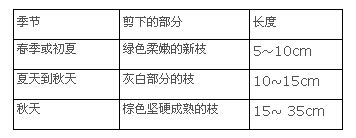
Rosemary cuttings can be rooted in soil or in water, then planted in soil once roots form. Gardeners can choose whichever propagation method they prefer. I. Rosemary water-rooting method: 1. Using clean scissors, cut new slender shoots from a healthy, vigorous rosemary plant. Be careful to avoid shoots with flowers.
-
How to Propagate Wax Begonia from Cuttings with a High Survival Rate? Detailed Methods and Steps
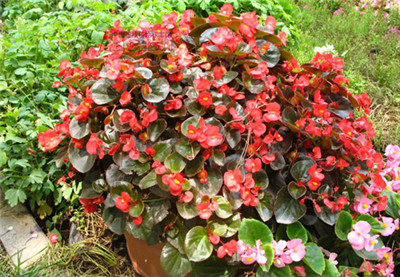
Wax begonia (Begonia semperflorens) has delicate, glossy leaves, clustered flowers with vivid colors, and blooms in all four seasons, making it an excellent houseplant. The cuttings of wax begonia do not need to be too long; generally, it is recommended to keep them under 10 cm. Cuttings that are too long can lead to difficulty in water transport, difficulty in supporting the branch, and easy rotting.
条件筛选