What to do if your Lampranthus spectabilis won't bloom? Detailed cutting propagation methods
Autumn leaf daisy, also known as Lampranthus spectabilis, is a succulent plant that many people grow. So what should you do if your Lampranthus spectabilis won't bloom, and how do you propagate it from cuttings?
What to do if your Lampranthus spectabilis won't bloom:
1. Temperature and light
Generally, apart from slight shading in summer, it needs fairly ample light in the other seasons. If there isn't enough sunlight, the distance between its nodes will start to stretch out, and the stems and leaves will also be very soft, so it easily topples over. When temperatures are high, the plant will be in a semi-dormant state, so at this time we must place it somewhere fairly ventilated and cool for care. If it hasn't bloomed, then you need to check whether temperature and light are being supplied adequately, and be sure to make appropriate adjustments.
2. Improper watering method
It generally prefers a somewhat warm and dry spot, is very afraid of standing water, and also greatly fears high temperatures, though it is quite drought-tolerant. So normally you should pay attention to keeping the soil in a moist state, and you must not water too much. So if it doesn't bloom, check whether the watering method is wrong or you're watering too much. Also, when overwintering you must reduce watering, and just keep the leaves from shrivelling. If there's too much standing water in the pot, it will easily cause root rot. Root rot will also make it unlikely to bloom.
3. Improper fertilising method
Spring and autumn are when it grows best. At this time you must give it a dilute fertiliser once every half month, so that it can be supplied with the nutrients it needs. If you don't fertilise in time, the plant won't grow especially luxuriantly, and then it won't easily bloom. But you also mustn't fertilise too much, and in particular check whether the nitrogen content is too high, otherwise the plant will just grow tall and bloom less or even not bloom at all. So check whether this is the cause, and adjust the amount of fertiliser appropriately up or down.
4. Damage from pests and diseases
If it isn't blooming, we should check whether there are insects on it. If there are pests or diseases, they will suck out its nutrients and also cause other diseases, making it less likely to bloom. If there are any, then you should use some method to kill all those insects, so that it can grow better and bloom faster.
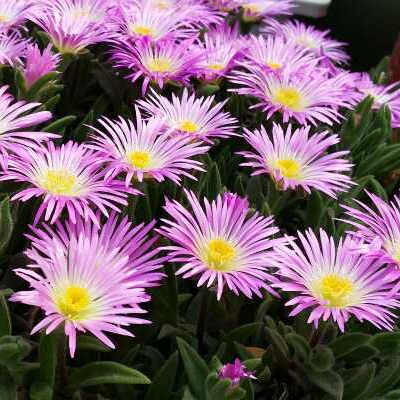
Cutting propagation methods for Lampranthus spectabilis:
1. About the timing of plant cuttings
Lampranthus spectabilis is generally propagated by cuttings in spring and autumn. Because it loves warmth and a sunny, ample-light environment, fears high temperatures, and is not cold-tolerant, during the growing season we now need to give it appropriate light. If there isn't enough light, it may cause its internodes to be long and thin, and it easily topples. So choosing to start cuttings in this season will have the best effect on its growth and propagation.
2. About cutting and planting the plant
When taking cuttings, we must choose strong terminal branches, cut them to 6 to 9 cm, then insert them into a sand bed or vermiculite, keeping it only slightly moist. Over the following two to three weeks the branches will root, and one week after rooting they can be potted up. Note that branches that haven't rooted find it very hard to photosynthesise on their own, so we can mist them with a certain amount of water to maintain the plant's internal water needs and balance. Normally in a cool, shaded situation this needs 3 to 5 times a day; the higher the temperature on a sunny day, the more times we need to mist; on cloudy and rainy days we can reduce the amount of misting or not mist at all.
3. About care and management
Because of the characteristics of Lampranthus spectabilis, our newly potted plants need to be kept slightly dry; too dry or too much water may cause the plant to die off or develop root rot from standing water. When the seedling reaches about 20 cm tall, we can pinch it out once, to make the plant branch more and bloom. Normally we need ample sunlight and fertilising once every half month. In summer's high temperatures the plant will enter a semi-dormant state, so we should place it somewhere ventilated and cool for care, and stop fertilising it, waiting until autumn before starting the next round of careful care. Every year when spring arrives we need to repot it into a fresh pot. This flower likes sandy soil best, ideally a loose and fertile one. We also need to do a fresh round of pruning according to the pot it's moved into, roughly cutting the existing branches back by half or about a third, to encourage it to grow new branches and leaves and produce more vigorous flowers.
Alright, friends, now you all know the cutting propagation methods for Lampranthus spectabilis.
Why won't Lampranthus spectabilis bloom? What to do if your Lampranthus spectabilis won't bloom?
Lampranthus spectabilis is a beautiful flower native to southern Africa. This flower likes a warm, dry, sunny growing environment, is drought-tolerant but not cold-tolerant, not tolerant of waterlogging, and cannot be exposed to long periods of high temperature and strong sun. The growing environment should preferably be a fertile, loose, well-drained sandy loam, and it is usually planted by two methods: cuttings and sowing. Lampranthus spectabilis is famous for its flowers, so if the Lampranthus spectabilis you're growing doesn't bloom, that greatly reduces its value. So why won't Lampranthus spectabilis bloom? What to do if your Lampranthus spectabilis won't bloom? Let's find out below.
Lampranthus spectabilis
Why won't Lampranthus spectabilis bloom? What to do if your Lampranthus spectabilis won't bloom?
1. Temperature and light
Generally, apart from slight shading in summer, it needs fairly ample light in the other seasons. If there isn't enough sunlight, the distance between its nodes will start to stretch out, and the stems and leaves will also be very soft, so it easily topples over. When temperatures are high, the plant will be in a semi-dormant state, so at this time we must place it somewhere fairly ventilated and cool for care. If it hasn't bloomed, then you need to check whether temperature and light are being supplied adequately, and be sure to make appropriate adjustments.
2. Improper watering method
It generally prefers a somewhat warm and dry spot, is very afraid of standing water, and also greatly fears high temperatures, though it is quite drought-tolerant. So normally you should pay attention to keeping the soil in a moist state, and you must not water too much. So if it doesn't bloom, check whether the watering method is wrong or you're watering too much. Also, when overwintering you must reduce watering, and just keep the leaves from shrivelling. If there's too much standing water in the pot, it will easily cause root rot. Root rot will also make it unlikely to bloom.
3. Improper fertilising method
Spring and autumn are when it grows best. At this time you must give it a dilute fertiliser once every half month, so that it can be supplied with the nutrients it needs. If you don't fertilise in time, the plant won't grow especially luxuriantly, and then it won't easily bloom. But you also mustn't fertilise too much, and in particular check whether the nitrogen content is too high, otherwise the plant will just grow tall and bloom less or even not bloom at all. So check whether this is the cause, and adjust the amount of fertiliser appropriately up or down.
4. Damage from pests and diseases
If it isn't blooming, we should check whether there are insects on it. If there are pests or diseases, they will suck out its nutrients and also cause other diseases, making it less likely to bloom. If there are any, then you should use some method to kill all those insects, so that it can grow better and bloom faster.
The flowering period of Lampranthus spectabilis is mostly in spring and summer-autumn. During the flowering period the flower volume is especially large, and the colours include red, yellow, purple and many others. A well-grown plant used to accent a balcony or windowsill during its flowering period is a great choice, and it can also be planted along roadsides, in car parks and other open areas, with excellent landscape effect. The above content was compiled for you by the editors of First Agricultural Economics Network, and we hope it is helpful to you.
[Lampranthus spectabilis] How to grow Lampranthus spectabilis - cultivation methods for Lampranthus spectabilis
Lampranthus spectabilis is not actually a begonia (Malus spectabilis) flower. Lampranthus spectabilis is a succulent in the family Aizoaceae. The Lampranthus spectabilis plant is short and its flower colours are gorgeous, making it an excellent indoor potted plant. So how do you grow Lampranthus spectabilis? And what are the cultivation methods for Lampranthus spectabilis? Let's find out together.
Picture of Lampranthus spectabilis in bloom
I. How to grow Lampranthus spectabilis
Lampranthus spectabilis likes a warm, dry and sunny environment. It is drought-tolerant, not cold-tolerant, fears waterlogging, and is not tolerant of high temperatures. A fertile sandy loam is best for the soil. In winter the temperature should not be below 10°C.
For newly potted seedlings, slightly dry is best. When the plant is 20 cm tall, it needs to be pinched back by cutting off half, to encourage more branching and more blooming. During the growing season it needs ample sunlight, with fertilising once every half month. The stems and leaves then grow luxuriantly and robustly, and it blooms continuously. If light is insufficient, the leaves easily topple and blooming decreases.
In midsummer it enters a semi-dormant state, so control watering and place it somewhere cool and ventilated. Otherwise high temperature and high humidity will cause the roots to rot. In winter it grows slowly, so water less, and just keep the leaves from shrivelling. If the temperature is low and humidity is high, the leaves easily turn yellow and droop, and in severe cases wither and die. Overwintered plants need pruning and repotting in early spring; once new branches and leaves grow, they can bloom again in April-May.
Leaf spot disease and rust disease sometimes occur; spray with a 600-fold dilution of 65% zineb wettable powder. Pests include whitefly and scale insects; spray to kill with a 1500-fold dilution of 40% omethoate emulsifiable concentrate.
Picture of Lampranthus spectabilis in bloom
II. Cultivation methods for Lampranthus spectabilis
Propagation of Lampranthus spectabilis: commonly by sowing and cuttings. For sowing, do it in spring from April to May, using indoor pot sowing; germination occurs about 10 days after sowing. For cuttings, either spring or autumn will do: choose plump terminal branches, cut them to 6-8 cm long, and insert them together with the leaves into a sand bed. The cutting medium should not be too wet; they root 15-20 days after insertion, and one week later they can be potted up.
During the growing season Lampranthus spectabilis requires ample light. If light is insufficient, the internodes will stretch out, becoming weak and slender, and the branches and leaves easily topple. Normally keep the potting soil slightly on the dry side and avoid standing water, otherwise it will cause root rot. Apply a decomposed dilute liquid fertiliser or compound fertiliser once every 15 to 20 days. During cultivation, do not use too much fertiliser or water; in particular the amount of nitrogen fertiliser must not be too much, otherwise the branches and leaves will grow luxuriantly but bloom sparsely.
In summer's high temperatures the plant is in a semi-dormant state, growing slowly or stopping. It should be placed somewhere ventilated and cool for care, protected from strong sun, with watering controlled so that high temperature and high humidity don't cause root rot, and fertilising stopped; wait until autumn cools before resuming normal management.
Picture of Lampranthus spectabilis in bloom
The above ishow to grow Lampranthus spectabilisandthe cultivation methods for Lampranthus spectabilisintroduced. Lampranthus spectabilis has vivid flower colours and a large flower volume, and can be potted to accent balconies, windowsills and other spots, so it is worth growing.