Can chrysanthemums be propagated by cuttings in August? A detailed guide to the cutting method
Chrysanthemums are the flowers of autumn and a symbol of the season, usually blooming from August to October. So can chrysanthemums be propagated by cuttings in August? How do you take chrysanthemum cuttings?
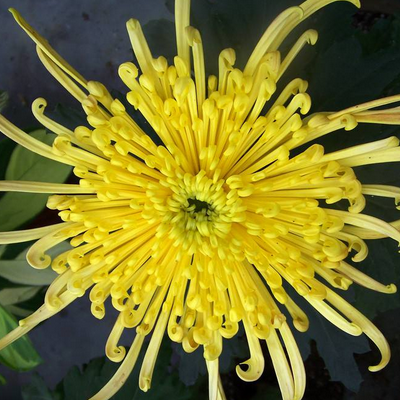
Can chrysanthemums be propagated by cuttings in August:
Chrysanthemums can be propagated by cuttings, but the timing and season matter for taking chrysanthemum cuttings.
Chrysanthemums are best propagated by cuttings in spring and early summer. By August the weather has already entered autumn, and the chrysanthemum's flowering season is approaching. If you take chrysanthemum cuttings at this time, they need to re-root, which is a very long process, and this can easily lead to poor nutrition at flowering time and to small, sparse blooms. At this point it is best to transplant them with the roots intact.
How to take chrysanthemum cuttings:
1. Cut the chrysanthemum branch in the middle, keep the upper part, and cut it into 20 cm lengths.
2. Each section of branch should keep one leaf bud, and the top part should keep the terminal bud. Then soak it in a rooting powder solution for 2 hours.
3. Choose soil rich in humus. First water it to moisten the soil, then use a wooden stick to make a slanted hole 6-8 cm deep, put the chrysanthemum branch into the hole, and press the soil firm.
4. After pressing the branch firm, spray water again, spraying it wet and thoroughly, and place it in a cool, ventilated spot.
5. After spraying the water, make a shade canopy, cover it during the day and open it at night, and spray water with a spray bottle on schedule to keep the soil moist.
6. After the upper leaf buds emerge, they can get some sunlight in the morning and afternoon, but must not be exposed to the scorching sun at noon.
7. After the cuttings have taken root, they can be transplanted and can get more sunlight. At this time you need to control water; do not water too frequently, to avoid overly fast growth.
Well, that is all for the introduction to chrysanthemums. Friends, you all understand clearly now, and know that chrysanthemums are best not propagated by cuttings in August.
Chrysanthemum cutting techniques (gardener's experience version)
Taking chrysanthemum cuttings is an important means of propagating chrysanthemums. For ordinary gardeners, it is not only necessary to understand chrysanthemum cutting techniques, but also to understand the timing of chrysanthemum cuttings, so as to improve the survival rate. Chrysanthemum cuttings can be taken from mid-March to early August, and cuttings taken in July and August are often grown as single-stem chrysanthemums.
For home potted ornamental chrysanthemums, people generally keep the root shoots from after the previous year's bloom, and let them sprout again from the roots in early spring the following year. If these flower shoots are allowed to keep growing, by autumn the branches will be very long, which looks very unattractive, and there will be few of them, so the branches must be cut off and then used for cuttings.
Chrysanthemum cuttings are called softwood cuttings, unlike the hardwood cuttings of woody flowers such as roses, Rosa multiflora, gardenia, and hibiscus. Chrysanthemums are herbaceous flowers, and softwood cuttings use the upper part of the branch, with the terminal bud. The specific steps are as follows:
1. Cut the chrysanthemum branch in the middle, keep the upper part, and cut it into 20 cm lengths.
2. Each section of branch should keep one leaf bud, and the top part should keep the terminal bud. Then soak it in a rooting powder solution for 2 hours.
3. Choose soil rich in humus. First water it to moisten the soil, then use a wooden stick to make a slanted hole 6-8 cm deep, put the chrysanthemum branch into the hole, and press the soil firm.
4. After pressing the branch firm, spray water again, spraying it wet and thoroughly, and place it in a cool, ventilated spot.
5. After spraying the water, make a shade canopy, cover it during the day and open it at night, and spray water with a spray bottle on schedule to keep the soil moist.
6. After the upper leaf buds emerge, they can get some sunlight in the morning and afternoon, but must not be exposed to the scorching sun at noon.
7. After the cuttings have taken root, they can be transplanted and can get more sunlight. At this time you need to control water; do not water too frequently, to avoid overly fast growth.
8. Start fertilizing after September, initially using nitrogen fertilizer, or a compound fertilizer, to promote the growth of branches and leaves. After October, apply more phosphorus fertilizer to promote the growth of flower buds. At this time, pay attention to spraying pesticide; either “monocrotophos” or “Yibianjing” will do, to prevent aphids from breeding.
9. After the flower buds emerge, keep only one large flower bud and pinch off all the extra ones. At this time fertilizer and water must be kept up, and by the end of October the flowers will gradually open (I mean the Qingdao area).
Which flowers and plants are suitable for planting in August?
Sowing: daisies, dianthus, Calendula, wallflower, black-eyed Susan, snapdragon, pansy, scarlet sage, stock - these bloom in flower beds the following spring.
Cuttings: Boston ivy, Chinese rose, gardenia, coleus, honeysuckle, Alternanthera.
Division: daylily, blackberry lily, hosta, iris, Hemerocallis, blanket flower.
Layering: rose, hydrangea.
Grafting: plum blossom, cherry blossom, Chinese rose, purple-leaf plum, Malus spectabilis, cactus family plants. Key management points
Watering: Entering August, if air humidity decreases and the flower plants grow larger and larger, you should increase the amount of water given to the flowers. On clear noons, you should also spray or water the flowers as conditions require. For some plants that are growing leggy and blooming less, withhold water to promote flower bud differentiation. Do not let gladiolus plants that have already grown flower spikes lack water, otherwise the tips of the flower spikes will bend, and later watering will not easily restore them to an upright state.
Fertilizing: Many flowers have already entered or are about to enter the fastest growing period of the year. At this time, fertilize China aster, chrysanthemum, dahlia, hardy aster, ageratum, cockscomb, black-eyed Susan, bougainvillea, canna, Kochia, Alternanthera, amaranth, and scarlet sage more. Topdressing can be done by watering or by spraying the leaves. No matter what flower you are fertilizing, you must follow the principle of using less first and more later, and thin first and concentrated later. In addition, decide the length of the fertilizing interval according to the size and growth vigor of the plant. For small plants with weak growth, fertilize once every 5-7 days; for large plants with strong growth, fertilize once every 3-5 days. If using organic liquid fertilizer, mixing in a small amount of urea and monopotassium phosphate gives better results for the growth and development of the flowers.
Light: For fast-growing flowers, transplant them promptly or widen the spacing between flower pots to let light through. Appropriately remove the leaves blocking the grape clusters so they can carry out photosynthesis and color better. For chrysanthemums and poinsettias undergoing short-day treatment, prevent light leaks during the day. Open the shade cover at night for ventilation, and take care to avoid exposure to lamplight or moonlight, otherwise their flowering period will often be delayed. For tuberose used as cut flowers or potted flowers, do not place it under lamplight at night; it is best to place it in a dark place, so that its flowers will have a stronger fragrance.
Temperature regulation: It is best to place Chinese hibiscus, lotus, water lily, and flowering maple in a wind-sheltered, sunny spot, which can raise the temperature of the small environment and thus extend their flowering period. When the five-fingered eggplant blooms, try to lower the ambient temperature. This is because when the temperature exceeds 30°C, the flowers of the five-fingered eggplant often set fruit poorly due to poor pollination.
Pruning: Pinching hardy aster 3 weeks in advance and scarlet sage 4 weeks in advance can control them to bloom at the scheduled time. After setting the buds on dahlias, pinch off all the side buds and basal shoots of the plant to make the flowers bloom larger, and this can also be used to control the dahlia's flowering period. At the beginning of the month, knock the geranium out of its pot and trim the roots, then repot and prune the branches, to ensure it sends out more branches and blooms frequently the following year. Remove the ornamental pumpkins set at the end of this month, otherwise they will not easily ripen in autumn and will affect the quality of the other ornamental pumpkins on the plant.
Repotting: Pot up the early chrysanthemums and cliff chrysanthemums grown in the ground that have already shown buds. Two days before lifting the root ball, water thoroughly first, which makes the operation easier and reduces the occurrence of the root ball breaking apart. Repot calla lily, cyclamen, and fuchsia.
Disease prevention: For Chinese rose, impatiens, and hardy aster, which are prone to powdery mildew, besides spraying pesticide preventively every half month, you should also reduce water spraying and pay attention to ventilation.