-
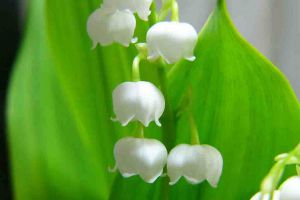
How to plant lily of the valley bulbs? Learn the correct planting method
I believe many friends want to grow lily of the valley but don't know where to start. Actually, as long as we prepare slightly acidic, fertile soil and slightly moist conditions in spring, we can plant them. First cut the bulbs into small pieces, and each piece needs to have a bud. Then plant them into the prepared soil, cover with another layer of soil, and care for them carefully. By the second year, they will be able to bloom beautiful flowers.
-

How often should you water a cyclamen? Master the correct watering frequency
How often should you water a cyclamen? This question has different answers in different seasons. Generally speaking, in early spring we can water once every two or three days, and in late spring once every two days; in early summer once a day, in late summer and autumn we can pause watering, and when winter comes we again need to increase the amount of water, watering once every two or three days is better.
-

What Fertilizer Is Best for Cyclamen? A Detailed Guide to the Correct Fertilizing Method
To help it grow better, when choosing fertilizer for it we should apply different flower fertilizers according to its different growth stages, gradually increasing the amount of the K element as it grows. Specifically, we can apply the relatively ordinary and widely available urea on the market; in addition, there are some fertilizers specially made for flowers, such as Huaduoduo, Bikaihua and Biwang, all of which can serve as its fertilizer.
-

The correct way to water pothos with beer
You've all heard that watering pothos with beer can make it fill the pot, but many friends, after trying it, ended up not with a pot bursting with growth, but with a dead plant. The truth is, the problem lies in how you water it. For example, you shouldn't pour beer directly into the soil; it must be diluted, and you can't water too often - once a week is enough.
-
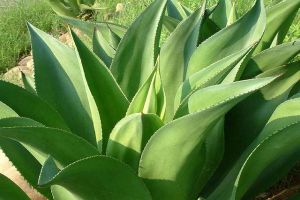
How to Fertilize Agave? A Detailed Guide to the Correct Fertilization Method
This is a very popular type of plant. Overall, it is fairly easy to care for. However, we also need to pay attention to some issues. For example, the issue of fertilization. Generally speaking, its demand for fertilizer is not very high. During the growing season, which is spring and summer, once a month is enough. In late autumn and early winter, it enters dormancy, and at this time it must not be fertilized. There are no particular requirements for the type of fertilizer; liquid fertilizer, compound fertilizer, and so on are all fine, but it must never be too concentrated.
-

How to water agave? Master the correct watering method and frequency
This is an ornamental plant. Because it stays evergreen all year round, it is quite commonly grown for viewing at home or in gardens. So, if we want to grow one, how should we water it? Since it is drought-tolerant but not waterlogging-tolerant, we should remember to water less rather than more. However, during its growing season it uses more water, so we can water a bit more; in winter it grows more slowly, so we can water a bit less; when there is little rain we can water a bit more, and when there is a lot of rain we can water a bit less.
-
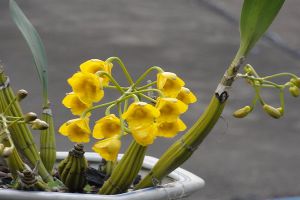
How do you eat Dendrobium chrysotoxum? An introduction to the correct way to eat it
Seeing this topic, many people will wonder: can this plant really be eaten? That's right, it can be eaten. And it tastes pretty good, too. The simplest way is just to peel its stems and eat them directly. However, the most common method is still to use it to make soup. Since many people do not know how to prepare it, here is a detailed explanation.
-
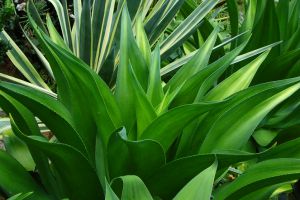
What to Do About Root Rot in Agave? Learn the Correct Way to Handle It
This is a highly ornamental plant. We can see that from the pictures. However, if its roots rot, it will definitely affect its overall appearance. To solve this problem, we first need to know the cause. If it is caused by too much water, you can first cut off the rotted roots and then reduce the amount of water given; if it is caused by an unsuitable temperature, you can adjust it to 15°C-25°C; if it is caused by pests, you need to spray the appropriate pesticide and let it get more sun.
-
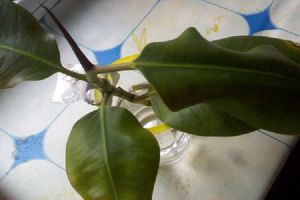
What to Do If Your Rubber Plant Grows Too Tall? Learn the Correct Way to Handle It
For most plants, growing tall is a good thing, but sometimes when plants that shouldn't naturally grow tall do so, it's not such a good thing. For example, the rubber plant (Ficus elastica) can sometimes grow very, very tall, so what should you do then? We can simply cut it short from the top by pruning off the branches and leaves at the top, or we can pinch out its growing tips to control its growth, but the most important thing is to reduce the amount of fertilizer applied, so as to directly eliminate the possibility of it growing too tall through its nutrient supply.
-

What to do if your gardenia gets frostbitten? Here are the correct remedies
In winter, the temperature is very low, which causes many gardeners' gardenias to get frostbitten, leaving them wilted and listless. What should you do then? First observe it, then take different measures depending on the situation. If the frostbite is relatively mild, we can remove the damaged branches and leaves and raise the temperature slowly to help it recover; if the frostbite is relatively severe, we can dig it out, cut off the damaged roots and the branches and leaves above, leaving only one or two of the better branches, and replant and care for it separately.
条件筛选