-
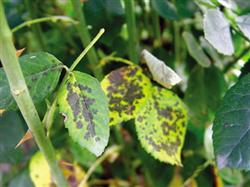
What are the control methods for mole crickets on Chinese roses?
Symptoms: This disease mainly affects the branches and stems of Chinese roses, causing cankerous lesions on the branches and stems. At first, they are small red spots, which then expand and darken, and may turn brown. In the later stage, the lesions become sunken and split longitudinally, black spots may appear on the diseased area, and in humid conditions black spore masses emerge. In severe cases, the lesions girdle the stem, and the branches below the diseased area shrink and die...
-
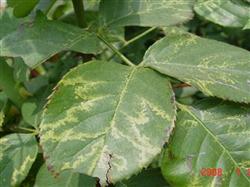
What to Do When Roses Get Rose Mosaic Virus? A Detailed Guide to Prevention and Control Methods
Rose mosaic virus is widely distributed and can cause a decline in the yield and quality of cut roses. Symptoms: Its symptoms vary depending on the rose variety. Rose mosaic virus is characterized by small chlorotic spots, sometimes showing polygonal patterns. The leaf surface around the lesions is often somewhat deformed. Some symptoms appear as rings, ...
-
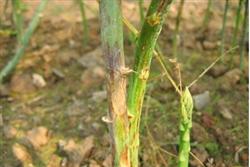
How to prevent and control asparagus stem blight? Detailed explanation of control methods
How to prevent and control asparagus stem blight? Please introduce the methods. Asparagus stem blight can be prevented and controlled by referring to the following methods: 1. When planting asparagus, choose flat, fertile sandy loam land that can be irrigated and drained. 2. Promptly and thoroughly handle diseased plant residues. Overwintering stalks must all be dealt with before "Spring Equinox"; diseased branches should be removed promptly;...
-
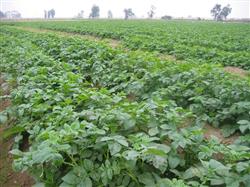
Control and Prevention Methods for Common Potato Diseases
How to control and prevent common potato diseases? Please give guidance. Common potato diseases include the following: A. Potato late blight. 1. Prevention: choose protective fungicides, such as Dashengfu (mancozeb suspension concentrate produced by Dow AgroSciences), Bibei (Bordeaux mixture). The key techniques for preventive fungicides...
-
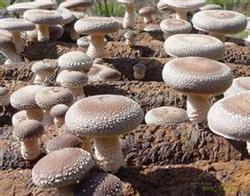
Pest and Disease Control Methods and Technical Key Points for Shiitake Mushroom Log Cultivation
There are many types of contaminant fungi parasitic on mushroom logs, commonly including Trichoderma, Schizophyllum commune, Lenzites betulina, and Panus lepideus. Among insect pests, there are slugs, snails, and millipedes that damage fresh mushrooms, and longhorn beetle larvae, bark beetles, and termites that damage mushroom logs. In terms of control, the policy of "prevention first, integrated control" should be implemented, streng...
-
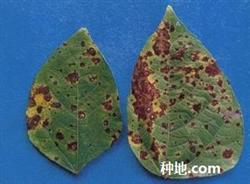
What are the control methods for mung bean leaf spot disease?
How should mung bean leaf spot disease be controlled? Please advise. The occurrence of mung bean leaf spot disease is closely related to temperature and humidity. Under conditions of 85% to 90% relative humidity, at temperatures of 25 to 28°C, the pathogen's conidia germinate most rapidly; when the temperature reaches 32°C, mycelial growth is most vigorous and the disease develops most rapidly...
-
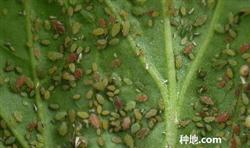
What are the control methods for mung bean aphids?
How should mung bean aphids be controlled? Please advise. Mung bean aphids mainly damage the tender leaves, young shoots, and heart leaves of mung beans, causing the affected leaves to curl and the plants to be stunted. Aphid outbreaks are closely related to temperature and humidity. When the temperature is above 25°C and the relative humidity is 60-80%, outbreaks are severe. Continuous rainy days or high-temperature weather are unfavorable...
-
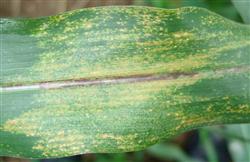
What are the control methods for corn brown spot?
How do you control corn brown spot? Please advise. Corn brown spot can be controlled as follows: (1) Rational fertilization. Apply sufficient base fertilizer, pay attention to the balance of nitrogen, phosphorus and potassium fertilizers, and avoid over-applying nitrogen fertilizer, so as to enhance the disease resistance of the plants. (2) Early prevention. Hybrids with Huangzaosi bloodline are susceptible to brown spot. At the 5-6 leaf stage...
-
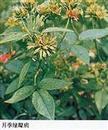
Symptom Identification and Control Methods for Rose Green Petal Disease
Symptoms: The main manifestation is narrow, thin petals that appear green and sepal-like or leaf-like, with the corolla turning green and flowers transforming into leaves; this is the typical symptom of rose green petal disease. Any plant affected by this disease, under the same cultivation and management conditions, will be more dwarfed than ordinary rose varieties, with profuse lateral branching, narrow and small leaves, and the petioles and stems rarely showing red coloration...
-

Symptoms and Control Methods of Rose Little Leaf Disease
Symptoms Rose little leaf disease is a common physiological disease of roses in northern China. Little leaf disease occurs on young shoots and young leaves, and is more obvious when roses sprout in spring. Diseased branches sprout later, and after the leaves emerge, the leaves are narrow, small and slender, with leaf margins turning upward, hard and brittle texture, and a relatively pale yellow-green leaf color, with uneven color intensity...
条件筛选