Pest and Disease Control Methods and Technical Key Points for Shiitake Mushroom Log Cultivation
There are many types of contaminant fungi parasitic on mushroom logs, commonly including Trichoderma, Schizophyllum commune, Lenzites betulina, and Panus lepideus. Among insect pests, there are slugs, snails, and millipedes that damage fresh mushrooms, and longhorn beetle larvae, bark beetles, and termites that damage mushroom logs. In terms of control, the policy of "prevention first, integrated control" should be implemented, streng...
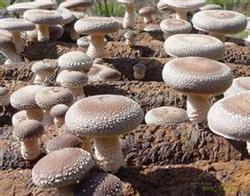
There are many types of contaminant fungi parasitic on mushroom logs, commonly including Trichoderma, Schizophyllum commune, Lenzites betulina, and Panus lepideus. Among insect pests, there are slugs, snails, and millipedes that damage fresh mushrooms, and longhorn beetle larvae, bark beetles, and termites that damage mushroom logs.
In terms of control, the policy of "prevention first, integrated control" should be implemented, and scientific management of mushroom logs in the mushroom yard should be strengthened to create an environment favorable for shiitake growth and unfavorable for the occurrence of contaminant fungi and pests. Preventive measures should be taken, and once problems occur, they should be eliminated promptly. Contaminant fungi on mushroom logs can be scraped off with a small knife or coated with 2% lime water. For pests such as snails and slugs, manual capture can be carried out in the early morning or evening. For termites, a mixed powder of arsenic trioxide (arsenous acid, white arsenic, arsenolite) 60% and talcum powder 40%; or arsenic trioxide 46%, salicylic acid 15%, and iron oxide 5% can be spread on termite trails and nests for control. Pest and disease control for bag cultivation:
Common contaminant fungi include Trichoderma, Penicillium, Mucor, Rhizopus, Aspergillus, and Streptomyces.
Common pests include slugs, springtails, and termites.
Integrated control measures should be adopted for contaminant fungi. In addition to attention to the selection of raw materials and spawn, and disinfection of the site and tools, the following should also be adopted during cultivation: (1) The substrate should first undergo composting and fermentation, using the biological heat generated by various thermophilic microorganisms to kill pests and medium-to-low temperature fungi, reducing sources of contamination. (2) Rapid bagging and sterilization. The prepared substrate is slightly acidic, suitable for the growth and reproduction of various microorganisms, so bagging should be completed within 5 hours as much as possible, and during sterilization, the temperature should be raised to 100°C within 4-6 hours. (3) Cooling and ventilation of the culture room can reduce contaminant fungal contamination and increase the success rate of inoculation. To prevent Trichoderma contamination, the inoculated bags can first be cultured at 16°C, at which shiitake mycelium can grow but Trichoderma spores have difficulty germinating and mycelial growth is slow (the optimum temperature for Trichoderma mycelial growth is 25-30°C). After the shiitake mycelium has grown to a certain extent on the surface of the substrate, the temperature is gradually raised, and finally cultured at 25°C until the mycelium fully colonizes the entire bag. If cultured at 25°C from the start, this favors Trichoderma mycelial growth, and the contamination rate will be high. (4) For locally contaminated bags, 20% formaldehyde solution or 5% carbolic acid can be injected to control the spread of the contamination point. For the control of slugs and termites, refer to the control methods for log cultivation. For the control of springtails, during the fruiting period, 0.1 dichlorvos mixed with a small amount of honey can be used as a bait for trapping and killing, or 0.1% rotenone or 150-200 times pyrethrum solution can be sprayed.