How to control alternate bearing in plums? These methods are essential
Plum trees have been cultivated in China for more than 3,000 years. The Book of Songs records "the blossoms are peach and plum" and "you throw me a peach, I return you a plum." The Guanzi states, "On the five fertile soils, the trees suited to them are plum and apricot." This shows that plum trees and apricot trees have a long history of cultivation in China and adapt well in both the north and the south. But for a long time, our...
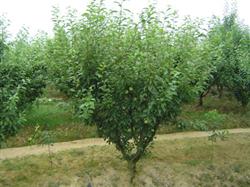 1. Reasonable pruning to regulate tree vigor. On-year trees should be pruned early (before winter sets in) and heavily. Cut out dead branches, residual branches, slender branches, scorched-tip branches, diseased and pest-infested branches, and excessively dense and crossing branches. Make many heading cuts to promote shoot growth; for vigorous growing branches and competing branches, make heavy heading cuts, cutting away 2/3 to 3/4 of the branch or leaving only 3 to 5 buds. Thin flower buds early, prune out excess flowering branches, and reduce the fruit load. Off-year trees should be pruned late (around the beginning of spring), keeping flowering branches and thinning out non-flowering vegetative branches. Leave branches unpruned or bend them down to moderate tree vigor, retain flowers and fruit as much as possible, and increase the fruit set.
2. Reasonable crop load to adjust fruit set. On-year trees must have their fruit set controlled. Fruit thinning should be done in late spring and early summer, that is, about 50 days after flowering. First thin out diseased and pest-damaged fruit, deformed fruit, and fruit at the tips of shoots, then set the final fruit by a leaf-to-fruit ratio of roughly 18:1. Fruit can also be set by branch: for large-fruited types, generally leave 1 fruit per short fruiting branch, that is, leave 1 fruit per fruiting base branch about 10 cm long; for medium-fruited types, generally leave 1 fruit per short fruiting branch, and leave 2 fruits on vigorous branches, spaced 6 cm to 8 cm apart; for small-fruited types, leave 1 to 2 fruits per short fruiting branch, spaced 4 cm to 5 cm apart. Thin fruit evenly across the whole tree to reduce the fruit load, promote branch and leaf growth, and ensure a good harvest in the off year. For off-year trees, to increase the fruit set of plums, you can pinch or thin the vigorous branches and strong shoots, control shoot growth, and promptly use artificial pollination and spray 2,4-D, etc.
3. Scientific fertilization. On-year trees should be given heavy applications of fruit-swelling fertilizer and post-harvest fertilizer. After flowering, during the rapid fruit expansion period (about late May), apply per tree 50 kg of human and livestock manure, 0.3 kg to 0.4 kg of urea, and 0.3 kg to 0.4 kg of potassium sulfate, to supplement nutrients and promote fruit development, shoot growth, and flower bud differentiation. After harvest, apply per tree 20 kg of decomposed organic fertilizer, 0.2 kg to 0.3 kg of urea, 0.4 kg to 0.6 kg of superphosphate, and 0.3 kg to 0.4 kg of potassium sulfate, to replenish what the tree has consumed, help restore tree vigor and flower bud differentiation, and lay the foundation for a good harvest the following year. Off-year trees should be given a good pre-flowering fertilizer. About 10 days before flowering, apply per tree 0.1 kg to 0.2 kg of urea and 0.1 kg to 0.3 kg of potassium sulfate. In addition, during the flowering period, you can spray 0.1% to 0.2% borax or 0.2% to 4% urea, to supplement the shortage of stored nutrients in the tree, improve the tree's nutrition, increase the fruit set, and raise the yield.