Causes of Pumpkin Fruit Cracking and Control Methods
Main symptoms: Fruit cracking occurs in both young and mature pumpkins, producing longitudinal, transverse or diagonal cracks on the fruit surface. The cracks vary in depth and width; severe cracks can reach deep into the flesh, exposing the seeds, and the injured surfaces of the cracks become suberized; minor cracks are only small fissures. If young fruit cracks, by the time the pumpkin matures it generally becomes severe...
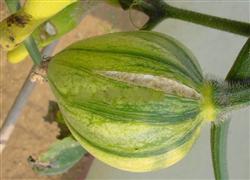
Main symptoms: Fruit cracking occurs in both young and mature pumpkins, producing longitudinal, transverse or diagonal cracks on the fruit surface. The cracks vary in depth and width; severe cracks can reach deep into the flesh, exposing the seeds, and the injured surfaces of the cracks become suberized; minor cracks are only small fissures. If young fruit cracks, by the time the pumpkin matures it generally becomes severe cracking.
Causes of the disease: It is mainly caused by long-term drought or excessive water control to prevent gray mold and other diseases, followed by a sudden rainstorm or heavy irrigation; at this time the flesh cells absorb water and expand, while the rind cells have already aged and cannot expand in sync with the flesh cells, causing the rind to split. If young fruit splits and the fruit continues to grow, the crack gradually deepens and enlarges. If young fruit suffers certain mechanical injuries that create wounds, the fruit cracks around the wound as it expands. In addition, insufficient calcium at flowering, or calcium deficiency in the floral organs, can also cause young fruit to crack.
Control methods
(1) Choose plots with flat terrain, fertile soil and strong water- and fertilizer-retention capacity for planting.
(2) Prepare the soil finely, apply sufficient decomposed organic fertilizer, and pay attention to the combined use of nitrogen, phosphorus and potassium fertilizers. Spray calcium fertilizers such as Lufenwei or calcium chloride at the flowering stage.
(3) Water reasonably, avoiding soil drought or excessive moisture, and pay special attention to preventing sudden heavy irrigation after long-term soil drought.
(4) When cultivating in greenhouses, avoid excessively high or low temperatures; maintain the growing-period temperature at 18°C-25°C as appropriate. (5) Prevent mechanical damage to young pumpkins during farming operations.