-
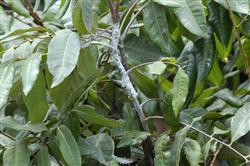
Control Methods for the White Moth Wax Cicada and the Citrus Mealybug in Longan Orchards
How to control the white moth wax cicada and the citrus mealybug in longan orchards? Please provide control methods. The white moth wax cicada and the citrus mealybug both belong to the order Homoptera, the former to the family Flatidae and the latter to the family Pseudococcidae, and they mainly damage fruit trees such as citrus, longan, lychee and mango. In the past, the population of these pests was often naturally controlled by large numbers of natural enemies and rarely reached...
-
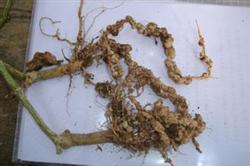
What are the control methods for chrysanthemum foliar nematode disease?
Chrysanthemum foliar nematode disease is one of the important diseases of chrysanthemums. It is distributed all over the world, and occurs in Shanghai, Nanjing, Hefei, Guangzhou, Changsha, Kunming, Zhejiang and other places in China. It mainly damages chrysanthemum leaves, causing the leaves to turn yellow and drop early. Besides chrysanthemums, this nematode also harms China aster, black-eyed Susan, dahlia, ...
-
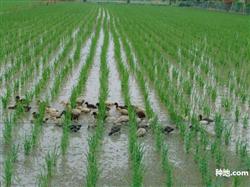
Detailed Explanation of Pollution-Free Control Methods for Rice Pests and Diseases
Pollution-free methods for controlling rice pests and diseases: (1) Rice field plowing and water-soaking technique for killing borers: during the peak pupation period of the overwintering generation of rice borers (before March 20 in southern Jiangxi, April 1 in central Jiangxi, and April 10 in northern Jiangxi), plow winter fallow fields and green manure fields, then flood with deep water and soak, so that the borers cannot emerge normally, thereby killing the pupae and borers and reducing the occurrence base...
-
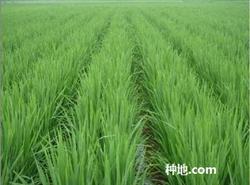
Rice Pest and Disease Control Methods and Key Technical Points
How to control rice pests and diseases? What techniques can be borrowed for rice pest and disease control methods: 1. Rice black sclerotial stem rot. A fungal disease of the stem base of rice at the adult plant stage, also called rice stem rot or small sclerotial disease. The pathogens are Sclerotium hydrophilum and Sclerotium oryzae of the Deuteromycotina. Sexual state...
-
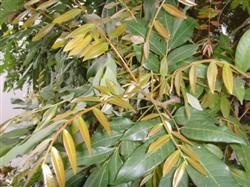
What are the control methods for longan sooty mold?
What methods are there to control longan sooty mold? Please advise on the methods. Control methods for longan sooty mold: 1. Strengthen orchard management. Prune moderately to improve ventilation and light penetration and reduce humidity. Promptly control pests such as the white moth planthopper, longan lanternfly, and scale insects to prevent pest infestations from triggering sooty mold. 2. Chemical control. In the early stage of the disease, use...
-
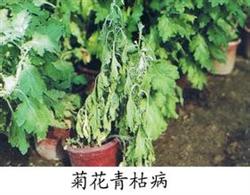
What to Do When Chrysanthemums Get Bacterial Wilt? Introduction to Prevention and Control Methods
1. Damage Symptoms: When the whole plant is infected, the above-ground leaves wilt; after lasting 3-5 days, the lower leaves turn yellow, the stem nodes near the ground appear brown, the fleshy part of the tuberous roots rots, and the epidermis and fleshy roots also turn brown, later becoming lead-white. When the diseased stem is cut crosswise, the vascular bundles turn brown, and when squeezed by hand or kept under moisture, a dirty-white bacterial ooze exudes; the diseased tuberous roots can also discharge bacterial ooze from cracks.
-
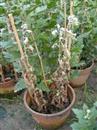
What are the control methods for chrysanthemum wilt?
I. Damage symptoms: When the disease first occurs, the leaf color becomes lighter and turns yellow, the leaves wilt and droop, and the stem base also turns light brown. A cross-section of the stem base shows the vascular bundles turning brown; the vascular bundles of the upward-extending branches gradually turn light brown as well, and the downward extension causes the outer skin of the roots to necrose or turn black and rot, with some stem bases splitting open. When humidity is high, it produces...
-
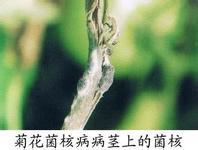
What are the control methods for sclerotinia rot of chrysanthemum?
1. Damage symptoms: Water-soaked lesions first appear on the middle and lower parts of the stem, later turning grayish white; under moist conditions, the diseased part becomes soft and rots, with a white mold layer on the surface; in the later stage, the cortex of the diseased stem rots into a shredded, split appearance, with mouse-dropping-shaped black sclerotia formed inside, and sometimes sclerotia also form on the stem surface. 2. Morphological characteristics of the pathogen: The pathogen is a fungus of the phylum Ascomycota...
-
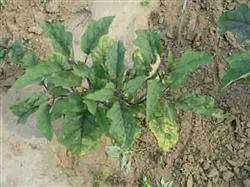
How to prevent and control verticillium wilt in chrysanthemums? A detailed guide to practical methods
I. Symptoms of damage: Verticillium wilt of chrysanthemum occurs commonly; infected plants have yellow, weak leaves, and the yellowing is initially limited to a few lower leaves, then gradually increases, and old leaves turn brown and die. Flowers are small or fail to bloom. II. Morphological characteristics of the pathogen: The pathogen is Verticillium dahliae Kleb., a fungus of the class Deuteromycetes. Mycelium...
-
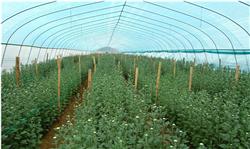
What are the control methods for crown gall disease in chrysanthemums?
Answer content: Key points of chrysanthemum cultivation and management techniques 1. Site selection: Chrysanthemums like moisture and fear drought, and cannot tolerate waterlogging. If soaked by heavy rain for 48 hours after planting, they will all die. Therefore, choose land that is fertile, convenient for drainage and irrigation, and has sufficient light. If converting rice fields for planting, reinforce the main surrounding embankment and ensure sufficient drainage and irrigation capacity, so as to avoid...
条件筛选