How to prevent and control verticillium wilt in chrysanthemums? A detailed guide to practical methods
I. Symptoms of damage: Verticillium wilt of chrysanthemum occurs commonly; infected plants have yellow, weak leaves, and the yellowing is initially limited to a few lower leaves, then gradually increases, and old leaves turn brown and die. Flowers are small or fail to bloom. II. Morphological characteristics of the pathogen: The pathogen is Verticillium dahliae Kleb., a fungus of the class Deuteromycetes. Mycelium...
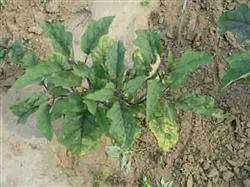
I. Symptoms of damage: Verticillium wilt of chrysanthemum occurs commonly; infected plants have yellow, weak leaves, and the yellowing is initially limited to a few lower leaves, then gradually increases, and old leaves turn brown and die. Flowers are small or fail to bloom.
II. Morphological characteristics of the pathogen: The pathogen is Verticillium dahliae Kleb., a fungus of the class Deuteromycetes. The mycelium is white; conidiophores are erect, 110-130 micrometers long, with whorled branching, 3-4 branches per whorl, branch size 13.7-21.4 x 2.3-9.1 (micrometers); conidia are borne at the tips of the whorl branches or terminal branches. Conidia are long ovoid, unicellular, colorless, size 2.3-9.1 x 1.5-30 (micrometers). The spore wall thickens to form dark brown chlamydospores, and many thick-walled cells combine into nearly spherical microsclerotia, size 30--50 micrometers.
III. Disease characteristics: The pathogen survives in soil or on diseased plant residues for many years and invades vascular bundle tissue through the roots. Infected cuttings are also an important primary infection source; through root contact, hyphae grow in the soil. Conidia spread by wind and rain, and sometimes conidia can be seen growing on infected stems. Disease resistance differs among cultivars. When plants grow vigorously, the disease develops slowly; when plants enter the flowering stage and develop flower buds, the disease spreads relatively quickly.
IV. Control methods:
(1) Heat-treat or chemically treat the soil used for propagating chrysanthemum seedlings. A choice is 40% quintozene powder 3.5-5 g mixed with 0.1 cubic meters of fine soil to kill the pathogen in the soil.
(2) Select disease-free cuttings from healthy plants. When taking cuttings, the use of ABT rooting powder is recommended so the cuttings take root and survive as quickly as possible, shortening the time the cuttings remain in the soil and thereby reducing disease occurrence.
(3) For other methods, see Fusarium wilt of chrysanthemum.