What are the control methods for chrysanthemum wilt?
I. Damage symptoms: When the disease first occurs, the leaf color becomes lighter and turns yellow, the leaves wilt and droop, and the stem base also turns light brown. A cross-section of the stem base shows the vascular bundles turning brown; the vascular bundles of the upward-extending branches gradually turn light brown as well, and the downward extension causes the outer skin of the roots to necrose or turn black and rot, with some stem bases splitting open. When humidity is high, it produces...
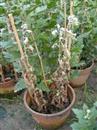
I. Damage symptoms: When the disease first occurs, the leaf color becomes lighter and turns yellow, the leaves wilt and droop, and the stem base also turns light brown. A cross-section of the stem base shows the vascular bundles turning brown; the vascular bundles of the upward-extending branches gradually turn light brown as well, and the downward extension causes the outer skin of the roots to necrose or turn black and rot, with some stem bases splitting open. When humidity is high, it produces white mold, which is the fungal mycelium and conidia. The disease spreads relatively slowly, and some plants show yellowing and wilting of the branches and leaves on one side or root rot.
II. Disease characteristics: It mainly overwinters in the soil as chlamydospores, or lives a saprophytic life for a relatively long period. In the field, it is mainly spread through infected soil and by taking cuttings from diseased plants for propagation, or through irrigation water, and can also be carried by wind over long distances along with diseased soil. The optimum temperature for the pathogen's development is 24-28°C, with a maximum of 37°C and a minimum of 17°C; below 15°C, the disease does not occur. This fungus only harms chrysanthemums, and under suitable disease conditions, dead plants appear within 2 weeks of the disease course. Moist or waterlogged conditions make the disease likely to occur; it is especially likely to occur with water accumulation after rain, high temperature and continuous rain, excessive application of nitrogen fertilizer, and acidic soil.
III. Control methods: (1) It is recommended to apply Baode biological fertilizer or compost fermented with enzyme bacteria or decomposed organic fertilizer. (2) Strengthen management and practice crop rotation; choose well-drained sandy soil for planting; irrigate reasonably, strengthen the management of ditches in the planting area, and try to avoid excessive moisture in the field or water accumulation after rain. (3) At the early stage of the disease, apply 50% carbendazim wettable powder at 500 times dilution, or 50% thiophanate-methyl·sulfur suspension concentrate at 800 times dilution, 10% Zhiweiling aqueous solution at 300 times dilution, 12.5% enhanced carbendazim concentrated soluble liquid at 300 times dilution, 50% Rongjunling wettable powder at 800 times dilution, or 50% Shajunwang (chlorobromoisocyanuric acid) water-soluble powder at 1000 times dilution.