-
What Is the Banana Skipper? A Detailed Guide to Control Methods
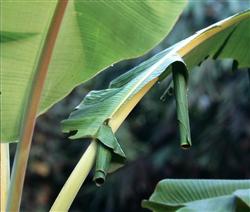
What is the banana skipper and how do you control it? Please explain the methods. The banana skipper, also known as the banana leaf roller or banana leaf nest worm, belongs to the order Lepidoptera, family Hesperiidae. It is distributed in Guangdong, Guangxi, Hainan, Fujian, Yunnan and Taiwan, China, and is a major pest of banana plants. When outbreaks are severe, not a single leaf on the whole plant remains intact, with leaf nests piled up everywhere, seriously...
-
The Harm and Control Methods of Banana Fusarium Wilt
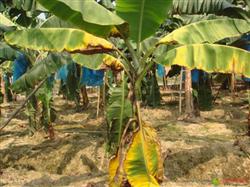
What harm does banana Fusarium wilt cause? How should it be controlled? Please explain the methods. Banana Fusarium wilt is also known as banana Panama disease and banana Fusarium wilt. It has long occurred in many countries in Latin America, and was also discovered long ago in Taiwan, China. This disease is listed as a quarantine target for both external and internal quarantine in China. From 1985 to 1988 in Guangdong Province...
-
Detailed Guide to Common Disease and Pest Control Methods for Calla Lily
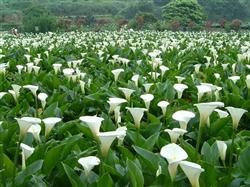
The main pests harming calla lily are: the two-spotted spider mite, namely the cotton spider mite and the cotton red spider. The female two-spotted spider mite has an oval dorsal surface, while the male has a diamond-shaped dorsal surface. In spring and summer, their color is yellow and yellow-green, with a black patch on each side. By late summer, individuals turn orange in body color, and the number of females...
-
What are the control methods for leaf spot disease in calla lilies?
I. Symptoms: Infected leaves develop lesions ranging from light brown to yellowish-brown, mostly round, oval, or irregular in shape. A few lesions have indistinct concentric rings. In the later stages of the disease, many small black dot-like moldy growths appear in the center of the lesions, namely the conidiophores and conidia of the pathogen. II. Pathogen and disease occurrence...
-
Detailed Guide to Common Pest and Disease Control Methods for Calla Lily
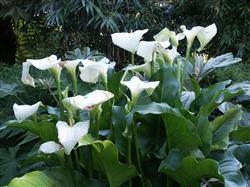
I. Diseases 1. Calla lily soft rot: Soft rot and detachment occur on the plant near the soil surface, causing leaves to wilt upward and the fleshy tuber to develop a soft rot downward, with roots also rotting, and the whole plant suddenly wilting and dying. When leaf edges are affected, they become soft and wet-rotted. When flower stalks are affected, the flowers turn brown, and the stalks become soft-rotted and drop off...
-
What are the control methods for wheat blossom midge?
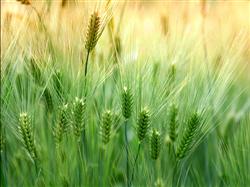
What methods are there to control wheat blossom midge? Please guide. Wheat blossom midge can be controlled by referring to the following methods: 1. Chemical control: the best control period is the pupal stage. Generally, use 200-250 ml of 50% phoxim emulsifiable concentrate or 40% isofenphos-methyl emulsifiable concentrate per mu, add 5 kg of water, spray and mix with 25 kg of fine soil. Alternatively, use 3-5 kg of 3% phoxim or 3% isofenphos-methyl per mu, mix with 20-30 kg of fine soil, and broadcast evenly. Irrigate promptly after broadcasting to improve the control effect. During the adult stage, supplementary control can also be carried out by using 50 ml of 50% phoxim emulsifiable concentrate per mu or 25 ml of Huifeng permethrin emulsifiable concentrate per mu, add water and spray at conventional volume.
-
How to control wheat blossom midge? These methods you need to master
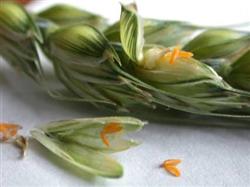
How to control wheat blossom midge? Please explain the methods. Wheat blossom midge can be controlled by referring to the following methods: 1. Occurrence patterns of wheat blossom midge. Wheat blossom midge has one generation per year. Overwintering larvae form cocoons in the soil at 20 cm to oversummer and overwinter. In the spring of the following year, when the temperature rises to 10 degrees (at this time wheat is at the jointing stage), the midge begins to break the cocoon and moves up into the 3-10 cm soil layer to prepare for pupation. When the temperature reaches 12 degrees (at this time it is the booting stage of wheat, mid-to-late April), the larvae successively pupate at about 3 cm on the soil surface. This is the best time to apply poisoned soil to control wheat blossom midge. Otherwise, after wheat heading, adult midges emerge in large numbers. Newly emerged adults can mate and lay eggs the same day. Each adult can lay dozens to over a hundred eggs. After 5-6 days, the eggs hatch into larvae, which bore into the wheat glumes and feed on the grain that is filling. In the late filling stage, mature larvae crawl out of the glumes after rain or when dew wets the wheat heads, fall to the soil, and oversummer and overwinter there. By wheat harvest, the damaged grains become "sparrow tongues" or "small black spots", shriveled and black, causing serious yield reduction.
-
Wheat Seedling Stage Pest and Disease Control Methods and Key Technical Points
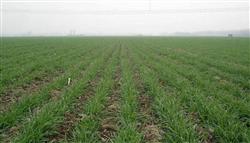
How to control pests and diseases at the wheat seedling stage? Please advise. Generally, about 15 days after wheat sowing, the seedlings have basically emerged fully. In the time that follows, how to manage and protect the wheat seedlings is extremely critical. The author recommends several methods for controlling pests and diseases at the wheat seedling stage. Wheat rust: 15 to... days after wheat emergence
-
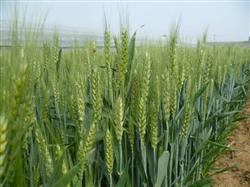
Common pests and diseases during the wheat grain-filling stage and their control methods
What pests and diseases should be watched for during the wheat grain-filling stage? Please explain. During the Start of Summer period, winter wheat in the north generally enters the flowering and grain-filling stages and has a relatively high demand for water. Because field humidity is high, pests and diseases such as wheat aphids and stripe rust have further developed and spread, so recently winter wheat areas in the north still need to...
-
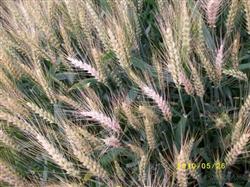
What are the control methods for wheat head blight (Fusarium head blight)?
What methods are used to control wheat head blight? Please provide guidance. Due to the continuous increase in the degree of mechanized wheat harvesting, large amounts of straw returned to the field, and wheat chaff blown and scattered across the field, the occurrence of wheat head blight has gradually worsened. Head blight is one of the major diseases harming wheat; the affected wheat heads turn pink, which is why it is called head blight...
条件筛选