The Harm and Control Methods of Banana Fusarium Wilt
What harm does banana Fusarium wilt cause? How should it be controlled? Please explain the methods. Banana Fusarium wilt is also known as banana Panama disease and banana Fusarium wilt. It has long occurred in many countries in Latin America, and was also discovered long ago in Taiwan, China. This disease is listed as a quarantine target for both external and internal quarantine in China. From 1985 to 1988 in Guangdong Province...
What harm does banana Fusarium wilt cause? How should it be controlled? Please explain the methods.
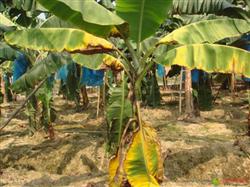
Banana Fusarium wilt is also known as banana Panama disease and banana Fusarium wilt. It has long occurred in many countries in Latin America, and was also discovered long ago in Taiwan, China. This disease is listed as a quarantine target for both external and internal quarantine in China. From 1985 to 1988, in Zhongshan, Panyu, and Huadu in Guangdong Province and in the suburbs of Guangzhou, Longya banana (Guoshanxiang) and Fenjiao banana were affected over relatively large areas, with incidence rates generally 3.7%~26%, and in severe cases reaching 60%, causing devastating losses. When the disease first appears, yellowing is seen at the leaf margins; diseased leaves rapidly wither and droop, turning from yellow to brown and then drying up. When the diseased plant's corm and roots are cut longitudinally, the vascular bundles can be seen to be necrotic and discolored yellow-brown or purplish-red. This disease is a vascular bundle disease caused by Fusarium, and the pathogen is Fusarium oxysporum f. sp. cubense. Four physiological races have been identified, among which race 4 has already been found in Taiwan, China, and can infect all banana and plantain cultivars, posing the greatest risk. The initial infection source of this disease comes from diseased plants and contaminated soil. The pathogen's chlamydospores can survive in soil for several years to more than ten years, but under waterlogged and oxygen-deficient conditions, the survival period is greatly shortened. Long-distance spread of the disease occurs mainly through seedlings, contaminated soil, and flowing water. Banana plantations in low-lying areas are prone to the disease.
Control methods: (1) Strengthen quarantine. Strictly prevent diseased seedlings from entering from abroad or from Taiwan, China; domestically, it is also necessary to strictly prohibit the transfer of banana seedlings from diseased areas to other places. (2) Promote the planting of disease-free tissue-cultured seedlings. (3) Inspect banana plantations regularly. If scattered diseased plants are found, they should be removed and destroyed promptly, and lime or urea should be spread to treat the soil. In severely affected areas, whole-plantation destruction may be considered, followed by replanting with rice, peanuts, sugarcane, and other cash crops.
Click to get more banana cultivation techniques
Click to get more fruit cultivation techniques