How to prevent and control rose rust? These methods you need to master
I. Symptoms Rose rust is a major disease of roses, common throughout southwest China, and more severe in areas with warm weather year-round and rainy, foggy winters. According to the author's surveys over many years, the incidence rate in some areas of our province is as high as 80%. White-flowered and purple-flowered roses are both infected, causing leaf drop, affecting growth and flowering, and it also...
I. Symptoms
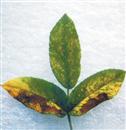
Rose rust is a major disease of roses, common throughout southwest China, and more severe in areas with warm weather year-round and rainy, foggy winters. According to the author's surveys over many years, the incidence rate in some areas of our province is as high as 80%. White-flowered and purple-flowered roses are both infected, causing leaf drop, affecting growth and flowering, and it also harms many plants of the genus Rosa. This disease infects leaves, petioles, calyxes and young stems. Small yellow spots or orange-red angular lesions first appear on the upper surface. In June and July, many apricot-yellow powdery masses appear on the underside of the leaves, and on petioles and young branches the lesions appear as yellow wart-like protrusions. These are its "urediniospores", spread by wind and rain. The pathogen is Phragmidium mucronatum (rose multi-spored rust fungus) of the order Pucciniales, phylum Basidiomycota. The fungus overwinters as telial mounds on diseased parts and fallen leaves of infected plants.
II. Control methods
1. Manual control: promptly remove diseased buds and leaves and burn them in a centralized manner to reduce the spread of the pathogen.
2. Strengthen cultivation management: apply more phosphorus and potassium fertilizer to enhance resistance; pay attention to ventilation, light penetration and drainage to lower the humidity of the surrounding environment and reduce conditions favorable to the disease.
3. Chemical control: from May to August, spray Bordeaux mixture at a dilution of 1:1:150-200 every two weeks, and lime sulfur mixture at 0.3 degrees Baumé; the following pesticides can also be used for spraying: 97% nabam at 250-300 times dilution (add 50-100 g of soap powder per 100 jin of spray solution), 20% triadimefon (Bayleton) wettable powder at 2000 times dilution, 30% Lvdebao at 300-400 times dilution, 10% Score water-dispersible granules at 3000-5000 times dilution, 25% Fuxing emulsifiable concentrate at 5000-8000 times dilution, 30% Triflumizole wettable powder at 3000-5000 times dilution, etc.