-

Major progress made in project to control soybean yield reduction from continuous and alternating cropping
The reporter learned from relevant departments that the project "Research and Demonstration of Key Technologies for Controlling Soybean Yield Reduction under Continuous and Alternating Cropping," tendered by the Municipal Science and Technology Bureau, has achieved major progress after two years of scientific research. The project was carried out in Yilan and Bayan counties, the two counties with the largest soybean area in Harbin. Through key technology research, soybean varieties resistant to continuous and alternating cropping were selected, including Kenfeng 16, Heinong 48, Kangxian 4, and Hefeng 47. A formula fertilization technique was proposed with 45 kg of nitrogen, 60-67.5 kg of phosphorus, 67.5-75 kg of potassium, and
-
Why can't soybeans be planted in continuous cropping?
Soybeans are commonly known as yellow beans. Farmers have a traditional habit of planting soybeans this year and continuing to plant them next year, which results in stunted growth, shortness, yellowing leaves, susceptibility to pests and diseases, fewer pods and small seeds, and significantly reduced yield in continuously cropped soybeans. According to surveys, under normal circumstances, continuous cropping of soybeans reduces yield by 20%-30% or more. The main reasons for the yield reduction: pests and diseases are prone to occur. Several diseases parasitic on soybeans, such as bacterial spot disease, black spot disease, damping-off, and yellow wilt, have suitable conditions for occurrence in continuously cropped soybean soil and will inevitably occur in large numbers
-
Why soybeans should not be grown in continuous or alternate-year cropping
Soybean continuous and alternate-year cropping control techniques can reduce the impact on yield. Impact on soybean yield. Different environments have different effects on soybean yield. ①Continuous cropping is severe, alternate-year cropping is mild; ②severe in the west and southwest, mild in the north and east; ③severe on poor land, mild on fertile land; ④severe on ridge slopes, mild in low-lying wet areas; ⑤severe in dry years, mild in rainy years; ⑥severe with no or little fertilizer, mild with more fertilizer; ⑦severe with original-ridge sowing, mild with plowed new ridges; ⑧severe with many soil-borne diseases and pests, mild with few diseases and pests; ⑨severe on long-cultivated land, mild on newly reclaimed land; ⑩severe under drought, mild with irrigation. The four eastern leagues of the Inner Mongolia Autonomous Region are each similar to their adjacent provinces, among which the Hulunbuir League area is similar to the northern part of Heilongjiang Province, and the continuous cropping phenomenon is also very severe. Today I want to discuss three issues: first, the impact of continuous and alternate-year soybean cropping on soybean yield and quality; second, the reasons for continuous and alternate-year soybean cropping; third, control techniques.
-
What to Do About Continuous Garlic Cropping? Detailed Explanation of Prevention and Control Methods
Question: Because garlic has been planted for many years, the garlic in the field now gets sick every year, and the bulbs get smaller year after year. Changing the seed garlic does not help. Is it a problem with the soil? What should be done? Answer: When garlic is continuously cropped for many years, various soil-borne diseases and root maggots worsen year by year, which can easily lead to garlic disease and poor growth. For the above fields, it is best to practice paddy-upland rotation of garlic with rice, or rotate garlic with non-garlic upland crops for more than 3 years.
-
What to Do About Garlic Continuous Cropping? Practical Control Methods Shared
Yongnian County is a major garlic-growing county, but in recent years, continuous year-after-year garlic planting has caused physiological diseases to become increasingly severe. In addition, garlic's selective absorption of nutrients has made the problem of insufficient nutrient supply prominent, showing symptoms such as dead seedlings, root rot, anthracnose, and in the later stage some cylindrical leaves like scallion leaves, which are unfavorable for the normal bolting of garlic scapes. This not only increases the labor intensity of garlic farmers but also reduces garlic yield. Changing the garlic root environment is the key to increasing garlic income, as follows: apply "Nong Dage" or "Chongcha No. 1" biological bacterial fertilizer per mu of garlic
-
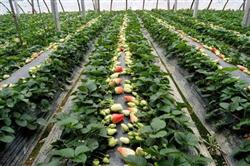
What are the harmful effects of continuous cropping of greenhouse strawberries? A detailed explanation of prevention and control techniques
1. Harmful effects of continuous cropping of greenhouse strawberries 1.1 Causes long-term accumulation of pathogenic microorganisms. Planting strawberries continuously on the same plot of land causes obvious changes in the soil microbial community, and suddenly, suddenly nematodes and pathogenic bacteria multiply in large numbers, leading to major outbreaks of pests and diseases. 1.2 Causes imbalance of strawberry nutrients...
-
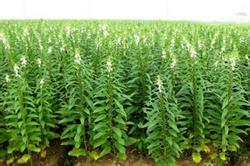
Why Are Sesame Plants Afraid of Continuous Cropping? An Analysis of the Causes of Continuous Cropping Harm
1. The key lies in timely topping. Usually, spring sesame retains the first pair of true leaves, and summer sesame retains the second pair of true leaves. Experiments have shown that this is the best time for topping, inducing a double-stem rate of 100%. The specific timing is: when the second pair of true leaves of spring sesame is half-unfolded, and when the third pair of true leaves of summer sesame is half-unfolded, with an interval of about one week...
-
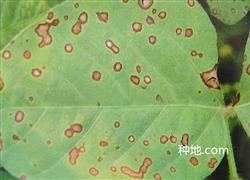
What does continuous and alternating soybean cropping mean? Read this article and you will understand
How should soybean leaf spot disease be prevented and controlled? What are the causes of the disease? 1. Distribution Soybean leaf spot disease occurs in Sichuan, Henan, Shandong, Jiangsu and other places in China, and occurs more often in autumn soybeans. 2. Symptoms The lesions on the leaves are light brown to grayish white, irregular, with dark brown edges. In the later stage, the lesions develop...
-
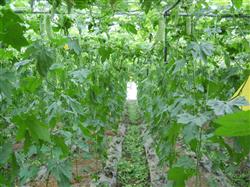
Bitter Melon Continuous Cropping: Planting Methods and Key Technical Points
How to grow bitter melon in continuous cropping? Please provide guidance on the methods. First, pay attention to timely pest and disease control. In the middle and late stages, bitter melon's stress resistance decreases, and the likelihood of pest and disease infection increases, so prevention should be carried out early. At present, the main disease harming bitter melon is powdery mildew, which can be controlled by spraying 12.5% myclobutanil emulsifiable concentrate at 2000 times dilution or 12.5% tebuconazole...
-
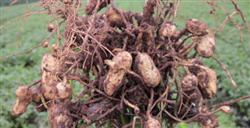
What are the harms of continuous peanut cropping? A detailed guide
What are the harms of continuous peanut cropping? Please note that continuous peanut cropping has the following harms: 1. It causes severe soil nutrient deficiency. Because peanut roots have a large number of rhizobia, they are not very sensitive to nitrogen. Continuous cropping leads to soil nutrient deficiency that cannot meet the nutrients needed by peanuts, thereby affecting the normal growth and development of peanuts. The longer the continuous cropping...
条件筛选