-
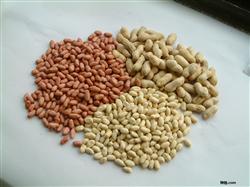
Complete Collection of Peanut Growing Technique Videos and Images
Peanut, originally called groundnut (scientific name: Arachis hypogaea Linn.), belongs to the order Rosales, family Fabaceae, an annual herbaceous plant with erect or prostrate stems 30-80 cm long, wing petals separate from the keel petals, pods 2-5 cm long and 1-1.3 cm wide, inflated, with thick shells, flowering and fruiting period from June to August. It is mainly distributed in Brazil, China...
-
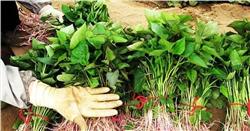
Complete collection of scientific sweet potato cultivation techniques, videos and pictures
I. Select good sweet potato varieties: Choose high-yielding varieties according to the characteristics of the sweet potato variety and the cultivation purpose. In spring sweet potato areas, it is advisable to choose medium-maturing varieties that are tolerant to fertilizer, recover quickly after transplanting, set tubers early, produce many and uniform tubers, and have a long duration of tuber enlargement. For example, in areas mainly for food use, Sushu 8, Anping 1, Xushu 34, Xushu...
-

Complete Guide to Lotus Root Varieties and Introduction to Common Varieties
What lotus root varieties are there? Where can I find a complete guide to lotus root varieties? We ask knowledgeable readers to help introduce them. Lotus root is slightly sweet and crisp, and can be eaten raw or cooked; it is one of the common table vegetables. But exactly which lotus root varieties exist is something some readers still do not know well, so Zhongdi Net has compiled the commonly cultivated lotus root varieties, detailed below...
-
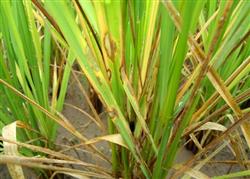
What Is Rice Sheath Blight? A Complete Guide
What is rice sheath blight? What damage does rice sheath blight cause? We ask friends to help explain the damage of rice sheath blight: Rice sheath blight is also called banded leaf blight. It can occur from the seedling stage to the heading stage. When leaf sheaths are infected, small dark green water-soaked spots with blurred edges appear near the water surface, then gradually expand into oval or cloud...
-
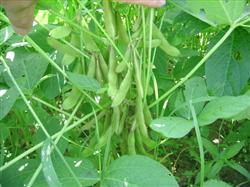
A Complete Guide to Weed Control Methods in Summer Soybean Fields
How to control weeds in summer soybean? Please provide methods. After summer soybean sowing, soil and climatic conditions favor weed germination and growth, and if chemical control is not carried out in time, it can easily lead to a weed infestation. In production, herbicides should be applied early for control based on the weed occurrence characteristics in summer soybean fields and the properties of the herbicides. Soil-incorporated treatment: after land preparation,...
-
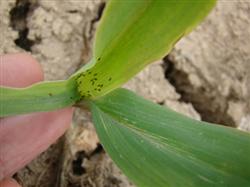
Complete Guide to Summer Corn Pest and Disease Control
How do you control summer corn pests and diseases? Here is an introduction. During the summer sowing period and seedling stage, many types of pests, diseases and weeds occur, and the damage is severe. If control is poor, it very easily causes missing plants and broken rows, leading to reduced yield. Therefore, throughout the entire growth period of corn, carrying out comprehensive control of pests, diseases and weeds at the sowing and seedling stages is crucial. First...
-
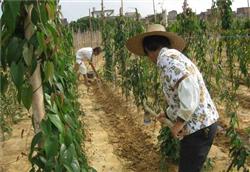
How to Fertilize Chinese Yam? A Complete Guide to Methods and Key Points
How do you fertilize Chinese yam? Please explain the fertilization methods. The following two approaches can be used to fertilize when growing Chinese yam: The first type, in places such as Hebei and Henan, some farmers have grown Chinese yam continuously for many years and can achieve yields of more than 4000 kg per mu. Their approach is based mainly on organic fertilizer, with an appropriate amount of chemical fertilizer as a supplement...
-
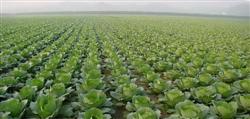
How to fertilize cabbage? A complete guide to scientific fertilization methods
How to fertilize cabbage? Is there any sharing of cabbage fertilization techniques? Producing 1000 kg of cabbage requires 2.0 kg of pure nitrogen, 0.72 kg of phosphorus pentoxide, and 2.2 kg of potassium oxide; for a yield of 3000-5000 kg of cabbage per mu, 6-10 kg of pure nitrogen, 2.2-3.6 kg of phosphorus pentoxide, and 6.6-11 kg of potassium oxide are required. Before planting...
-
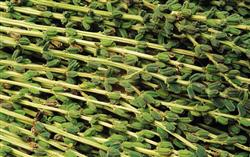
A Complete Analysis of the Key Technical Points for Growing Black Sesame
1. Land preparation and fertilization: Choose sandy loam or loam fields with loose soil, good aeration, and medium to above-medium fertility for planting, and avoid continuous cropping. Prepare the land and fertilize at the end of May and the beginning of June, applying 10-15 kg of urea or 20-25 kg of ammonium bicarbonate per mu, along with 5-10 kg of potassium chloride. 2. Seed treatment: Sun the seeds for 1-2 days before sowing. To prevent...
-

How to fertilize soybeans for high yields? A complete guide to fertilization techniques
High-yield fertilization techniques for soybeans
条件筛选