Complete Collection of Peanut Growing Technique Videos and Images
Peanut, originally called groundnut (scientific name: Arachis hypogaea Linn.), belongs to the order Rosales, family Fabaceae, an annual herbaceous plant with erect or prostrate stems 30-80 cm long, wing petals separate from the keel petals, pods 2-5 cm long and 1-1.3 cm wide, inflated, with thick shells, flowering and fruiting period from June to August. It is mainly distributed in Brazil, China...
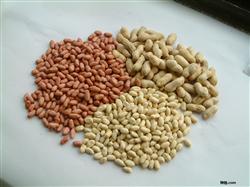
Peanut, originally called groundnut (scientific name: Arachis hypogaea Linn.), belongs to the order Rosales, family Fabaceae, an annual herbaceous plant with erect or prostrate stems 30-80 cm long, wing petals separate from the keel petals, pods 2-5 cm long and 1-1.3 cm wide, inflated, with thick shells, flowering and fruiting period from June to August. It is mainly distributed in Brazil, China, Egypt and other places. It can be used as a raw material for soap and hair oil and other cosmetics.
Peanut fruits contain protein, fat, carbohydrates, vitamin A, vitamin B6, vitamin E, vitamin K, as well as minerals such as calcium, phosphorus and iron, and other nutrients. They contain 8 kinds of amino acids needed by the human body and unsaturated fatty acids, and contain lecithin, choline, carotene, crude fiber and other substances. The fat content is 44%-45%, the protein content is 24-36%, and the sugar content is about 20%. They are rich in vitamin B2, PP, A, D, E, calcium and iron, etc. They also contain thiamine, riboflavin, nicotinic acid and other vitamins. They help promote the development of human brain cells and enhance memory.
Peanut seed selection methods:
1. Buy from legitimate seed stores. At present, there are many peanut varieties, and the names are also very
diverse. It is hard for farmers to judge whether these varieties have been identified when selecting seeds, so they should choose seed stores with a good reputation and fair prices to make purchases, and after buying seeds they must ask the merchant for a purchase receipt and keep it.
2. Suit measures to local conditions and choose good varieties. Farmers should, according to their own planting experience,
planting habits, soil and other actual conditions, choose peanut seeds suited to local conditions. Different peanut-growing areas have different main planted varieties. Do not follow the crowd and buy blindly. At present, Jihua No. 5 and Jiyou No. 4 can both meet the needs of growers; a variety with a high price is not necessarily a high-quality variety.
3. Pay attention to mastering the characteristics of peanut varieties. All peanut seeds, no matter which variety, have different
characteristics. Jihua No. 5 is a comb-branch common-type large-pod variety; this variety has neat and plump pods, a high double-pod rate, a relatively high filled-pod rate and shelling rate, large pods and large kernels, long oval seeds, pink seed coat, and a delicate, sweet, crisp taste when eaten raw. It is suitable for oil pressing and fresh eating, and has the characteristic of high yield. The pods of Luhua 14 peanut are cocoon-shaped small pods, the kernels are peach-shaped, and the seed coat is pink and glossy.
4. When buying peanut seeds, check the quality. When buying peanut seeds, check whether there is
insect damage or mildew, shell them to observe whether the kernels are plump and whether they have deteriorated, and properly squeeze them with your hand to check the dryness and moisture level of the peanut seeds; dry peanut seeds are not easily crushed by hand. In short, when buying peanut seeds, you should first understand some common knowledge about good varieties, so as to avoid unnecessary losses.
Peanut sowing:
Peanut fields should be cultivated into a deep, soft, fertile and loose soil environment, mainly focusing on two aspects: first, plow and harrow more and prepare the land finely, harrowing it soft and level; second, apply more organic fertilizer. When preparing the land, apply per mu 800-1000 kg of high-quality farmyard manure and barn manure, 25-30 kg of phosphate fertilizer, 10 kg of potassium chloride, and 2-3 loads of plant ash, broadcast over the whole soil layer.
Sow early at the right time. Spring peanuts should be sown appropriately early; the best period is around "Yushui" to "Jingzhe", and planting can be done when the temperature rises above 20°C.
Appropriately increase the number of plants. Appropriately increase the sowing rate and the number of individual plants, coordinate the contradiction between individual and population development, and carry out reasonable close planting based on the principle of fully using soil fertility and light energy. Generally, a sowing rate of 20,000 plants per mu is suitable. Use arched beds 1.4-1.5 m wide including ditches; paddy fields should use high beds (dry gardens may use low beds). The plant-row spacing is 18 x 23 cm, with 2 seeds per hole (seed spacing 2-3 cm), and cover with 2-3 cm of soil.
Peanut fertilization:
(1) Mainly farmyard manure, supplemented by chemical fertilizer. In China, peanuts are mostly grown in hilly areas, where the soil layer is thin and fertility is low. Farmyard manure is mainly organic fertilizer, contains rich nutrients, can improve the soil, build up soil fertility, and has a long fertilizer effect. Chemical fertilizer is a quick-acting fertilizer. Although it also contains nutrient elements needed by peanuts, compared with farmyard manure its nutrient composition is still single. At the same time, chemical fertilizer also leaves other components during application, which is not conducive to peanut growth and the improvement of soil fertility.
(2) Apply organic fertilizer and inorganic fertilizer together; the two interact with each other, improving the activation of microorganisms in the soil and the decomposition speed of organic fertilizer, transforming various nutrients into forms that can be absorbed by peanuts, thereby improving fertilizer use efficiency.
(3) Full amounts of nitrogen and potassium, double phosphorus. For every 50 kg of peanut pods produced, the ratio of nitrogen, phosphorus and potassium required is 5:4:2.5. The current-season utilization rates of nitrogen, phosphorus and potassium chemical fertilizers by peanuts are 41.8%-50.4%, 15%-25%, and 45%-60%, respectively.
(4) Rhizosphere topdressing and foliar spraying. Topdressing should be based on growth vigor and the different characteristics of varieties. Generally, the method of punching holes in the rhizosphere for deep topdressing is used, that is, sharpen a wooden stick about 3 cm in diameter, make a 5 cm deep hole about 5 cm from the plant, and apply fertilizer into it. Generally, apply 10 kg of urea per mu, and cover with soil after topdressing.
For foliar spraying, use 150 g of 0.3% potassium dihydrogen phosphate per mu mixed with 50 kg of water, and spray on the leaves during the pod-setting period, once every 7 days, continuously 2-3 times, with very good results.
Peanut diseases:
1. Peanut bacterial wilt, commonly known as "peanut plague", is a major enemy of peanut production. The disease occurs from the seedling stage to the harvest stage, but occurs most and most severely during the flowering stage. Generally, it reduces yield by 15%-20%, and in severely affected fields by more than 50%; if the disease occurs during the pod-setting stage, there may be no harvest at all. Affected plants first show slight wilting at noon, then recover in the morning and evening, then the leaves of the whole plant lose water, wilt and droop, and finally die of bacterial wilt while still green. Cutting open the stem of a diseased plant, you can see that the vascular tissue near the ground turns brown; when squeezed by hand, a dirty white bacterial fluid flows out from the cut. When the diseased plant is pulled up, the root has already rotted and is dark brown.
The pathogen can survive for many years in the soil of diseased fields along with diseased residue, and spread with rainwater and farm tools. Continuous cropping land is prone to the disease; high temperature and rainy weather, high humidity, and alternating sunny and rainy weather make it more likely to occur. Fertile loam or sandy loam with good drainage has fewer occurrences, while poor sandy soil has more occurrences. Generally, spreading-type peanut varieties have stronger disease resistance, while erect-type varieties are easily susceptible. The control measures are as follows:
1. Reasonable crop rotation. This disease mainly infects and damages through pathogens surviving in the soil. Implementing reasonable rotation with non-host crops, such as rotating peanuts with rice or corn, sorghum, etc., can eliminate the pathogens in the soil and effectively prevent the occurrence of this disease.
2. Improve the soil, pay attention to drainage, and apply more organic fertilizer. The base fertilizer should include more lime, plant ash and phosphate fertilizer. For each mu, the base fertilizer should include 40 kg of lime, 100 kg of plant ash, and 25 kg of superphosphate, which can promote robust peanut growth and improve plant disease resistance.
3. Promptly pull out diseased plants and burn them. After sporadic diseased plants are found, immediately pull them out with roots and burn them in a centralized manner, and sprinkle lime powder into the diseased holes to prevent the pathogen from spreading.
4. Carry out timely chemical control. In the early flowering stage of peanuts, use 130 g of captan per mu, mix with 80 kg of water, and spray the soil surface and roots, once every 7-8 days, continuously 2-3 times, with a control effect of more than 85%. In the early stage of the disease, copper-ammonia solution can also be used for control. The specific method: grind 0.5 kg of copper sulfate and 3.5 kg of ammonium sulfate, then add 1 kg of slaked lime, dilute with 500 kg of water, and apply 250 g per clump, with relatively good results.
2. Peanut net blotch, also called brown streak disease or cloud-pattern leaf spot, often occurs mixed with leaf spot disease, and can cause early peanut leaf fall, seriously affecting peanut yield.
Disease occurrence pattern: The disease mostly begins during the flowering stage, and the peak period is from pod-setting to maturity. It mainly harms leaves. Initially, round or irregular dark brown small spots appear along the main vein, with chlorotic halos around the spots; later, irregular brown spots with net-like edges appear on the upper surface of the leaves, and small chestnut-brown dots can be seen in the diseased parts. During continuous rainy weather, the leaf spots are larger and dark brown, while spots on the underside of the leaves are not obvious and are light brown; in severe cases the spots merge. Under dry conditions, the spots easily crack and perforate. Once leaves are infected, they fall off very easily.
Control method: In the early stage of the disease, use 70% mancozeb wettable powder 500-600 times solution, 75% chlorothalonil wettable powder 700-800 times solution, 64% sandofan wettable powder 500 times solution, 70% phosethyl-Al mancozeb wettable powder 500 times solution, or 80% pencozeb wettable powder 600 times solution, spraying once every 10-15 days, continuously 2-3 times.
3. Peanut viral disease, one of the main diseases of peanuts, seriously affecting peanut yield and quality, and especially severe in the northern production areas of China.
For peanut viral diseases, except bud necrosis disease, which is mainly spread by thrips, other diseases such as mild mottle disease, yellow mosaic disease, and common mosaic disease are spread through seeds and aphids, and seed-borne diseased tubers are the main primary infection sources for the prevalence of these diseases. The level of seed transmission is mainly affected by the period of disease occurrence; the earlier the disease occurs, the higher the seed transmission rate. The seed virus-carrying rate is negatively correlated with seed size: large seeds have a low virus-carrying rate, while small seeds have a high virus-carrying rate. When there is a virus source and susceptible varieties, the timing and number of aphids are the main factors in the prevalence of viral diseases. The aphids that transmit the virus are mainly winged aphids active in the field. Generally, if aphids occur early and in large numbers during the peanut growing period, it is likely to cause severe disease prevalence; otherwise, the disease is mild. Low rainfall, mild climate and dryness during the peanut seedling stage easily lead to major aphid outbreaks and disease prevalence; otherwise, it is mild. Control methods: First, use virus-free or low-virus seeds to eliminate or reduce primary infection sources. Virus-free seeds can be obtained through isolated propagation. Second, choose varieties such as Yuhua No. 1, Haihua No. 1, and Yuhua No. 7, which are lightly susceptible and have low seed transmission rates, and select large kernels as seeds. Third, promote plastic film mulching technology; plastic film has a certain aphid-repelling effect and can reduce the harm of viral diseases. Fourth, promptly clear weeds in and around the field to reduce aphid sources. Fifth, carry out disease quarantine well and prohibit seed transfer from diseased areas. Sixth, use chemicals to control aphids. When sowing, use 3% carbofuran granules to cover the seeds, with a dosage of 2.5 kg-3 kg per mu; 25% phorate (812) can also be used to cover the seeds, with a dosage of 0.5 kg per mu. After peanut emergence, check promptly; when aphids are found, spray promptly with 40% dimethoate emulsifiable concentrate 800 times solution to eliminate aphid virus transmission.
4. Control of peanut root rot
(1) Implement crop rotation. Lightly diseased fields should be rotated every other year, and severely diseased fields should be rotated for 3-5 years.
(2) Seed dressing with chemicals. Before sowing, dress seeds with 15% triadimefon at 0.3% of seed weight or 50% carbendazim wettable powder at 0.5%, seal for 24 hours, then sow.
(3) Chemical control. After full emergence, strengthen inspection; when diseased plants are found, immediately use spraying or drenching to block the central diseased plants. Use 50% carbendazim wettable powder 500 times solution, or potassium permanganate 600-1000 times solution to spray the stem base of peanuts; once every 7-15 days, 2-3 times or more in total, using 75 kg of solution per mu each time, applied alternately, spraying enough to drench thoroughly.
5. Control of stem rot
(1) Agricultural control. Choose disease-free seeds and disease-resistant varieties; carry out reasonable rotation, and rotate with cereal crops.
(2) Chemical control. Before sowing, dress seeds with 50% carbendazim wettable powder, or soak 100 kg of seeds in 0.5 kg of 50% carbendazim wettable powder mixed with 50-60 kg of water for 24 hours before sowing. In the early stage of the disease, use 50% carbendazim wettable powder or 65% zineb wettable powder 500-600 times solution for spray control, once every 7 days, continuously 2-3 times.
Peanut insect pests:
(1) Aphids. Aphids not only suck peanut sap, but are also the main vector for spreading viruses. Control of peanut aphids must be based on early action. When there are 10 aphids per clump, use 40% omethoate 1000 times solution for control.
(2) Cutworms and white grubs. Cutworms and white grubs are underground pests. They not only have a long damage period but also cause severe damage, often causing missing plants and broken rows. Because underground pests often move underground and are highly concealed, control is difficult, so integrated control methods must be adopted.
Reasonable crop rotation: Good preceding crops for peanuts are gramineous crops such as corn and millet; avoid continuous cropping and adjacent cropping.
Deep plowing in autumn: Deep plowing in autumn can turn pests up to the ground surface, exposing them to death by sun or making them eaten by birds, reducing pest sources.
Seed coating: Coat seeds before sowing with seed coating agent; this method can also effectively prevent rodent damage.
Soil treatment: When preparing the land before sowing, evenly broadcast 22.5-30 kg of 3% phorate granules per hectare on the field surface, then shallowly turn them into the soil; or scatter phorate granules into the sowing furrow, then sow; insecticides can also be mixed into organic fertilizer and applied as base fertilizer.
Control of larvae: In late June and late July, during the peak hatching period and young larval stage of scarab beetles, apply 35-45 kg of phoxim granules per hectare plus 250-300 kg of fine soil and scatter it around the peanut rhizosphere, then shallowly hoe it into the soil. Root drenching with 50% phoxim or 90% trichlorfon 1000 times solution can also be used.
Peanut harvest:
Because peanuts are a crop that flowers above ground and fruits underground, it is generally difficult to tell from the outside whether the pods are already plump and mature. At the same time, peanuts flower continuously and set pods continuously, so pod maturity is also uneven. Harvesting too early or too late will affect yield and quality. Therefore, determining the suitable harvest period for peanuts is especially important. Generally, the suitable harvest period for peanuts can be judged from the following three aspects.
1. Look at the growth period. The growth period of common peanut varieties is about 125 days.
2. Look at temperature. If the average day and night temperature is below 12°C, peanuts have stopped growing and can be harvested.
3. Look at the plant. Under normal conditions, when peanuts enter the late fruiting stage, most of the nutrients in the plant have already been transported to the pods; the plant shows signs of aging, the top stops growing, the upper leaves turn yellow, and the basal and middle leaves fall off. At this time, most pod kernels are plump and can be harvested.
Peanut seed saving:
When selecting and reserving seeds, special attention should be paid: choose pods from plants that have the characteristics of the variety, mature uniformly, have neat branches, and bear concentrated and plump fruits, and use them as seeds. Pods borne by plants with the following symptoms cannot be used as seeds.
1. Plants that stay green and mature late. Such plants develop poorly in the early stage and grow excessively in the later stage; not only do they bear fruit later, but they also bear few fruits and have poor plumpness.
2. Plants that weaken prematurely. The peanut pods are not yet mature, but the aboveground plant declines prematurely, and the accumulation of organic matter in the kernels is still insufficient. Using them as seeds will not only have a low germination rate but also lose the characteristics of the variety, weakening year by year and directly affecting yield.
3. Diseased plants. Pods borne by plants suffering from wilt disease, leaf spot disease, or peanut rust, if used as seeds, will not only spread and transmit the disease, but are also mostly empty pods and shriveled seeds.
Click to get more peanut growing techniques
Click to get more grain crop growing techniques