-
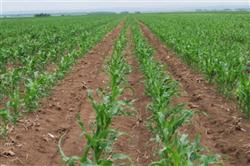
Can glyphosate be used to control weeds in corn fields?
Can glyphosate be used to control weeds in corn fields? Please explain: glyphosate should be used with caution for weed control in corn fields, for the following reasons: First, users lack understanding of the properties of glyphosate and cannot clearly distinguish between systemic and contact pesticides. After glyphosate solution is absorbed by corn leaves, it will not only damage the leaves it touches, but the entire plant will...
-
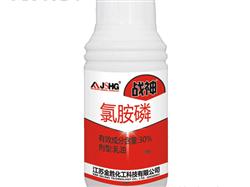
Which pests can chloramidophos control? A detailed explanation of its scope of application
Which pests can chloramidophos control? Please introduce 30% chloramidophos emulsifiable concentrate, a new insecticide variety with independent intellectual property rights, capable of efficiently controlling a variety of pests, mainly the larvae of the rice leaf roller. Such as the striped stem borer, the yellow stem borer, the pink stem borer, the brown planthopper, leafhoppers, the cotton bollworm, the cabbage caterpillar, the beet armyworm, etc., low...
-
Can acetochlor be used for soil-sealing weed control in barley fields?
Can acetochlor be used for soil sealing in barley fields? Please advise: acetochlor wettable powder is a mixed formulation of thifensulfuron-methyl and acetochlor, and both of these active ingredients can be applied in barley fields. You can refer to the application method for wheat fields in the product instructions, spraying after sowing and before emergence to carry out soil-sealing treatment, or you can...
-
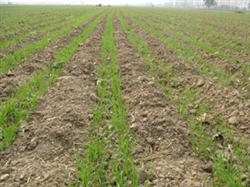
Can acetochlor be used for weed control during the wheat seedling stage?
Can acetochlor be used on wheat seedlings? Please advise: acetochlor must not be applied to wheat seedlings. Wheat is fairly sensitive to acetochlor from just emerging until before the 2-leaf stage, and applying the herbicide at this time easily causes herbicide injury. In wheat fields, acetochlor should be applied after sowing but before emergence, or after the wheat reaches the 2-leaf 1-heart stage. After application, keeping the field moist gives a better sealing effect; note that the soil...
-
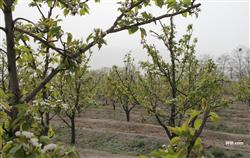
Can glyphosate be used to control weeds in peach, pear, and plum orchards?
Can glyphosate be used to control weeds in peach, pear, and plum orchards? Please advise and explain. Glyphosate is a low-toxicity, broad-spectrum, non-selective herbicide, widely used for weed control in orchards of cash crops such as fruit orchards, tea plantations, and mulberry plantations, as well as for weed control in no-till fields, along roads, in grassland renovation, and on forest firebreaks, and it has been widely used around the world...
-
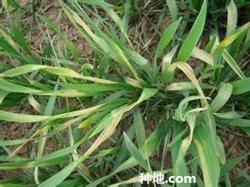
How can herbicide dosage be controlled in a scientific and reasonable way?
What should be done if wheat is damaged by herbicide phytotoxicity? What remedial methods are there? There are many varieties of herbicides for wheat crops, and their physicochemical properties, sites of action, and mechanisms of action differ, so the symptoms of phytotoxicity they cause also differ. Some are manifested inside the plant, some externally, some in the aboveground parts, and some in the underground parts...
-
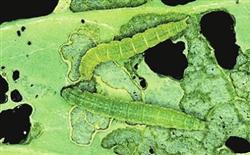
Insect growth regulators can be used for diamondback moth control
The appearance of the diamondback moth seriously affects the growth of crops, so pesticides such as insect growth regulators are chosen to completely eliminate it. First, 10.8% pyriproxyfen emulsifiable concentrate can be sprayed as an 800-1500 times dilution; second, 5% chlorfluazuron emulsifiable concentrate 30-60 ml mixed with 30 jin of water can be sprayed; third, 5% emamectin benzoate water-dispersible granules 5 g mixed with 30 jin of water can be spr...
-
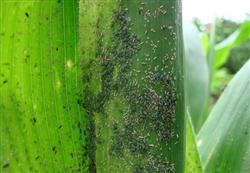
How can aphids in cornfields be controlled effectively?
How to control aphids in cornfields? Please explain the methods. Corn aphids, commonly known as "greasy bugs" or "honey bugs", harm not only corn but also crops such as sorghum and barley. They pierce and suck plant sap. Aphid numbers are very low at the seedling stage, but surge during the ear stage, secreting large amounts of "honeydew", which forms a black mold-like layer on the leaves, affecting photo...
-
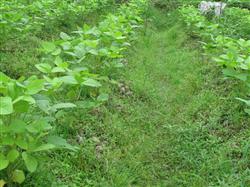
How can weeds be effectively controlled during soybean cultivation?
How do you control weeds when growing soybeans? The main weeds in soybean cultivation include monocotyledonous weeds such as crabgrass, barnyardgrass, goosegrass, lambsquarters, and foxtail; broadleaf weeds include redroot pigweed, eclipta, copperleaf, and velvetleaf. Summer soybeans are usually sown in June, during the hot and rainy season, when weeds emerge aggressively, at high density, grow vigorously, and are diverse in species, easily forming a weed infestation. Generally, weeds begin to emerge 5 days after soybean sowing, and the entire weed emergence period lasts about 60 days, which is extremely unfavorable for high soybean yields. For this reason, accurately mastering chemical weed control techniques is crucial.
-

Which pests can dichlorvos control? Detailed explanation of usage precautions
Dichlorvos: target pests and usage precautions
条件筛选