How can herbicide dosage be controlled in a scientific and reasonable way?
What should be done if wheat is damaged by herbicide phytotoxicity? What remedial methods are there? There are many varieties of herbicides for wheat crops, and their physicochemical properties, sites of action, and mechanisms of action differ, so the symptoms of phytotoxicity they cause also differ. Some are manifested inside the plant, some externally, some in the aboveground parts, and some in the underground parts...
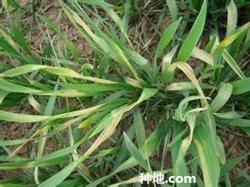 When using herbicides: how should the herbicide dosage be controlled?
Weeds and wheat are both plants, and the selectivity of herbicides is limited. To ensure that the herbicide both kills weeds and does not harm wheat, the herbicide dosage must be strictly controlled. It must neither be increased nor decreased at will, and must be used according to the dosage given in the instructions, while also adapting to local conditions. Soil with high organic matter content and fine soil particles has a large adsorption capacity for herbicides, and the number of soil microorganisms is large and their activity is vigorous, so the chemicals are degraded to a greater extent, and the application rate should be appropriately increased. In contrast, sandy loam soil has larger particles and a smaller adsorption capacity for the chemicals; the chemical molecules are mostly in a free state among the soil particles, have strong activity, and are prone to causing phytotoxicity, so the application rate can be appropriately reduced. Herbicides are relatively stable in alkaline soil and are not easily decomposed, with a long residual effect, and are likely to cause phytotoxicity to subsequent crops. Therefore, in alkaline soil, the application time should be advanced as much as possible, and use should be cautious.
Click to get a large amount of herbicide use technology
Click to get a large amount of pesticide application technology