-

How to classify and manage cotton during the flowering and boll stage? Jinnan District Agriculture and Forestry Bureau reminds cotton farmers
The period from when 50% of cotton plants flower to when 50% of cotton plants mature and open their bolls is called the flowering and boll stage. Cotton in Tianjin generally enters the flowering and boll stage in early July and finishes at the end of August. This period is the key period that determines cotton yield, and cotton farmers are urged to pay attention to the growth trend of cotton in the field and adjust technical management measures at any time. According to Gao Qingming and others of the Cotton Research Institute of the Hebei Academy of Agriculture and Forestry Sciences, based on morphological indicators such as cotton plant growth during the flowering and boll stage, cotton fields are classified into 4 grades: excessive vegetative growth, robust, ordinary, and weak. The main indicators of the 4 grades are as follows: ①
-
How to manage cotton during the flowering and boll-setting stage? Jinnan District Agriculture and Forestry Bureau reminds cotton farmers to master the techniques
The flowering and boll-setting stage of cotton in Tianjin generally begins in early July and ends at the end of August, lasting 55 days. According to surveys, most of the cotton fields in our district have entered the flowering and boll-setting stage. Field management during the flowering and boll-setting stage is very important. This period is when cotton grows and develops most vigorously, and it is a period of intricate and complex contradictions among vegetative growth and reproductive growth, individuals and populations, and the cotton crop and the environment, so it is the period that determines yield. Cotton field management during this period should focus on doing the following key tasks well: 1. Increase potassium fertilizer application. Increasing
-
What level does a cotton single boll weight of 8 grams represent?
1. Large bolls: The average single boll weight of this variety is 8 grams, with the largest single boll weighing 9.2 grams. Lint percentage is 41.5%, and seed index is 11.1 grams. 2. Good emergence: The seeding rate for this variety is 400-500 grams per mu, with strong germination vigor, good emergence, and uniform, vigorous seedlings. 3. Strong growth: The growth period of this variety is about 128 days, with medium-sized leaves and good ventilation and light penetration. Plant height is 105 cm, the cotton plants are clean, and the fruiting branches have strong outward extension ability. Cotton bolls are evenly distributed on the lower, middle, and upper parts of the plant and on the inner and outer periphery, and boll weight is consistent. 4. Good resistance: This variety is highly resistant to cotton
-
How to reduce cotton square and boll shedding? Proper management is key
There are three main causes of cotton square and boll shedding: First, physiological shedding, which is also the main cause of shedding. Due to the interaction between meteorological conditions and nutritional conditions, the metabolism within the cotton plant is disrupted, nutrition is insufficient, and physiological shedding of squares and bolls occurs. Second, unfavorable meteorological conditions aggravate disease and pest damage. Pests such as cotton aphids and red spider mites bite and feed on leaves, reducing the photosynthetic capacity of the leaves, causing nutritional deficiency in squares and bolls and increasing shedding. Excessive spraying, overly high pesticide concentration, and too-short spraying intervals and other pesticide damage will also increase
-
Introduction to the Bollgard 410B Cotton Variety
Variety source: Bollgard 410B is another new transgenic insect-resistant cotton variety developed by the American companies Monsanto and Delta and Pine Land using modern high-tech biotechnology. Approval status: In 2001 it received approval from the Ministry of Agriculture for commercial production, and in the same year it passed variety approval in Anhui Province. It is currently one of the key new transgenic insect-resistant cotton varieties promoted in Anhui Province. Characteristics and traits: Bollgard 410B is a medium-early maturing variety, with a growth period of about 123 days, a plant height of about 105 cm, upward-angled fruiting branches, shorter fruiting nodes, a clean and compact plant type, and very strong boll-setting ability.
-
Application Technology of Mepiquat Chloride for the New Large-Boll Cotton Variety Shuofeng No. 9
Characteristics and traits: This variety was developed from the original Shuofeng No. 9 through purification and rejuvenation selection. The plant is tall, with thick and hard stems, a loose plant type, and relatively long fruiting branches with few hairs. The leaves are large and dark green, the bolls are large, long-oval in shape. It emerges well, with uniform seedlings, vigorous growth in the early and mid stages, and growth stabilizing in the late stage, with good uniformity. The first fruiting branch node is low, boll setting is good, boll opening is full and smooth, easy to pick, the pre-frost boll rate is 91.0%, fiber length is 31.1 mm, fiber quality is excellent, making it a high-quality cotton variety. The growth period is 125 days, plant height 110-130 cm. Comprehensive traits are stable, resistant to
-
Applying boll fertilizer to cotton pays off, and this investment account must be calculated clearly
This year, due to early drought followed by flooding and the recent hot, high temperatures, cotton development progress has been very uneven. In particular, the number of bolls set on cotton varies greatly. In cotton fields planted earlier and managed better, the average number of early summer bolls per cotton plant has already reached 8 to 10, and for high-yield cultivation farmers, the early summer bolls on cotton can be as many as more than 20, while in general fields the early summer bolls on cotton are only 4 to 6. From the perspective of cotton's growth process, field cotton has now generally entered the boll-setting stage. The period when cotton concentrates on setting bolls is precisely the period of greatest fertilizer demand. From the stages divided by cotton boll setting,
-
Observe the growth of cotton bolls and apply the cotton flowering and boll fertilizer precisely
In the middle and late stages of cotton growth, flowering and boll fertilizer should be applied accurately according to changes in bolls and leaf color. Generally, where soil fertility is good, seedling and bud fertilizer is plentiful, growth during the bud and flowering stage is vigorous, leaves are large, leaf color is deep, internodes are sparse, bracts do not tightly enclose the flower buds, few bolls are set, and leaf color does not fade at early flowering, flowering and boll fertilizer in such cotton fields should not be applied early; it should be postponed until bolls increase and leaf color turns lighter. Conversely, where soil fertility is poor, seedling and bud fertilizer is applied in small amounts, growth during the bud and flowering stage is weak, leaves are small, leaf color is light, internodes are short and thin, bract color is light, flower buds are few, and leaf color is pale yellow at early flowering, 5-8 kg of urea per mu can be applied as a relay fertilizer
-
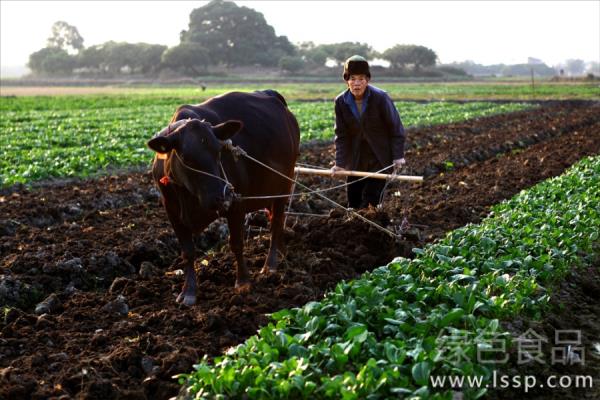
Management methods for eliminating overwintering cotton bollworm through winter plowing of cotton fields
Methods for managing winter plowing of cotton fields to eliminate overwintering cotton bollworm
-

条件筛选