-

Occurrence of wheat and barley sheath blight and control recommendations
According to surveys by the forecasting stations of each county (city, district), wheat and barley sheath blight has now occurred widely and will enter the peak damage stage. All localities must seize the appropriate timing and promptly organize the broad masses of farmers to carry out control. I. Occurrence situation and trend analysis The characteristics of wheat and barley sheath blight occurrence this year: First, the occurrence period is normal. Due to the low temperatures last winter and this spring, wheat seedlings grew weakly, which was unfavorable for the occurrence of wheat and barley sheath blight. The earliest detection in the whole city was in Xiangshui in early mid-February, and large areas were detected in late February and early March. Second, the general incidence rate and
-
How to prevent and control southern blight in lilies? A full analysis of the key methods
Symptoms: The whole plant wilts, white mycelial strands or rapeseed-like tan-colored small sclerotia wrap around the stem base, and the affected part turns brown and rots. Large amounts of white mycelial strands and tan-colored sclerotia are visible on the soil surface. Pathogen: Sclerotium rolfsii Sacc., called the sclerotium-forming fungus, belongs to the Deuteromycotina fungi. The hyphae are white and silky, spreading in a fan-like or radial pattern, then gathering into mycelial strands or tangling into sclerotia. The sclerotia resemble rapeseeds, initially white to yellowish-white, later turning tan, round, with a smooth surface. Transmission routes: (1) The pathogen
-
Symptoms and Control Methods of Botrytis Blight in Primroses
Botrytis blight is a common and widespread disease of primroses. [Pathogen] Botrytis cinerea Pers. et Fr. [Symptoms] Water-soaked spots appear at leaf tips or leaf margins, then gradually enlarge, turn brown to black, and rot; stems develop irregular brown lesions and are prone to soft rot; flowers turn brown, rot, and drop off. In the late stage of the disease, a grayish-brown mold layer forms on the affected parts. [Disease cycle] The pathogen overwinters in diseased plant residues or in the soil. Conidia are spread by wind and rain
-
Symptom Identification and Control Methods for Southern Blight in Impatiens
Southern blight in impatiens attacks the roots, stems and fruits of plants, causing damping-off, root rot, basal rot and fruit rot. This disease can also harm plants such as iris, orchids, peonies, peaches and plums. Symptoms: In the early stage of the disease, a brownish-black wet rot appears at the base of infected plants, later followed by white silky mycelium and the formation of sclerotia the size of rapeseeds. In the late stage of the disease, severely infected plants collapse with damping-off. Pathogen: The pathogen is Sclerotium rolfsii Sacc., belonging to the Deuteromycotina
-
How to prevent and control garlic leaf blight? These methods you need to master
Control measures for garlic leaf blight: 1) Promptly remove damaged leaves and flower stalks; 2) Strengthen field management, plant at a reasonable density, drain promptly after rain, and improve the host's disease resistance; 3) Starting at the early stage of the disease, spray 75% chlorothalonil wettable powder at 600 times dilution, or 50% iprodione wettable powder at 1500 times dilution, 64% oxadixyl-mancozeb wettable powder at 500 times dilution, 50% copper sulfate-ammonium salt wettable powder at 500 times dilution, 60% fosetyl-aluminum wettable powder at 500 times dilution, 14% copper ammonia complex aqueous solution at 300 times dilution, 1:1
-
What are the control techniques for azalea leaf blight
1. Main symptoms: It occurs on the leaves, mostly at the leaf tips. In the early stage, the lesions are chlorotic yellow spots, and the lesions spread from the edges inward, taking an irregular shape; in the later stage, the lesions are yellowish-brown, and in severe cases the diseased leaves dry up. 2. Causes of the disease: It is a fungal disease. The pathogen survives on diseased plant debris and spreads through watering, insects, human activities, etc. In indoor environments, it can occur year-round, and high temperature, dryness, and poor ventilation easily trigger the disease. Plants that are weak in growth or affected by pests (especially aphids, scale insects, and whiteflies)
-
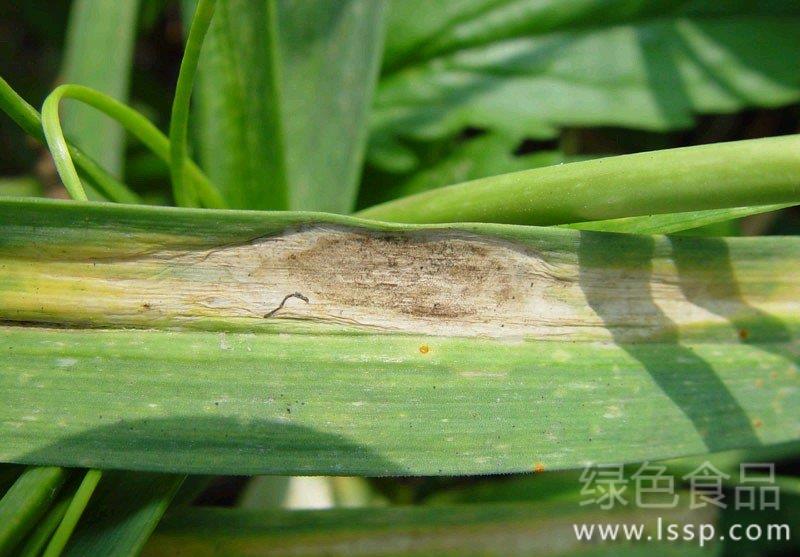
Garlic leaves turning from green to brown and yellow: master the control methods for garlic leaf blight
Garlic leaves turning from green to brown and yellow: control methods for garlic leaf blight
-
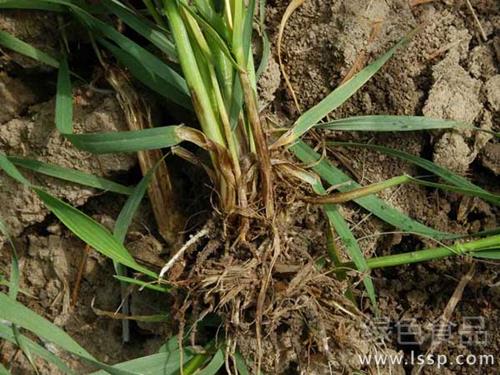
How to prevent and control wheat root rot? Identification of symptoms of root rot, stem blight and yellow leaves, and medication
How to prevent and control wheat root rot when roots rot, stems wither and leaves turn yellow
-
Identification and Control Methods of Cotton Stem Blight
Symptoms The disease occurs more severely in the Northeast cotton region, the Yellow River basin and the Yangtze River basin, and the cotton regions along the rivers and coast. Cotton can be affected throughout the entire growth period, with the seedling stage and bud stage suffering the most severe damage. When cotyledons and true leaves are infected, small round spots initially appear with purplish-red edges and grayish-white centers, after which the lesions expand or merge into irregular-shaped lesions. Some lesions develop concentric rings in the center, scattered with small black granules, which are the pathogen's pycnidia. The diseased parts often break apart and fall off. Under high humidity, water-soaked lesions appear on young tender leaves, then spread rapidly as if scalded by boiling water,
-
Symptom Identification and Control Methods for Ginger Leaf Blight
[Pathogen scientific name] Septoria zingiberis [Host crop] Ginger. [Disease diagnosis] It affects the leaves. When the leaves become diseased, small water-soaked spots appear at first, and after gradually expanding, the lesions become nearly fusiform, light brown, with a grayish-white center; later the lesions extend upward and downward into long streaks. Many small black dots are scattered on the lesions. In severe cases, the lesions may split longitudinally, and the leaves die. The pathogenic fungus is Septoria zingiberis. The pycnidia are superficial or borne on both sides of the leaf, spherical or subspherical, dark brown, and contain
条件筛选