How to prevent and control wheat root rot? Identification of symptoms of root rot, stem blight and yellow leaves, and medication
The symptoms of wheat root rot are similar to those of root drowning. After wheat roots are infected by pathogens, the disease first spreads from the fibrous roots to the branch roots and then to the main root, and the color turns dark brown. After the disease occurs, the roots slowly rot. In the early stage, there are no obvious symptoms on the stems above ground, but over time, without fertilizer and water supplied by the roots, the stems will wither, the branches and leaves will turn yellow, and eventually the plant will die.
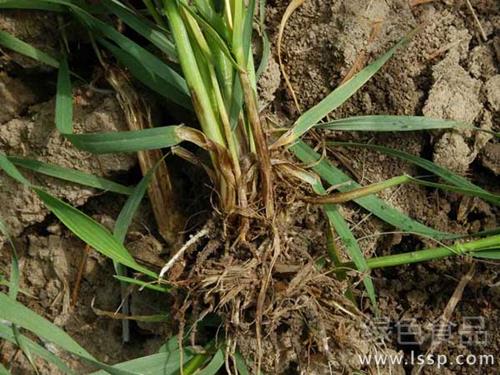
Wheat root rot
1. Causes of wheat root rot:
Continuous cropping of wheat for many years, relatively low soil organic matter, plus unfavorable weather; or when planting wheat, hilling soil too high, or when fertilizing in furrows on both sides or weeding, damaging the root system; or because during rain or irrigation, the water volume is too large and drainage is not timely; or insufficient light, low temperature and high humidity, soil that is too clayey, soil clodding, and poor ventilation; when roots are injured or broken, they are easily invaded by pathogens. It occurs frequently in the rainy season.
2. Preventing and controlling wheat root rot:
1. Agricultural control methods:
a. Because waterlogging and untimely drainage can cause this disease, plant in a relatively flat place. b. Do a good job of drainage, drain standing water, especially in the rainy season. c. Cultivate in time to increase soil aeration. d. Apply decomposed organic fertilizer, potassium fertilizer, and phosphorus fertilizer to make wheat "strong" so as to enhance disease resistance.
2. Pesticide control:
① Seed disinfection. Dosage for wheat seed disinfection: seeds can be treated with a 600-800 times dilution of hymexazol or an 800-1000 times dilution of metalaxyl-hymexazol. ② Before planting, disinfect the soil. A 1200-1500 times dilution of hymexazol or a 1500-2000 times dilution of metalaxyl-hymexazol can be used. ③ After the disease occurs, drench the roots. A 1200-1500 times dilution of hymexazol or a 1500-2000 times dilution of metalaxyl-hymexazol.