-
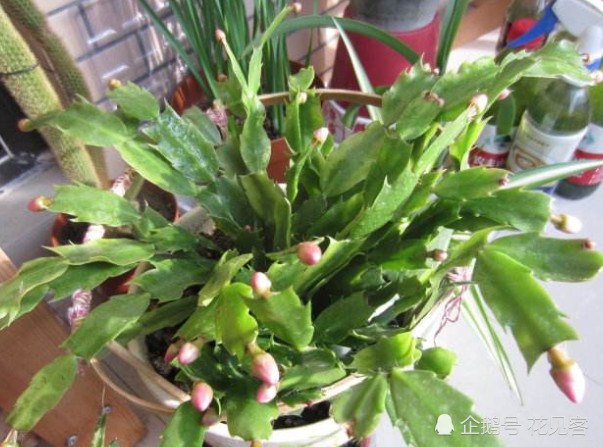
Water the Christmas cactus with this kind of "garbage water" in early autumn, and its stems and leaves will be plump and emerald green, with flowers blooming all over the branches.
The Christmas cactus (Schlumbergera) is an epiphytic succulent plant, shrub-like, with drooping stems, many branches and no spines, bright green or slightly purple, with a truncated apex, and flowers borne singly at the tips of the branches, bright and beautiful, deeply loved by many flower lovers. After early autumn, Christmas cacti begin to...
-
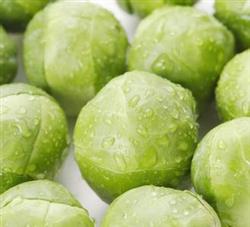
Cabbage Has High Nutritional Value: 10 Benefits of Eating It Regularly
You are certainly familiar with cabbage-family vegetables. But if asked what health-preserving benefits cabbage has, you might not know too much. Below, the editor of AiMeiWang will take you through the nutritional and health value of cabbage. 1. Cabbage is a type of vegetable that strengthens the body. Cabbage is a large family, with...
-
4 Key Technical Points for Raising Spring Cabbage Seedlings in Winter
Spring cabbage is a type of vegetable crop with a relatively large planting area in the vegetable-producing regions of the central and southern parts of our province. Spring cabbage production has the characteristics of low input, saving labor and effort, and high yield. Right now, the golden season for raising early spring cabbage seedlings has arrived again. Below, the key technical points for raising spring cabbage seedlings are introduced for everyone's reference: 1. Suitable...
-
How to grow strong seedlings of spring cabbage? Detailed explanation of technical management measures
Currently it is the seedling-raising period for spring cabbage, and the following technical key points should be grasped in production. Select good varieties: choose selected 8398, Chungang No. 2, Chungang No. 3 and other varieties with strong cold resistance, disease resistance and strong winter hardiness. Prepare the seedbed: choose a field with fertile soil that has not grown cruciferous vegetables in the previous year as the seedbed, ...
-
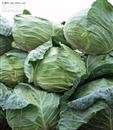
How to fertilize spring cabbage? Mastering its nutritional characteristics is key
The early-maturing cabbage grown in Changde is deeply favored by consumers for its firm heads, high proportion of clean edible leaves, and high quality and pollution-free nature, with a yield of 4000--4500 kg per mu and an economic benefit of more than 2000 yuan. Its cultivation techniques are described as follows: 1. Sowing and raising seedlings 1.1 Seedling raising time. In order to harvest early, generally in December...
-
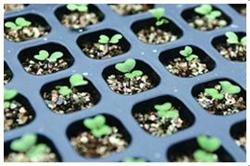
Detailed Explanation of Key Points for Spring Cabbage Cultivation Techniques
Cabbage has the characteristics of low input, labor-saving, effort-saving, and high yield, and is widely cultivated in the plain areas of our province. Dingzhou City, Baoding, has a perennial planting area of more than 30,000 mu of early spring cold shed cabbage and open-field cabbage. Right now, the season for raising early spring cabbage seedlings has arrived again. To help everyone do a good job in seedling raising and lay the foundation for a bumper harvest this spring...
-

Chinese cabbage in autumn is prone to cabbage worms, so how can you control them more effectively?
Summary: Autumn Chinese cabbage is prone to cabbage worms, and these methods leave lower pesticide residues. Chinese cabbage is one of the vegetables in greatest demand in winter, especially in the northern vegetable market. Basically, one family can eat two or three bags of Chinese cabbage over a winter. Pickled Chinese cabbage, stewed Chinese cabbage, vinegar-tossed Chinese cabbage, and so on - Chinese cabbage is truly an indispensable good vegetable on the winter dining table. But the frequent outbreak of cabbage worms also really gives vegetable growers a headache. On Chinese cabbage that had been growing well, once cabbage worms crawl over the leaves, the leaves are either covered with holes or covered with insect droppings. This not only affects appearance, but more importantly affects yield.
-
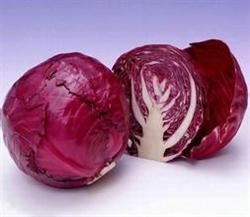
Key Points of Pest and Disease Control Techniques for Spring-Planted Purple Cabbage
Pest and disease control: As long as management is proper, purple cabbage generally has few diseases, so it is easy to produce pollution-free products that can be eaten raw. Purple cabbage may only suffer from seedling-stage diseases such as damping-off and downy mildew when humidity is high during the seedling stage, which can be controlled with pesticides such as Yunsheng, Dasheng, carbendazim, Xinluling, and Anke. Pests...
-
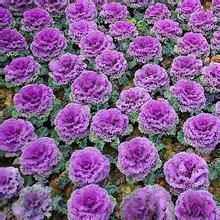
Detailed Explanation of Key Techniques for Spring Purple Cabbage Cultivation
Purple cabbage is a variety of cabbage, grown for its purplish-red heads. It originated along the Mediterranean to North Sea coasts of Europe, prefers cool conditions and is fairly cold-tolerant, and can be cultivated both in the open field and under protected conditions. It has the characteristics of firm heads, bright color, strong adaptability, high yield and good quality. In the Nanjing area, spring purple cabbage cultivation is sown from mid-December...
-
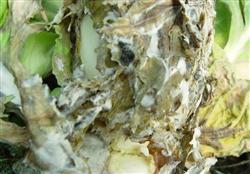
What are the control methods for downy blight (Phytophthora rot) in cabbage and cauliflower?
This spring has seen a lot of low-temperature and rainy weather, making cabbage prone to sclerotinia rot, so check and treat it early. When sclerotinia rot occurs at the cabbage seedling stage, water-soaked light brown lesions appear on the leaves with indistinct edges, and the diseased tissue soft-rots, causing damping-off. When plants are affected during the head-forming stage, water-soaked sunken lesions form on the leaves near the ground and on the root crown, initially appearing...
条件筛选