-

Methods and Technical Key Points for Controlling the White-Backed Planthopper in Rice
Damage symptoms: Adults and nymphs gather in colonies at the base of rice plants and pierce and suck the sap, causing the leaf tips of rice leaves to lose green and turn yellow, and in severe cases the whole plant withers and dies. Damage during the heading stage can also cause difficulty in heading, blighted panicles, or browning of the panicles, along with many empty grains and other damage symptoms. Morphological characteristics: Adults have two forms, the long-winged type and the short-winged type. The long-winged adult is 4-5 mm long, grayish yellow, with a rather narrow vertex projecting in front of the compound eyes; the face has 3 raised longitudinal ridges, with the ridges light in color and the grooves dark, black and white sharply distinct; in the center of the scutellum on the thoracic dorsum grows a pentagonal white or bluish-white spot; in females the
-
What kind of snake is the tiger keelback? An introduction to its physical features and habits
Tiger keelback (Rhabdophis tigrinus), with a total body length of nearly 1000 mm. The dorsal surface of the body is emerald green or grass green; on both sides of the front part of the body there are thick black and orange-red patches arranged alternately, and on both sides of the nape there is a pair of thick black "eight"-shaped markings. Distribution: widely distributed across the country; found in Tianjin, Hebei, Shanxi, Inner Mongolia, Liaoning, Jilin, Heilongjiang, Jiangsu, Zhejiang, Anhui, Fujian, Taiwan, Jiangxi, Shandong, Henan, Hunan, Hubei, Guangxi, Sichuan, Guizhou, Yunnan, Tibet, Shaanxi, Gansu, Qinghai, Ningxia and other places
-
What are the control methods for the white-backed planthopper on rice?
Scientific name Sogatella furcifera (Horvath), belonging to the order Homoptera, family Delphacidae. Distributed in the water bamboo and rice-growing areas of China. Hosts include rice, water bamboo, corn, barley, wheat, sugarcane, sorghum, barnyardgrass, bluegrass, and others. Damage characteristics are the same as those of the brown planthopper. Morphological features: macropterous male body length 3.2-3.8 mm, light yellow, with dark brown spots. Vertex projecting forward; on the outer side of the lateral carinae of the pronotum and mesonotum, behind the compound eyes, there is 1 crescent-shaped dark brown spot; the lateral area of the mesonotum is dark brown
-
How to prevent almond winter dieback? A detailed guide to practical methods
In northern regions, especially in areas with strong spring winds, winter dieback is prone to occur. The root system of almonds has no natural dormancy; although some cultivars can tolerate low temperatures of -18°C, winter dieback can also occur in windy, dry weather below -10°C. When transpiration water loss from branches reduces their water content to 35%, winter dieback occurs. Sometimes it also occurs on 2- to 3-year-old branches, causing serious effects on tree growth and fruiting. The main technical measures to prevent winter dieback are as follows: 1. Establish shelterbelts to create a good growing environment. Establishing shelterbelts,
-
Which varieties can be used to control the white-backed planthopper in rice?
To control the white-backed planthopper in rice, the varieties that can be used are: (1) Buprofezin. The recommended dosage is 7.5-12.5 grams of active ingredient per mu. The key application technique is: spray at the early outbreak stage of the brown planthopper, and it is best to maintain a water layer in the field when applying. (2) Imidacloprid. The recommended dosage is 1-2 grams of active ingredient per mu. The key application technique is: spray at the early outbreak stage of the brown planthopper.
-
How to nurse weak autumn ducks back to health? Scientific methods are key
In autumn, temperatures gradually drop, the temperature difference between day and night is large, and daylight hours become shorter. Autumn ducks hatched the previous year, after laying eggs for most of the year, are already very fatigued; if there is the slightest carelessness in management, they will stop laying and molt. Laying ducks hatched in early spring begin laying from late September to mid-October. At this time the weather gradually turns cooler, and the temperature difference between day and night is too great. Especially for free-range laying ducks, the food they can find in late autumn is scarce, which causes nutritional deficiency, affects egg production, and makes newly laying ducks "drop eggs." Therefore, rural laying duck farming has
-
Detailed Explanation of the Technique for Fruiting on Both the Front and Back Sides of Oyster Mushroom Beds
Using indoor frame-style cultivation of oyster mushrooms, fruiting simultaneously on both the front and back sides of the mushroom bed can, without increasing the substrate per unit area and without changing the substrate formula or the spawn sowing rate, produce an average of 16 kg of mushrooms per square meter of mushroom bed, and bring fruiting about 7 days earlier. 1. Setting up the mushroom bed frame structure: Build a frame indoors using materials such as moso bamboo, and fix the mushroom bed baseboard onto the frame. Generally the frame is 2 m high, with three tiers of mushroom beds, and the distance between tiers is 60-65 cm; beds managed from both sides are 110 cm wide, and beds managed from one side are 55 cm wide; the bed baseboard is made by nailing thin wooden boards, with 1.5-2 cm between each wooden strip. 2. Sowing: Select the Florida strain, which has a relatively broad suitable temperature range. Use the "layer sowing method": first lay a layer of plastic film on the mushroom bed baseboard, with a width 2.5 times the width of the bed baseboard, then spread a layer of substrate about 3 cm thick on the plastic film, then spread a layer of spawn, with the spawn layer no more than 1 cm thick; after spreading 4 layers of substrate and 3 layers of spawn in this way, press firmly, then cover the surface of the culture medium with a layer of water-soaked wet newspaper, and finally wrap the entire culture medium tightly with plastic film. 3. Fruiting management: About 60 days after inoculation, when the mycelium has basically finished colonizing the substrate, use a blade to make intermittent longitudinal cuts in the plastic film at the gaps on the back side of the mushroom bed baseboard. Each cut segment should be no longer than 15 cm, and both the horizontal and vertical spacing between cuts should be greater than 15 cm. Thereafter, each time the mushroom bed is watered, use a sprayer to spray an appropriate amount of water onto the cuts on the back side of the bed; other management is the same as conventional. After the first flush of mushrooms on the back side of the bed is harvested, the uncut plastic film on the back side of the bed can be slit open again with a knife. During the entire cultivation process, 2-3 flushes of oyster mushrooms can be harvested from the back side of the bed, with yield close to that of the front side of the bed.
-
How do you pinch back honeysuckle (Japanese honeysuckle) so it blooms more?
The method for pinching back honeysuckle is: leave 2 nodes on the main stem of the mother plant, about 15 cm above the pot surface, and cut off the branches above that point, so that the main stem sprouts more new shoots. When the first branches grow to about 10 cm, choose the thick, vigorously growing branches, leave 3 nodes on each branch, and carry out a second pinching. After the second pinching, the new branches produce new shoots again; when the new shoots reach a certain length, pinch off all their growing tips, and at the same time apply a top dressing of once of a thin liquid fertilizer based mainly on phosphorus and potassium, to promote robust growth of all the branches
-
Site preparation and planting measures for mixed forests of strip mulberry and black locust in converting farmland back to forest on the plains
Black locust uses pit-shaped site preparation, with a specification of 80 cm by 80 cm by 80 cm, a plant-to-row spacing of 3 m by 5 m, and a planting density of 45 trees per 667 sq m; plant in spring and autumn, apply sufficient base fertilizer before planting, and water after planting; strip mulberry is planted between the black locust, using pit-shaped site preparation, and planted in spring, the rainy season, or autumn.
-
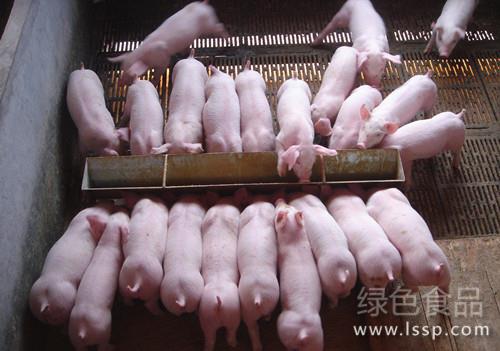
A pig's rectum has prolapsed from the anus and cannot be pushed back in; how should prolapse of the anus be prevented and treated?
How to prevent and treat prolapse of the anus in pigs when the rectum has prolapsed from the anus and cannot be pushed back
条件筛选