-

Detailed Explanation of the Technique for Fruiting on Both the Front and Back Sides of Oyster Mushroom Beds
Using indoor frame-style cultivation of oyster mushrooms, fruiting simultaneously on both the front and back sides of the mushroom bed can, without increasing the substrate per unit area and without changing the substrate formula or the spawn sowing rate, produce an average of 16 kg of mushrooms per square meter of mushroom bed, and bring fruiting about 7 days earlier. 1. Setting up the mushroom bed frame structure: Build a frame indoors using materials such as moso bamboo, and fix the mushroom bed baseboard onto the frame. Generally the frame is 2 m high, with three tiers of mushroom beds, and the distance between tiers is 60-65 cm; beds managed from both sides are 110 cm wide, and beds managed from one side are 55 cm wide; the bed baseboard is made by nailing thin wooden boards, with 1.5-2 cm between each wooden strip. 2. Sowing: Select the Florida strain, which has a relatively broad suitable temperature range. Use the "layer sowing method": first lay a layer of plastic film on the mushroom bed baseboard, with a width 2.5 times the width of the bed baseboard, then spread a layer of substrate about 3 cm thick on the plastic film, then spread a layer of spawn, with the spawn layer no more than 1 cm thick; after spreading 4 layers of substrate and 3 layers of spawn in this way, press firmly, then cover the surface of the culture medium with a layer of water-soaked wet newspaper, and finally wrap the entire culture medium tightly with plastic film. 3. Fruiting management: About 60 days after inoculation, when the mycelium has basically finished colonizing the substrate, use a blade to make intermittent longitudinal cuts in the plastic film at the gaps on the back side of the mushroom bed baseboard. Each cut segment should be no longer than 15 cm, and both the horizontal and vertical spacing between cuts should be greater than 15 cm. Thereafter, each time the mushroom bed is watered, use a sprayer to spray an appropriate amount of water onto the cuts on the back side of the bed; other management is the same as conventional. After the first flush of mushrooms on the back side of the bed is harvested, the uncut plastic film on the back side of the bed can be slit open again with a knife. During the entire cultivation process, 2-3 flushes of oyster mushrooms can be harvested from the back side of the bed, with yield close to that of the front side of the bed.
-
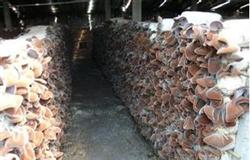
Detailed Explanation of Key Points for Cultivating Yellow-Back Wood Ear Mushroom (Auricularia polytricha) on Rice Straw
1 Rice straw softening treatment. The quality of rice straw treatment is the key to the success or failure of cultivating yellow-back wood ear mushroom and to achieving high yields. Rice straw is a loose material that easily accumulates water but is difficult to shape, and its epidermis in particular has a waxy layer that can hinder mycelial colonization of the substrate. Through experimentation, we have developed 3 methods for softening rice straw...
-
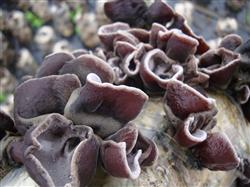
Detailed Explanation of Earless-Base Cultivation Techniques for Yellow-Back Wood Ear
Yellow-back wood ear (Auricularia auricula-judae) is a popular edible mushroom, characterized by ease of cultivation, strong disease resistance, high economic yield and a short production cycle. Annual cultivation nationwide has remained stable at around 500 million bags. As cultivation scale expands, not only do yields vary widely, but quality differences are also great. The author, in the main production areas of yellow-back wood ear in Sichuan Province...
-
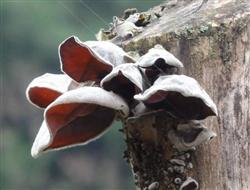
How to grow white-backed wood ear? A detailed guide to black wood ear cultivation methods
How to grow white-backed wood ear? An introduction to the environmental requirements of white-backed wood ear (1) Temperature. The suitable temperature range for mycelial growth is 8-37°C, with the optimum at 25-28°C; the suitable temperature range for fruiting body growth and development is 13-30°C, with the optimum at 18-22°C. Above 26°C the ear pieces grow quickly but are thin and turn red, resulting in poor product quality...
条件筛选