-

Prevention and Control Methods and Technical Key Points for Rotting Stomach Disease in Sea Cucumber Aquaculture
This disease mostly occurs in the late auricularia larval stage, and is more likely to break out during the high-temperature period from June to July each year and when larval rearing density is high. The disease has been found in both Shandong and Liaoning provinces, and its incidence rate has shown a trend of increasing year by year. The main symptoms of disease and death are: the larval stomach wall thickens
-
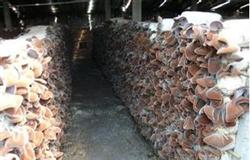
Detailed Explanation of Key Points for Cultivating Yellow-Back Wood Ear Mushroom (Auricularia polytricha) on Rice Straw
1 Rice straw softening treatment. The quality of rice straw treatment is the key to the success or failure of cultivating yellow-back wood ear mushroom and to achieving high yields. Rice straw is a loose material that easily accumulates water but is difficult to shape, and its epidermis in particular has a waxy layer that can hinder mycelial colonization of the substrate. Through experimentation, we have developed 3 methods for softening rice straw...
-
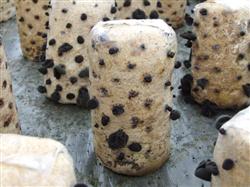
What are the key management points during the fruiting body stage of wood ear mushroom (Auricularia polytricha)?
What should be paid attention to during the fruiting body stage of wood ear mushroom (Auricularia polytricha)? Please give guidance. The fruiting body stage of wood ear mushroom occurs from May to October each year. To produce high-quality, high-yield wood ear mushroom, scientific management methods are very important. The key techniques for managing the fruiting body stage of wood ear mushroom are introduced below: 1. Temperature control. The temperature range for ear growth is...
-
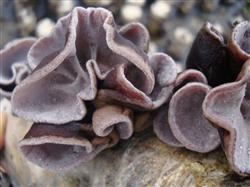
Cultivation Methods and Technical Key Points for Oversummering Auricularia polytricha
How to cultivate oversummering Auricularia polytricha? Please give guidance. For substitute-material cultivation of Auricularia polytricha and Auricularia maxima, there are two types: spring cultivation and autumn cultivation, and in most regions it is spring cultivation. However, in spring cultivation, the early stage generally has low temperatures, making mycelial growth difficult; in the later stage, the fruiting temperature is high, resulting in many malformed fruiting bodies. To solve this problem, soil-covering oversummering cultivation is carried out. Feeding 200...
-
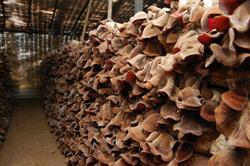
Detailed Explanation of Key Management Techniques for Oversummering Wood Ear Mushroom (Auricularia polytricha)
How to manage oversummering wood ear mushroom (Auricularia polytricha)? Please give an introduction. Oversummering wood ear mushroom (Auricularia polytricha) can be managed by referring to the following methods: 1. Making fungus logs. For soil-covered oversummering cultivation of wood ear mushroom (Auricularia polytricha), the inoculation time for making fungus logs should be postponed by 30-45 days compared with conventional spring cultivation, that is, from late April to early May. At this time, the temperature is 20-30°C, which is just suitable for...
-
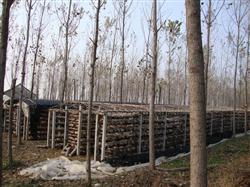
Key Techniques for Summer Cultivation of Black Wood Ear (Auricularia heimuer) in Forest Intercropping
How do you cultivate black wood ear in forest intercropping in summer? Please provide guidance. Under normal conditions, black wood ear grown in forest intercropping should produce 3 flushes. However, at present, after some first-flush wood ears are harvested, the bags become infected with contaminant microorganisms before the second flush even emerges, causing reduced yields or even total crop failure in the second and third flushes, which hurts profits. I. Causes of contaminant microorganism infection during flush transition: (1)...
-
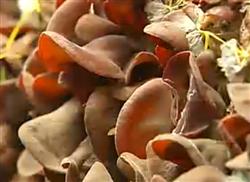
What are the cultivation methods for Auricularia polytricha?
How is Auricularia polytricha cultivated? Please give guidance. Auricularia polytricha is a medium-to-high temperature type fungus with a relatively wide temperature adaptation range; the young fruiting body is cup-shaped, gradually growing into an ear shape, with many ear pieces connected together in a chrysanthemum shape; the diameter is generally 10 cm-20 cm, and after drying it shrinks strongly into a horny texture, hard and brittle...
-
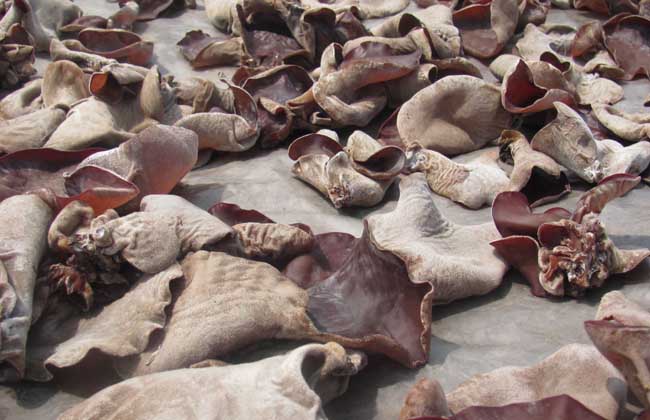
Detailed Explanation of Cultivation Techniques and Management Methods for Auricularia polytricha
Cultivation Techniques for Auricularia polytricha
条件筛选