Detailed Explanation of Cultivation Techniques and Management Methods for Auricularia polytricha
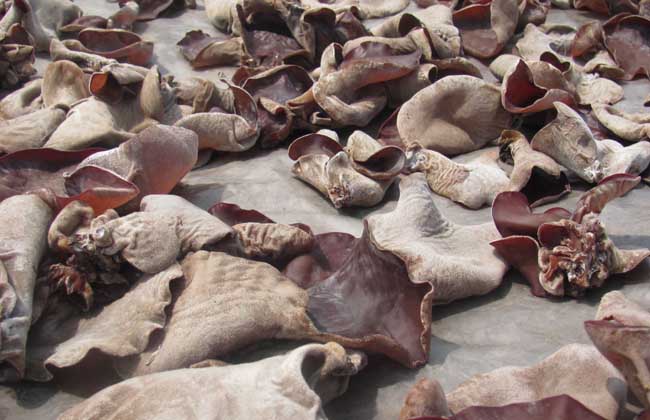
Auricularia polytricha, also known as coarse wood ear, yellow-back wood ear, white-back wood ear, etc., is a fungus of the family Auriculariaceae and genus Auricularia. It is distributed in most parts of China, mostly growing on the trunks or decaying wood of willow, black locust, mulberry and other trees. Its nutritional composition is similar to that of black wood ear (Auricularia heimuer), and it has the effects of clearing the lungs and boosting qi, relieving pain and invigorating blood circulation. Let us take a look at the cultivation techniques for Auricularia polytricha below!
Cultivation Temperature
Auricularia polytricha is a medium-to-high temperature type fungus. The mycelium growth temperature range is 5-37°C, with the suitable temperature being 25-30°C; mycelium stops growing above 40°C. The fruiting body development temperature is 18-34°C, with 22-28°C being most suitable; at this temperature, fruiting bodies develop in large numbers with high yield and good quality. The optimum temperature for basidiospore germination is 22-25°C.
Cultivation Humidity
The mycelium growth of Auricularia polytricha requires a substrate moisture content of about 60% and an air relative humidity below 70%. If the substrate moisture content is too high, water accumulates at the bottom of the substrate, and mycelium grows slowly or stops growing. During the fruiting body development stage, higher air humidity is required; the air relative humidity in the fruiting house should be 85-95%. At this humidity, fruiting bodies develop quickly, with large clusters and thick ear pieces. However, if the air humidity is too high, it is susceptible to contamination by competing microorganisms, causing "flowing ear" (soft rot).
Air Conditions
Auricularia polytricha is an aerobic fungus. During growth and development, if the air in the cultivation room (shed) is fresh and oxygen is sufficient, mycelium grows vigorously, and fruiting bodies are easily formed, elongated and opened. If ventilation is poor and carbon dioxide accumulates excessively, the growth of mycelium and fruiting bodies is inhibited, and it can also lead to contamination by competing microorganisms.
Light Conditions
The mycelium growth stage of Auricularia polytricha generally does not require light. During the differentiation and formation stage of ear primordia, a certain amount of scattered light is needed. The intensity of light has a direct effect on the color and texture of the ear pieces. Under weak light conditions, the ear pieces are pale in color, with short and fine fuzz. Under strong light, the ear pieces are dark in color, with long and coarse fuzz.
pH Level
The optimum pH for mycelium growth of Auricularia polytricha is 6.0-7.5. When pH is below 4.5 or above 8.5, mycelium growth is weak and slow. During fruiting body growth, the suitable pH is 5.2-8.0, with the optimum pH being 6.5-7.0.
Note: Auricularia polytricha is a medium-to-high temperature type wood ear. When cultivated from spring-summer to summer-autumn, it has strong vitality, wide adaptability and strong mold resistance. In addition, Auricularia polytricha has strong alkali tolerance; by appropriately raising the pH of the substrate, the growth of competing microorganisms can be inhibited. Let us continue to look at the cultivation techniques for Auricularia polytricha below.
Cultivation Season
There are many cultivation methods for Auricularia polytricha, but at present most use the sterilized substrate bag cultivation method and the plastic greenhouse wall-style fruiting mode. This production mode has the advantages of saving time, saving labor, being easy to operate and having high utilization rate per unit area. Based on its biological characteristics combined with the features of plastic greenhouses, for spring cultivation, bags are made and colonized in early February, and bags are placed for fruiting at the end of March. For autumn cultivation, avoid the high temperature season; bags are made and colonized in mid-August, and bags are placed for fruiting at the end of September. That is, "cultivate mycelium in winter, produce fruiting bodies in spring. Cultivate mycelium in summer, produce fruiting bodies in autumn." Plastic greenhouse cultivation can be about 15 days earlier or later than open-field cultivation, and is not affected by the rainy season.
Cultivation Formulas
1. Sawdust 60%, cottonseed hull 15%, corn cob 15%, wheat bran 10%, plus lime 1%, gypsum 1%, superphosphate 1%.
2. Corn cob 47%, sawdust 40%, bran 10%, superphosphate 1%, lime 1%, gypsum 1%.
Mixing and Bagging Substrate
1. Material selection: The raw materials for Auricularia polytricha should be dry, clean, free of mold and free of hard debris. Corn cobs should be crushed into particles of 0.5 cm in size, and sawdust should be sieved to remove hard debris. Moldy and deteriorated substrate affects fruiting and yield and should not be used.
2. Mixing: Corn cobs and sawdust have poor water absorption, so they should be pre-wetted 1 day in advance. After all substrate materials are assembled, mix thoroughly and moisten evenly. The substrate moisture content should be 60-65%. Too little water affects the hydrolysis and absorption of nutrients by mycelium, reducing vitality. Too much water inhibits mycelium growth and, in severe cases, causes suffocation and death. The pH value should preferably be 5.0-6.5.
3. Bagging: After mixing, let the substrate sit for 1 day, turning the pile once in between, so that the substrate absorbs water evenly. Do not allow dry material to remain, otherwise sterilization will be incomplete and contamination by competing microorganisms will easily occur. Before bagging, turn the substrate again to make the moisture content more uniform. Cultivation bags generally use 17×42 cm polypropylene bags. Using a bagging machine, each bag is filled with about 1 kg of wet substrate. The filling should be firm but moderate, with consistent tightness from top to bottom.
Sterilization and Inoculation
1. Sterilization: Auricularia polytricha uses atmospheric steam sterilization. When the temperature reaches 100°C, maintain for 12 hours, then stop the fire and let it sit for another 12 hours. When loading into the sterilizer, do not fill too full; leave some space so that steam fills the entire space and sterilization is thorough. Strictly inspect the spawn to ensure there is no contamination by competing microorganisms.
2. Inoculation: Use the open inoculation method. 12 hours in advance, place the selected thick white spawn free of contamination together with inoculation tools into the inoculation tent, and light two packs of Jingmeiling smoke fumigant for sterilization. Before inoculation, lift one side of the inoculation tent 20 cm off the ground to create a 2 m long ventilation opening, and ventilate for 10 minutes to let the chemical odor in the inoculation tent dissipate completely. Workers dress neatly and enter the inoculation tent, wipe their hands with 75% alcohol cotton balls for disinfection. Arrange personnel at a ratio of 1:4. Four people hold the substrate bags upright and open the bag mouths, while one person crushes the cultivation spawn under an alcohol lamp and quickly distributes and inoculates the spawn. After inoculating, immediately gather the bag mouth and press gently so that the spawn and substrate fully combine, then tie the bag mouth. Then turn the other end of the substrate bag upward, open the bag mouth to inoculate and tie the mouth.
Mycelium Run Management
1. The quality of mycelium run is closely related to fruiting potential, stress resistance and wood ear yield. Quicklime powder should be scattered on the ground inside the shed to create an alkaline environment that inhibits the occurrence of competing microorganisms. After inoculation, stack the substrate bags on site into wall-like stacks, generally 10 bags high, with 40 cm between stacks for ventilation and management.
2. The principle for mycelium run temperature is to keep it on the lower side rather than the higher side. Low-temperature mycelium run is preferable; high-temperature mycelium run must be avoided to prevent "mycelium burning." The temperature should preferably be 20-25°C and must not exceed 28°C. During mycelium culture, keep light away as much as possible, so that before the bags are fully colonized, no gelatinized fruiting base spots grow on the bags, which would make them prone to contamination. During mycelium run, inspect frequently, handle gently, prevent bag wall damage, and promptly remove any bags found with contamination to prevent infecting other bags.
3. If rodent damage is found in the shed, promptly scatter quicklime so that a layer of lime covers the surface of the bags, which can stop the damage, or place sticky mouse boards. Turn the stacks about every 10 days to prevent mycelium burning and to prevent too great a difference in mycelium run speed among bags. Generally, the bags are fully colonized in about 40 days, and after another 10 days of mycelium maturation period to let the mycelium fully mature, primordia begin to form; promptly stack into wall-like stacks for fruiting management.
Fruiting Management
1. Before arranging the fruiting bags, first lay straw mats on the ground where the fruiting bags will be placed, with both sides extending 10 cm wider than the fruiting bags, and lay woven bags on the ground to prevent the ear pieces from getting stained with mud and sand, which would reduce quality. After laying the straw mats and woven bags, spray the entire greenhouse with 500-fold carbendazim or kemeiling for disinfection. Leave a 1 m walkway in the middle of the plastic greenhouse from east to west. Place the fruiting bags in a north-south direction in wall-stack style, 10-12 bags high, with row spacing of about 80 cm, for easy management and harvesting.
2. The ground where the fruiting bags are placed should be higher than the walkway to facilitate drainage. Use a sterilized blade to evenly cut 6 to 8 "V"-shaped fruiting openings at both ends of the fruiting bags, with an opening diameter of 1.5-2 cm, and depth such that the mycelium is not damaged. For the first 10 days after opening the bags, spray twice daily to maintain moisture, keep the ground moist, maintain air relative humidity at 80%, provide a temperature difference of about 7°C, and ventilate 1-2 times per day. Under the stimulation of moisture retention, temperature difference, scattered light and ventilation, ear buds begin to form.
3. After ear buds appear, focus on moisture retention, with appropriate ventilation. The ear buds grow rapidly into funnel-shaped or cup-shaped young ears, and water should be sprayed 2-3 times per day. As the ear pieces gradually grow larger, increase the amount of water sprayed. In the later stage of ear piece growth, frequently observe the temperature inside the shed. When it exceeds 30°C, relative humidity is above 95%, and ventilation is poor, "flowing ear phenomenon" is likely to occur; increase ventilation and lower temperature and humidity.
4. When competing microorganisms occur, do not use pesticides. Lime can be applied by brushing, then biological fungicides sprayed, and ventilation increased. The key to fruiting management is controlling the moisture of the ear pieces, requiring "eat small meals more often" - spray frequently and lightly, alternating dry and wet, ensuring the ear pieces are moist without standing water. Generally, spray less when the ear pieces are small and more when the ear pieces are large. Do not spray or spray less on cloudy and rainy days; spray more on sunny and dry days. Generally, when small, 1-2 times per day; when large, 2-3 times per day, ensuring relative humidity of 85-95%. Mainly spray water on the ground or into the air; the spray should preferably be mist-like. Avoid spraying water directly onto the fruiting bags.
Harvesting and Flush Transition
1. The ear pieces can be harvested when mature. Under normal conditions, it generally takes 15-25 days from primordium emergence to harvest. The newly formed fruiting body of Auricularia polytricha is cup-shaped, then gradually expands and grows into an ear shape. Many ear pieces connected together form a chrysanthemum shape, generally 10-20 cm in diameter. Harvest when the ear pieces are fully expanded and the edges begin to shrink.
2. Stop spraying water 1 day before harvest to let the ear pieces dry slightly, so they are less likely to break during picking. Try to choose sunny days for harvesting, which is good for sun-drying. The harvesting method is to pinch the ear base with your hand and pick off the entire cluster of fruiting bodies. If fruiting is uneven, you can pick the large ones and leave the small ones; first harvest the large, mature ones on top, and keep the small ones below to continue growing.
3. During harvest, the ear base must be picked clean to avoid contamination by competing microorganisms or insect damage causing rotten ears, which would affect the growth of the next batch. After harvesting the ear pieces, stop spraying water for 3 days to let the mycelium recover and grow, then carry out fruiting management again. After about 15 days of moisture management, another harvest can be made. Generally, 3-4 consecutive harvests can be made.