What are the asexual propagation methods for saffron crocus?
Saffron crocus is a fairly common plant in people's daily lives and a flower that many plant enthusiasts like to grow. How to propagate saffron crocus is also a question many people care about. In fact, the propagation of saffron crocus depends on the location; different planting sites call for different methods. The specific details of saffron crocus propagation methods are recorded in detail below, so let's read on.
I. How to propagate saffron crocus / different methods for different locations
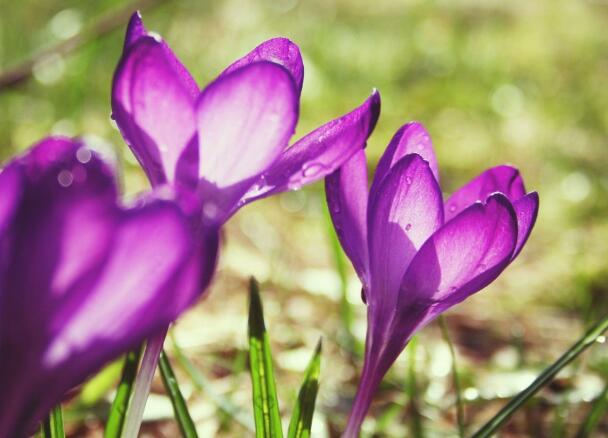
Saffron crocus has no seeds; its propagation mainly relies on corms, and generally you can choose open-field propagation or indoor propagation. These two propagation methods are different. As for the detailed methods, they are recorded below, so let's keep reading. There is one more point to remind everyone: when choosing saffron crocus corms, it is best to choose larger and healthy ones, as this is more beneficial for the growth of your saffron crocus.
II. Propagation methods for saffron crocus / asexual propagation
The propagation method for saffron crocus generally uses asexual propagation. To propagate it better, you first need to understand what asexual propagation is; understanding this will be of great help to the saffron crocus propagation process.
1. Asexual propagation
Asexual propagation can also be called agamogamy; this is a mode of reproduction in which the parent produces offspring individuals without sexual cells. The characteristic of asexual propagation is that only one parent participates in producing the offspring. This asexual uniparental inheritance is the most primitive way.
Asexual propagation does not go through complex embryonic development, nor does recombination of genetic information occur. Therefore, the genetic material of the offspring produced by asexual propagation is exactly the same as that of the parent. This kind of propagation is conducive to the rapid multiplication of individuals in a suitable environment. Asexual propagation produces offspring by means of division and budding.
2. Open-field propagation
This propagation method involves planting first and harvesting flowers later. The propagation period is generally between August and October each year, and the earlier the better. Saffron crocus corms are generally planted in three grades, large, medium and small, which makes management somewhat easier. When planting, first open horizontal planting furrows in the bed, then place the corms with the main bud pointing upward, gently press them into the furrow, cover with soil and water directly, and the next day cover with another 1-2 cm of soil, which can prevent drying, cracking and crusting.
3. Indoor propagation
The differentiation of flower buds and the budding and flowering of saffron crocus are all completed indoors. Around mid-May, after the upper part of the saffron crocus withers, the corms can be dug out and immediately moved indoors, then placed on indoor shelf trays graded by size. During propagation, there is no need to bury them in soil; simply place the corms with the bud tips pointing upward in rows in the tray, leaving a little space between the corms.
Notes: This saffron crocus propagation method has both advantages and disadvantages. The advantages are that the flowering period is relatively concentrated, which makes flower harvesting convenient, saves labor and time, occupies the land for a short time, and has fewer diseases. The disadvantage is that the corms are planted too late, which affects plant growth and is not conducive to corm enlargement.
How to grow saffron crocus? Saffron crocus cultivation techniques
Saffron crocus is also called fanhonghua or xihonghua; its stigmas are a valuable Chinese medicinal material with sedative and expectorant effects, mainly used to treat jaundice, hepatosplenomegaly, irregular menstruation, fever and other conditions. Saffron crocus is widely cultivated throughout China. Below is an introduction to saffron crocus cultivation techniques; the content is for reference only for growers.
I. Plant characteristics
Saffron crocus is also called xihonghua or fanhonghua. Saffron crocus flowers but does not bear fruit, and reproduces asexually through corms. Saffron crocus prefers a mild, cool climate, fears heat, and is relatively cold-tolerant, suitable for growing at -5°C to 25°C. The soil is best if it is fertile sandy land. The corms go dormant in summer and develop roots and sprout leaves in autumn. It blooms in late October. The flowers open during the day and wither at night. In China, the method of propagating corms in the field and harvesting flowers indoors is mostly used; the filaments have high effective ingredients and excellent quality, and saffron crocus can be cultivated in most areas.
II. Preparations before putting saffron crocus on the shelves
1. Room selection
Choose a room facing south, with good ventilation, and spacious and bright.
2. Shelf design
The shelves for saffron crocus are designed to be 1.5-1.8 m long, 1 m wide, and 1.8-2 m high.
3. Disinfection
Use a 500-fold dilution of 25% carbendazim to disinfect the bed surface, bed frames and trays to prevent the occurrence of diseases.
III. Indoor management techniques for saffron crocus
1. Putting on the shelves
In the first year of planting, you need to buy healthy corms weighing 20-30 g each with no mold spots or disease spots. Generally, corms can be used for 8-10 years. Saffron crocus corms increase by about 2 times each year; after the second year, without investing in corms, you can still expand the planting scale and increase planting benefits. The corms can be put on the shelves in mid-to-late August. Before putting them on the shelves, soak the corms in a 500-fold dilution of 25% carbendazim for 20 minutes to prevent the occurrence of diseases. Place the corms with the heads up and the bases down, closely arranged in a single layer in the trays, then place the trays on the wooden shelves.
2. Management during the budding stage
Late August to mid-September is the flower bud differentiation stage, requiring the room temperature to remain at 24-27°C; indoor humidity should be maintained at 70-80% to promote sprouting. From late September to mid-October, the corms begin to sprout; the room temperature should be kept at 16-23°C, and the indoor light should gradually be increased to enhance natural lighting. Indoor humidity should be controlled at around 80%.
3. Management during the flowering stage
Late October to mid-November is the flowering stage; the suitable temperature is 15-18°C, otherwise dead flowers and rotten flowers are likely to occur. Humidity should be kept at 70-80%.
4. Keep the terminal buds and remove the lateral buds
From late September to mid-November, the corms will grow many lateral buds. In order to cultivate large corms and increase filament yield, the lateral buds should be removed in time. Generally, corms below 20 g keep 1 main bud, those of 20-30 g keep 2 main buds, and those above 30 g keep 3 main buds.
5. Harvesting flowers
Indoor corms bloom at the end of October and finish in mid-November; the flowering period is about 15 days. The flowers are harvested before they are in full bloom. Generally, harvesting is done at 8-10 in the morning and 1-3 in the afternoon, with two concentrated harvests each day. Flowers that open on the day are picked the same day.
6. Removing the filaments
The freshly picked flowers still need to have their filaments removed in time; this process is called removing the filaments. The pistil of saffron crocus is composed of three stigmas joined together and the style below; its most effective part is the red stigma of the pistil. The method of removing the filaments is to gently peel open the harvested petals and pinch off at the branching point of the filaments, taking out the red part of the style. Note that the style should not be left too long, as too long will affect the appearance of the filaments. In production, it is required to harvest the flowers, peel the flowers and remove the filaments on the same day. If the fresh flowers are not all peeled that night, the piled-up fresh flowers will generate heat and easily cause the filaments to deteriorate.
7. Processing methods and storage
To ensure the quality of the filaments, artificial drying is now mostly used. Spread the collected saffron crocus stigmas thinly on white paper and dry them in a drying oven at 35-40 degrees for 6-8 hours. The dried filaments should be stored in a sealed, cool place.
IV. Field cultivation and management
1. Treatment of corms
Plant the corms from which the filaments have been harvested into the field in mid-November. Before planting the corms, soak them in a 500-600-fold dilution of 25% carbendazim for 20 minutes to prevent the occurrence of pests and diseases.
2. Land preparation
Saffron crocus likes crop rotation and avoids continuous cropping. Choose well-drained, loose and fertile sandy plots. The previous crop is best if it was legumes, corn, rice or similar crops. Saffron crocus is a fibrous-rooted shallow-rooted plant, so applying sufficient base fertilizer is very important. Apply 4000-5000 kg of decomposed farmyard manure per mu. When applying fertilizer, note that it should be spread evenly on the ground.
3. Making beds
Combine with plowing to mix the base fertilizer into the soil, then break it up finely and rake it level. Dig furrow beds in a north-south direction, with a bed width of 1 m, a height of 20 cm, and a distance of 30-40 cm between beds. The advantages of bed cultivation are increased soil aeration, less likelihood of root rot, and, in cold weather, it is also conducive to covering with plastic film, improving the warming and moisture-conserving effects of plastic mulching. Open furrows on the bed surface, with a depth of about 8 cm. The distance between furrows is about 20 cm, and then the corms can be planted.
4. Planting corms
Saffron crocus is propagated by corms. Many main buds and lateral buds grow on the corms; main buds flower while lateral buds do not, and each bud can form a small corm. The mother corm can grow 6-15 small corms. If the buds are not removed, there will be more and more small corms, and the flower yield will become lower and lower. Before planting, according to the principle of keeping the large and removing the small, keeping the strong and removing the weak, remove the excess lateral buds. Growing saffron crocus requires a relatively large amount of corms, about 500 kg per mu. The row spacing is 15-20 cm, the plant spacing is 10 cm, and the depth is 3-6 cm. Place the corms with the main bud upward, cover with soil and press firm. A reasonable depth is also an effective measure to increase filament yield; this not only meets the growth needs of the corms but can also inhibit the sprouting of new lateral buds. After planting is completed, water once thoroughly to give the corms enough water supply for growth. After 5-7 days, apply human and livestock manure together with water once more, applying 3000-4000 kg per mu to promote early rooting of the corms.
5. Film covering
In late November, if the weather is below 5 degrees, it is time to cover with film. Cover with plastic film and press the film firm with clods of soil, which serves to prevent freezing and cold damage and raise soil temperature, and can also reduce weed growth and promote corm growth.
6. Removing the film
From late February to early March, when the temperature rises and the corms enter the greening stage, the film can be removed. Clean up the removed film thoroughly to avoid polluting the environment.
7. Cultivation
After removing the film, loosen the soil and hoe weeds in time. The depth of cultivation is 2-3 cm. When cultivating, be careful not to damage the roots of the plants.
8. Topdressing
The greening stage of the corms is also the period when the daughter corms rapidly enlarge and gain weight. After removing the film, topdress in time, applying 3000-4000 kg of human and livestock manure per mu together with watering, and topdress once more half a month later. In March-April, generally spray 0.2% potassium dihydrogen phosphate on the leaves once every 10-15 days, spraying 2-3 times in a row to promote rapid corm growth.
9. Removing lateral buds
In April, saffron crocus enters the late stage of field growth. If lateral buds are found growing, remove them in time to avoid affecting the growth of large corms.
10. Prevention and control of pests and diseases
After saffron crocus turns green, the main disease is rot, and the pest is the Robin bulb mite. The control method is to spray a 500-fold dilution of 25% carbendazim on the roots of the plants after removing the film. If aphids appear on the leaves, dimethoate can be used for control.
11. Harvest
In mid-to-late May, when the aboveground branches and leaves of saffron crocus turn yellow, the corms can be harvested. When harvesting, use a hoe to dig up the corm roots; after digging them out, remove the branches, leaves and residual roots, dry them in the field for two days, then store them indoors. Store them in a ventilated, cool place.
The above are saffron crocus cultivation techniques. We hope they are helpful to you. To learn more agricultural technology knowledge, please follow Huinong Academy!
Huinong.com's 2018 Spring Seedling Procurement Festival high-quality supplier recruitment is in full swing. Click here to sign up!