Key Application Points of Soybean Foliar Fertilization Technology in Production
In soybean production, paying attention to foliar fertilization is an important measure for increasing yield and income. Therefore, it is necessary to understand the fertilizer requirements of soybeans at different growth stages, supplement nutrients in a timely manner, and meet the needs of soybean growth and development, thereby achieving the goal of increasing yield and income. Fertilization principles: adequate phosphorus and potassium, less nitrogen, and trace molybdenum. Because...
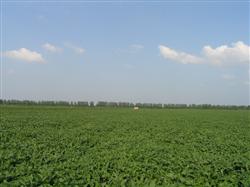
In soybean production, paying attention to foliar fertilization is an important measure for increasing yield and income. Therefore, it is necessary to understand the fertilizer requirements of soybeans at different growth stages, supplement nutrients in a timely manner, and meet the needs of soybean growth and development, thereby achieving the goal of increasing yield and income.
Fertilization principles: adequate phosphorus and potassium, less nitrogen, and trace molybdenum. Because soybean roots have symbiotic root nodules that can fix nitrogen from the air, soybeans have a relatively low demand for externally applied nitrogen but a relatively higher demand for phosphorus and potassium. In addition, when soybeans are deficient in molybdenum, they can hardly form root nodules, which leads to fewer pods and lower 1000-grain weight, thus affecting yield.
Fertilization time: choose cloudy and windless weather; on sunny days, apply before 10 a.m. or after 4 p.m.
Spraying requirements: Soybean is a dicotyledonous plant, and the stomata on the underside of the leaves are more numerous than on the upper surface. Moreover, the spongy tissue on the underside of the leaves has a strong water-absorbing capacity, so when spraying leaf fertilizer, both the front and back of the leaves should be covered. However, the liquid fertilizer concentration should be appropriate to avoid fertilizer damage.
I. Seedling stage: Focus on spraying phosphorus fertilizer, especially in plots without base fertilizer. The critical period for phosphorus nutrition in soybeans is the seedling stage, so supplying sufficient phosphorus nutrition at this time is beneficial to soybean growth and development and enhances stress resistance. At the seedling stage, spray a 2%-4% superphosphate extract once every 10-15 days, for 2 consecutive sprays.
II. Vegetative growth stage: Before flowering is the period of most vigorous vegetative growth in soybeans, mainly stem and leaf growth. Nitrogen is an indispensable component of protein and nucleic acid metabolism in crops and is also an essential element for chlorophyll synthesis. However, if nitrogen is applied improperly, it can easily cause excessive plant growth and lodging, making plants susceptible to pests and diseases. Therefore, when applying nitrogen, it should be applied according to the principle of applying more to plots with weaker growth and less to those with more vigorous growth. Potassium can increase cellulose in crops, make stems grow tough, enhance resistance to pests, diseases, and lodging, and also enhance the ability of cells to absorb water, which is beneficial for drought resistance. Molybdenum can promote nitrogen metabolism and enhance the nitrogen-fixing ability of soybeans. During the vegetative growth stage, it is suitable to spray the leaves with a uniform mixture of 1%-3% urea, 0.3%-0.5% monopotassium phosphate, and 0.01%-0.1% sodium molybdate. Apply once every 7-10 days, for 2-3 consecutive sprays.
The period from early flowering to pod setting in soybeans is a period when vegetative growth and reproductive growth proceed simultaneously, and the branches and leaves are relatively vigorous. Spraying the inflorescences with a mixture of 0.1% photosynthetic micro-fertilizer and 1% Soybean King plus "920" at a concentration of 5-25 mg/kg can enhance soybean photosynthesis, prevent flower drop, promote pod setting and grain filling, increase yield, and improve quality.