-

Alpine Tea Capital Chiayi 2020 Tea Expo: 4-meter giant teapot builds pre-event excitement
The "Alpine Tea Capital. Chiayi" 2020 Tea Expo will open grandly this Saturday at the Jinlan Branch of the Zhongpu Township Farmers' Association. With 3 days to go before the opening, at the promotional press conference on the 18th, Chiayi County Magistrate Weng Chang-liang led the directors-general of township farmers' associations and local tea...
-

Where in China are alpine meadow soils distributed, and what is suitable for growing on them?
Alpine meadow soil refers to soil developed under meadow vegetation above the closed canopy line of alpine forests. In China it was once called grass felt soil. Its main features are: the surface is layered or mound-shaped due to frequent frost cracking and soil sliding; the surface layer is a soft and tough grass felt layer interwoven by grass roots. Alpine
-
Where in our country are alpine desert soils distributed? What is suitable for growing there?
Alpine desert soil, also called cold desert soil, has as its parent material mainly residual and slope deposits from the weathering of various rocks, and also some glacial till. Organic matter accumulation in the soil is weak, 0.4-0.6%, salt content 0.5-1.6%, and calcium carbonate accumulation is obvious. White salt efflorescence and crusts are seen on the surface, mostly
-
Price of Alpine Gentian Root per Jin, Benefits of Drinking It as Tea, and the Four Best Herbs to Brew with It
Gentian root, also known as gall grass, bitter gall grass and so on, is a herbaceous plant commonly found on hillsides, grasslands and in thickets. Because its roots and stems have effects such as clearing heat and detoxifying, strengthening the stomach and boosting immunity, it is widely used as a medicinal material. It is currently sold on the market, and the price is a little on the expensive side
-
If we knew how precious the origins of Taiwan hinoki cypress are, could we put down the chainsaw? "Plants Connected to the World" Decodes Alpine Plants
If we knew how precious the origins of Taiwan hinoki cypress are, could we put down the chainsaw? "Plants Connected to the World" Decodes Alpine Plants
-
-
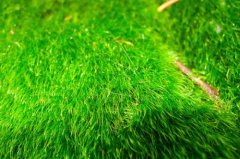
Common bryophyte Campylopus, alpine Campylopus caespitosus, main characteristics of bryophytes
Campylopus is a bryophyte that mainly grows on sandy-stony soil or peat soil in alpine regions, and is usually found under forest, at forest edges or in mountain streams and similar places. Campylopus is characterized by a slender plant body, densely caespitose, with stems and leaves, having
-
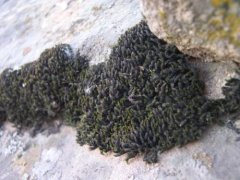
Common Moss Species: Alpine Bryum is a Major Feature of Tufted Bryum Moss Plants
Alpine Bryum is a type of moss plant, and from its name you can tell that this moss plant grows on high mountains. That is why it is called Alpine Bryum. So what characteristics does it have? Let's take a look together.
-
Detailed Explanation of Fertilizing and Watering Methods for Alpine Rhododendrons
There are many opinions on the issue of fertilizing alpine rhododendrons. Based on our practice in recent years, the traditional Chinese method of concentrated fertilizing should be changed and replaced with "light fertilizer applied frequently," that is, balanced fertilizing with every watering, with special attention to the N:P:K ratio at different growth and development stages, because it has a relatively large impact. Every effort should be made to carefully test and analyze with each watering so as to formulate the most ideal pH value and EC value. We conducted a large number of experiments at different growth stages, for example, making 12 gradients from pH3.8 to 7.1
-
What are alpine rhododendrons, Rhododendron hybridum, and foreign rhododendrons?
Scientific name: Rhododendronhybridum. Aliases: Rhododendron hybridum, foreign rhododendron. Family and genus: Ericaceae, Rhododendron. Morphological characteristics: The alpine wintergreen is an evergreen shrub, about 20 cm tall, growing on mid- to high-altitude mountains. The leaves are oblanceolate, smooth on the surface, with serrated edges, and alternate. The stems are red, erect or growing along the ground. The leaves are clustered at the branch tips, hairless on the leaf surface, with dense reddish-yellow woolly hairs on the underside. The flowers are terminal, in racemose umbellate inflorescences.
条件筛选