-

How Does Moss Reproduce? A Detailed Explanation of Moss Reproduction Methods and Techniques
Moss is a type of bryophyte plant that does not flower, does not produce seeds, and has no roots, so how does moss reproduce? Let us take a look together below. 1. How Does Moss Reproduce? Moss plants share a life cycle that produces the first dominant generation, the gametophyte.
-
How to grow Java moss so it propagates fast? These techniques you need to master
Java moss belongs to the bryophytes; it does not flower, does not produce seeds, and has no roots. This plant has a rather long evolutionary history - its traces already appeared as early as the Silurian period, 440 million years ago. Nowadays many people also keep Java moss at home as a potted plant
-
-

What are the propagation methods for bryophytes?
Mosses are higher plants with a relatively primitive position in the plant kingdom, and they play an "amphibious" role between water and land. They generally thrive in shady, humid environments, have a unique color and delicate texture, grow quickly, and are not easily troubled by pests and diseases; their growth habits and colors are also richly varied.
-
Is the common moss Big Cypress moss rare? An analysis of the main characteristics of bryophytes
Big Cypress moss belongs to the bryophytes, and this plant is generally a fairly common bryophyte. Is Big Cypress moss rare? Big Cypress moss is actually not a rare bryophyte; its traces can often be seen in moist places under mountain forests or on thin soil over rock surfaces. Big Cypress moss its plant
-
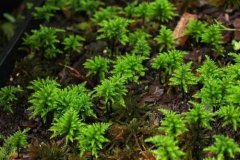
Common bryophyte: Climacium dendroides, how does Climacium dendroides reproduce, can Climacium dendroides be kept underwater, and is it easy to grow?
Climacium dendroides is a medicinal bryophyte. Its main medicinal effect is to relax muscles and stimulate blood circulation, and it also clears heat and removes dampness. Its distribution range is fairly wide, and it can be found in many regions of China, such as Jiangsu, Anhui, Zhejiang and other places. Climacium dendroides mainly grows in damp
-

Common bryophyte Campylopus, alpine Campylopus caespitosus, main characteristics of bryophytes
Campylopus is a bryophyte that mainly grows on sandy-stony soil or peat soil in alpine regions, and is usually found under forest, at forest edges or in mountain streams and similar places. Campylopus is characterized by a slender plant body, densely caespitose, with stems and leaves, having
-

What Is the Scientific Name of Wool Moss? An Analysis of the Main Characteristics of Common Bryophytes
Wool moss is a type of bryophyte, and its scientific name is Dicranum scoparium. The stems and leaves of this moss are as smooth as wool, so some people call it wool moss. Wool moss is now a relatively popular moss in the making of miniature landscapes, and this moss mainly
-
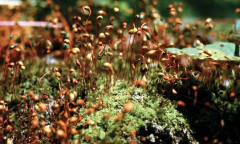
Red-fruited moss is a common species of bryophyte; what are its main characteristics?
Red-fruited moss is a type of moss plant. This bryophyte is named red-fruited moss mainly because its leaves are red. So what characteristics does it have? Would you like to learn about them? Let's take a look together. The mosses in the genus of red-fruited moss number about
-
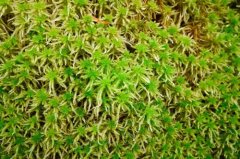
Sphagnum teres is a common species of bryophyte; what are its main characteristics?
Sphagnum teres, a type of moss, grows mainly in wet grasslands and tussock swamps. Its place of origin is Xinjiang, and it is also distributed in Northeast China. This plant is generally rather slender in form. Sphagnum teres usually has a grayish-white color with a purplish-red tinge.
条件筛选