-

The Benefits and Uses of Meadow Rue, Plus Growing Methods and Precautions
Retired cadres who have been sent to the countryside are surely more than familiar with the "meadow rue" plant. It mostly grows in places such as Sichuan, Yunnan, Guizhou, Hubei, Anhui and Zhejiang, and it most loves to grow on moist hillsides, under forest canopies or beside streams. In traditional medicine it has effects such as treating rheumatism and bruises from falls and blows. Although many young
-

Where in China are alpine meadow soils distributed, and what is suitable for growing on them?
Alpine meadow soil refers to soil developed under meadow vegetation above the closed canopy line of alpine forests. In China it was once called grass felt soil. Its main features are: the surface is layered or mound-shaped due to frequent frost cracking and soil sliding; the surface layer is a soft and tough grass felt layer interwoven by grass roots. Alpine
-
Control Methods and Effective Pesticides for Corn Armyworm and Meadow Moth
Currently, we are in a critical period for disease and pest prevention and control. According to monitoring, the first-generation adult armyworm peak in the Jianghuai and Huanghuai regions is migrating intensively to the Northeast and North China. At the same time, affected by overseas pest sources and suitable migration conditions, parts of eastern Inner Mongolia, Heilongjiang and western Jilin
-
Detailed Explanation of the Harm Caused by the Meadow Moth and Its Control and Pesticide Methods
The meadow moth (Loxostege sticticalis), of the family Crambidae, also known as the yellow-green striped moth, beet webworm, and the net-cone-fronted aphid moth, is a highly polyphagous major pest, mainly damaging sugar beet, soybean, sunflower, potato, hemp, vegetables, medicinal herbs and many other crops. So what harm does the meadow moth cause? What
-
-
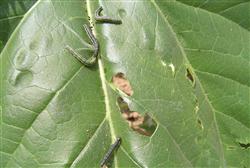
What are the control methods for the meadow moth on summer soybeans?
How to control the meadow moth on summer soybeans? Please allow me to explain. The meadow moth on soybeans has risen from a secondary key pest of summer soybeans in the past to a primary key pest. Newly hatched larvae feed on the mesophyll of tender young leaves, leaving the epidermis; after the 3rd instar their food consumption increases greatly, and they eat the leaves into notches with only the veins remaining. In ordinary years yield is reduced by 10%-15%, in severe years...
-
-
-
-
条件筛选