-
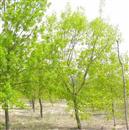
Detailed Explanation of the Key Techniques for Planting and Managing Winter Jujube Trees
How do you plant and manage winter jujube trees? Please give an introduction. Planting and managing winter jujube trees can be done with reference to the following techniques: Cultivation points: Planting. This variety has strong adaptability, tolerates drought and poor soil, and is not strict about fertilizer and water requirements. For orchard establishment, a dense, dwarfed cultivation method should be used, generally 2 to 3 × 3 to 4 m, with 5... plants planted per mu.
-
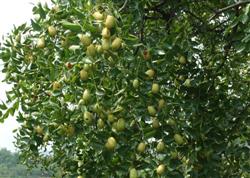
What are the key management techniques for jujube trees (winter jujube) in July?
How should winter jujube trees be managed in July? Please advise. For managing winter jujube trees in July, you can refer to the following methods: 1. Fertilization. For mature jujube trees producing about 15 kg of fresh jujube per tree, apply fertilizer at the standard rate of 1.1 kg urea, 0.25 kg phosphorus pentoxide, and 1.8 kg potassium sulfate per tree; for young trees still developing...
-
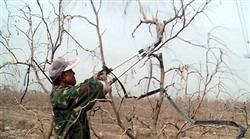
What are the pruning methods for jujube trees? Explained clearly in one article
What are the pruning methods for jujube trees? Please give an introduction. There are the following pruning methods for jujube trees: Thinning branches: remove overly dense perennial branches inside the canopy and new jujube heads sprouting on scaffold branches. Any that are in inappropriate positions or not planned to be kept as renewal branches should be thinned out as early as possible. Pinching: this means cutting off the bud at the tip of the jujube head. Generally pinch...
-
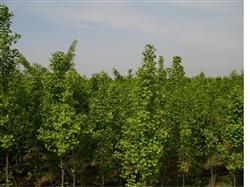
How to Fertilize Ginkgo Trees? A Full Guide to Practical Fertilization Techniques
1. Choose a suitable planting site. The plot for planting ginkgo must have deep, fertile soil, with a mature soil layer of no less than 30 cm, organic matter content greater than 1%, a year-round groundwater level below 2.5 m, and soil salt content no more than 0.05%. 2. Do not use fake grafted ginkgo seedlings. Ginkgo seedlings are divided into seedling-grown and grafted seedlings, ...
-
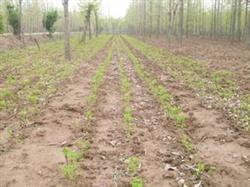
Key Technical Points for Irrigation and Drainage Management of Ginkgo Trees
In recent years, ginkgo production has developed rapidly, and the demand for seedlings is very large, but the seedling breeding cycle is relatively long, which is not conducive to production. Using cuttings to raise seedlings can save seeds, eliminate the grafting process, reduce seedling costs, and also speed up propagation. According to reports, treating ginkgo softwood cuttings with a low concentration of rooting powder has a certain effect on promoting root...
-
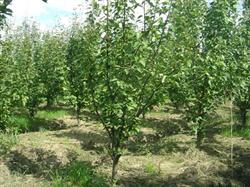
What are the post-harvest management methods for apricot trees?
What management methods are there for apricot trees after fruiting? Please introduce some methods. Pest and disease control for apricot trees after fruiting. After harvest, apricot trees are often harmed by pests and diseases, so pesticides should be sprayed in a timely manner according to the situation to protect the leaves and increase nutrient accumulation. Spraying growth regulators. After harvest, apricots can be sprayed 1-2 times with a 500ppm paclobutrazol solution, mixed with a 0.5% urea solution or potassium dihydrogen phosphate solution.
-
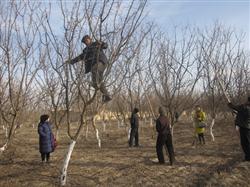
How should apricot trees be managed in winter to achieve high yields?
How should apricot trees be managed in winter for high yields? Please explain in detail. In winter, apricot trees can be managed by referring to the following methods: Pruning and shaping: Winter pruning of apricot trees is especially important. The focus is on removing diseased and weak branches and dead, dry branches to encourage flower buds to form as early as possible. At the same time, according to the terrain, the tree shape should be made favorable for sunlight, and its angles should be opened up for ventilation. After pruning...
-
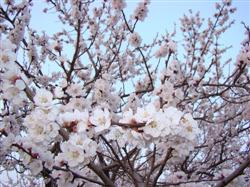
What are the key technical points for managing apricot trees during the flowering period?
How should apricot trees be managed during the flowering period? Please give guidance. Apricot trees bud and bloom earlier than other stone fruit trees, second only to the wild peach. In North China, apricot trees generally bloom from late March to mid-April, and the flowering time varies depending on the cultivar and environmental conditions. Preventing late frost: apricot trees bloom relatively early and are susceptible to early spring frost damage...
-
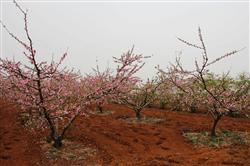
What are the effects and benefits of spraying water during the flowering period of apricot trees?
What is the purpose of spraying water during the flowering period of apricot trees? How should the water be sprayed? Please provide an introduction. The flowering period of apricot trees coincides with the dry and windy season. The stigma of apricot flowers dries out relatively quickly, which affects pollen development and reduces the fruit-setting rate. Practice has shown that spraying clear water during the flowering period of apricot trees can significantly increase the fruit-setting rate, by more than 4 times compared with no water spraying...
-
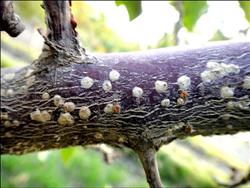
What are the control methods for scale insects on apricot trees?
How do you control scale insects on apricot trees? When do scale insects on apricot trees appear? What methods can be used for control? Please explain. As the apricot tree area expands year by year, the number of scale insect pest species on apricot trees increases and the affected area expands, and the damage is becoming increasingly serious. At present, scale insects have become one of the main factors affecting apricot production in our county...
条件筛选