-
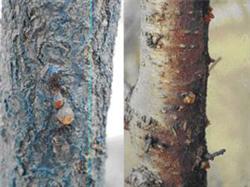
What are the control methods for gummosis in apricot trees?
How to control gummosis in apricot trees? What causes gummosis in apricot trees? What methods can control it? Please explain. Gummosis in apricot trees is a non-infectious disease that can affect both the trunk and the fruit. When it occurs, a soft gummy substance oozes from the bark of branches and trunks or from cracks in wounds, and after contact with air and drying, it forms a hard amber...
-

Key Technical Points and Methods for Autumn Management of Apricot Trees
How should apricot trees be managed in autumn? Please provide an introduction to the management methods. The apricot tree is the fruit tree that blooms earliest in spring, and it leafs out after flowering first. The nutrients needed for flower organ formation depend on the accumulation in the tree body from the previous autumn, so good autumn management plays a decisive role in the flower organ structure and fruit set the following spring. Apricot orchards...
-
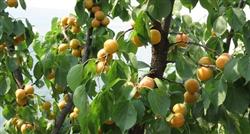
How to fertilize apricot trees for high yields? Detailed fertilization methods
How to fertilize apricot trees for high yields? Please explain in detail when to apply which fertilizer. To achieve high yields from apricot trees, you must manage fertilization at each stage well. For details, refer to the following methods: 1. Pre-bloom fertilizer. Fertilizer before bud break should be applied 15 days before flowering, with 500 g nitrogen, 300 g potassium, and 200 g phosphorus per apricot tree, mixed with human manure and urine...
-
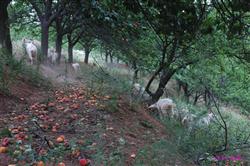
What causes flower and fruit drop in apricot trees?
Why do apricot trees drop flowers and fruit? What causes flower and fruit drop in apricot trees? Please give a detailed introduction. Apricot trees commonly show the phenomenon of "a tree full of flowers but no fruit" or "a tree full of flowers but only half a tree of fruit." Under normal conditions, the natural fruit set rate of apricot trees can only account for about 20% of the complete flowers. Apricot trees have three obvious flower and fruit drops...
-
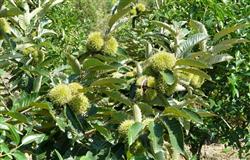
Detailed Explanation of Key Management Techniques for Chestnut Trees Before and After Harvest
How should chestnut trees be managed before and after harvest? Please give an introduction. Chestnut trees have a long fruiting period and a large fruit load, consuming many nutrients. Around the time the fruit ripens, the tree's vigor is already in a starved or semi-starved state, very weak. If nutrients are not replenished in time, it will seriously affect the flowering and fruiting of the coming year. Therefore, applying pre-harvest fertilizer well...
-
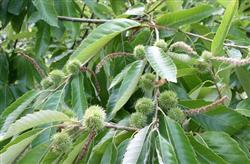
How to plant chestnut trees for high yields? These techniques must be mastered
How to plant chestnut trees for high yields? Please give an introduction. To achieve high yields when planting chestnut trees, you can refer to the following cultivation model: 1. Select improved varieties. Using improved varieties in chestnut cultivation is the foundation for achieving high yields over large areas. The basic criteria for selecting improved chestnut varieties are: ① strong adaptability to local climate and soil conditions...
-
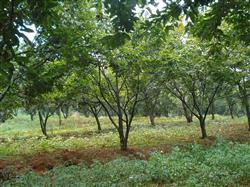
Detailed Explanation of the Fertilizer Requirements of Chestnut Trees: What Nutrients Are Needed for Growth?
What are the fertilizer requirements of chestnut trees? Please explain. Chestnut, like other fruit trees, differs in its fertilizer needs in that, besides requiring sufficient amounts of the three major elements nitrogen, phosphorus and potassium, it is particularly sensitive to the secondary element magnesium and the trace elements manganese and boron. If these are lacking or insufficient, serious physiological disorders occur that affect growth and development. According to measurements, ...
-
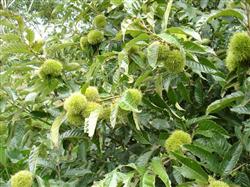
How should chestnut trees be managed to achieve a high yield?
How should chestnut trees be managed for a high yield? Please give guidance. Chestnut trees can be managed by referring to the following methods: 1. Fertilization. In spring, before flowering, apply 300-400 g of urea and 200-300 g of superphosphate per tree, and broadcast 6-7 g of borax per sq m of ground. In July, during the fruit burr swelling stage, apply fruit-swelling fertilizer and a three-element compound fertilizer at 0.7-...
-
What are the precautions for planting chestnut trees?
What should be noted when planting chestnut trees? Please give some guidance. When planting chestnut trees, the following points should be noted: 1. Young tree management ① After planting, chestnut seedlings should be watered promptly, and thereafter watered regularly according to soil moisture conditions. ② Weeds grow quickly; to reduce competition with the trees for water and nutrients, weeds within the tree basin should be removed promptly...
-
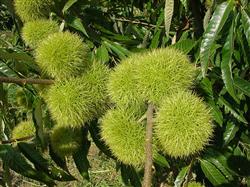
How to manage chestnut trees during the fruit expansion period? Key technical points explained in detail
How to manage chestnut trees during the fruit expansion period? Please give an introduction. Summer and autumn are the period when chestnut fruits expand rapidly, so fertilizer and water management and pest and disease control must be strengthened to allow the fruits to expand fully, the flesh to be plump, no fruit drop in the middle period, and good fruit quality, thereby achieving high yield and quality. The specific management measures are as follows:...
条件筛选