-
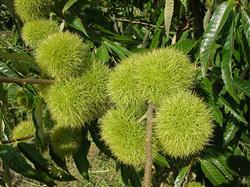
What are the scientific fertilization methods for chestnut trees?
How do you fertilize chestnut trees scientifically? Please give a detailed introduction. Chestnut, like other fruit trees, has the same fertilizer requirements, except that in addition to the three major elements of nitrogen, phosphorus and potassium, it is especially sensitive to the secondary element magnesium and the trace elements manganese and boron. If these are lacking or insufficient, serious physiological disorders occur that affect growth and development. According to measurements...
-
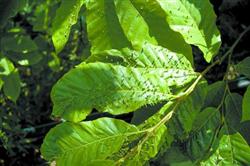
What Are the Main Insect Pests on Chestnut Trees? Read This One Article to Understand
What are the main insect pests of chestnut? Please introduce them. The occurrence characteristics and control methods of the chestnut gall wasp and the cloud-spotted longhorn beetle on chestnut trees are introduced as follows: 1. Chestnut gall wasp 1. Morphological characteristics The adult is a small black wasp, body length 2-3 mm, with transparent forewings and hindwings. The egg is oval, length 0.1-0.2 mm, milky white, with a short filamentous stalk at the tail end...
-
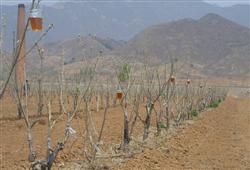
How to manage young chestnut trees well? Mastering these management points is key
How to manage young chestnut trees well? Please provide an introduction to the methods. Young chestnut trees can be managed by referring to the following methods: 1. Management after chestnut grafting: After the scion of a newly grafted young tree survives, first remove the sprouts on the rootstock so that all nutrients are concentrated in the new shoots; for large chestnut trees undergoing top grafting replacement, some sprouts may be appropriately retained...
-
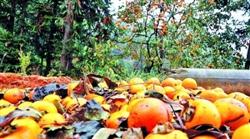
What are the methods for preventing and controlling fruit drop in persimmon trees?
How do you prevent and control fruit drop in persimmon trees? Please give an introduction to the prevention and control methods. The causes of fruit drop in persimmon trees include two situations: physiological fruit drop caused by the physiological disorder of the persimmon tree itself, and fruit drop caused by diseases and pests such as anthracnose or persimmon fruit moth. To prevent and control persimmon fruit drop, first, pollinator tree varieties need to be arranged, and pollinator trees must be planted or...
-
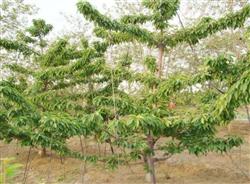
What are the specific fertilizer requirements of persimmon trees?
What are the fertilizer requirements of persimmon trees? Please give an introduction. Persimmon originated in China, and wild persimmons are widely distributed along the Yangtze River and in southern China. Cultivated persimmons are extremely widely distributed in China, with many varieties. Persimmon trees have well-developed taproots and deep roots, with very few fine roots. The taproot can reach 3-4 m deep, and horizontal roots generally extend 1.5-3 times beyond the canopy. Due to...
-
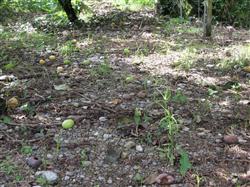
What are the main causes of fruit drop in persimmon trees?
Why do persimmon trees drop their fruit? How should it be prevented and controlled? Please give an introduction. There are two causes of fruit drop in persimmon trees: one is physiological fruit drop caused by the tree's own physiological imbalance; the other is fruit drop caused by pests and diseases. Either cause can lead to serious economic losses in certain years. 1. Physiological fruit...
-
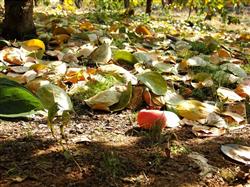
What causes physiological fruit drop in persimmon trees?
What is physiological fruit drop in persimmon trees? Please provide an introduction on how to prevent it. The causes of physiological fruit drop in persimmon trees and prevention and control methods are as follows: 1. Factors behind physiological fruit drop in persimmon trees. Due to improper management, persimmon trees drop a large amount of fruit 1 month after the flowers fade, with the peak fruit drop period occurring about 20 days after full bloom, and then another minor fruit drop in August...
-
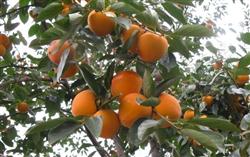
How to Fertilize a Persimmon Tree Well? A Detailed Guide to Scientific Fertilization Methods
How to fertilize a persimmon tree well? Please give guidance. The persimmon tree is a fruit tree that is widely cultivated, easy to manage, long-lived and high-yielding. It originated in our country, and is also cultivated in Japan, Korea and other countries. The persimmon tree is a deciduous tree, with a tree height of more than 10 m, a crown spread of about 16 m, and a lifespan of several hundred years. I. Root nutrition of the persimmon tree...
-
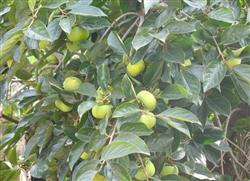
What are the key technical points for summer management of persimmon trees?
How should persimmon trees be managed in summer? Please provide guidance. The summer management methods for persimmon trees can refer to the following points: 1. Fruit thinning. For astringent persimmons, from mid-May to early June; for sweet persimmons, from early June to early July. After the physiological fruit drop ends, select and keep healthy young fruits free of pests and diseases at a ratio of 20-25 leaves to one fruit. What should be removed are deformed fruits, pest- and disease-damaged fruits, fruits set on branches less than 15 cm long or with fewer than 5 leaves, and fruits on the base and tips of bearing branches.
-
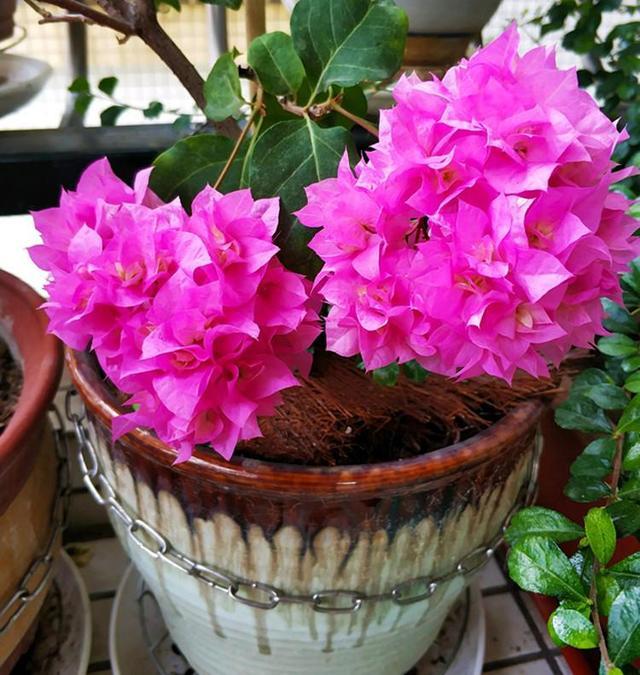
When this flower blooms, it displays a rich variety of colors, with flowers covering the entire tree
Bougainvillea, with strong vitality, offers both beautiful flowers and foliage, and comes in rich colors including red, yellow, and purple, with red being the most common. It has a long blooming period, with flowers covering the branches, making it an excellent potted plant. Moreover, there are many varieties of bougainvillea, and with good mastery of techniques, you can make it bloom profusely.
条件筛选