Detailed Explanation of Osmanthus Tree Cutting Propagation Methods and Techniques
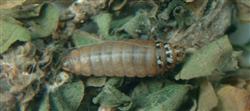
The larvae spin silk to bind leaves and bark fragments together to build a protective case, feed on the leaf mesophyll, and leave the veins behind. Damaged leaves become perforated; in severe cases, all the leaves on the entire tree are eaten bare, and the bark can also be gnawed. This severely affects the growth vigor of the osmanthus tree. Control methods: remove the protective cases to reduce the pest source and eliminate overwintering larvae. Protect natural enemies such as the umbrella-skirt tachinid fly...
 What time of year is most suitable for cutting propagation of osmanthus seedlings, and how to cut them in the way most favorable to their growth.
To propagate osmanthus seedlings, the fully enclosed heat-retaining softwood cutting method can be used. The cutting time is from May to June, and cutting is most ideal after the branches have become lignified. When cutting, first water the cutting bed thoroughly, then insert the cuttings, cover with film, and carry out post-cutting management.
To propagate osmanthus seedlings, the fully enclosed heat-retaining softwood cutting method can be used in early summer.
1. Cutting time
From May to June, cutting is most ideal after the branches have become lignified. If too old, they heal and root with difficulty; if too tender, the cuttings are prone to rot because they are in a high-temperature and high-humidity state.
2. Land preparation and bed making
Use ordinary loam soil, rake the soil clods until broken and level, then make the seedbed. The bed height is 20 cm and the width is 100-110 cm, slightly higher in the middle and slightly lower around the edges, to avoid water accumulation causing the cuttings to rot.
3. Cutting the cuttings
Select branches that are somewhat strongly lignified, about 10 cm long, with leaves free of disease spots, and keep only 1-2 leaves at the upper part. Soak the lower cut end in a 500 ppm No. 2 ABT rooting powder or naphthaleneacetic acid aqueous solution for 5 seconds, let it dry slightly, and then insert it. If no hormone treatment is used, the rooting time will need to be longer.
4. Cutting
First water the cutting bed thoroughly, then carry out the cutting. The plant-to-row spacing is 3 x 8 cm, and the insertion depth is 1/2 to 2/3 of the cutting length, leaving the leaves above the soil, then spray water once. Take bamboo strips 150-170 cm long, sharpen both ends, and insert them respectively into the two sides of the bed width to form arches, inserting one arched bamboo strip every 1.3 m. Cover them with a film that is not completely transparent, press the surrounding edges firmly and weigh them down tightly with soil clods, then build a frame 1.5 m high, cover it with bamboo blinds or straw mats, with the surroundings hanging down to the ground, providing full shade.
5. Post-cutting management
Effectively carry out shading, keep the bed surface temperature between 25-28 degrees C, and control the relative humidity at 85%-95%. Do not open the film at will. After 1 month, rooting can occur; after rooting, remove the film and water. If the bed surface temperature exceeds 28 degrees C, open both ends of the film at noon for ventilation and air exchange. While lowering the bed surface temperature, spray water on the leaf surface once a day to increase the humidity of the bed surface. After the bed surface temperature drops, continue to press the plastic film back in place until most of the cuttings have rooted, then the film can be removed and normal management can be resumed.
Click to get more osmanthus planting techniques
Click to get more flower planting techniques