In what ways is the value of the osmanthus tree reflected?
Question: What is the planting value of the osmanthus tree? Answer: Landscape use. The osmanthus is evergreen all year round, with luxuriant branches and leaves, blooming in autumn and filling the air with fragrance, so it can be described as "dominating the three autumn months and outshining all other flowers." It is widely used in landscaping, often as a garden feature tree, planted singly, in pairs, or in clumps and groves. In Chinese classical gardens...
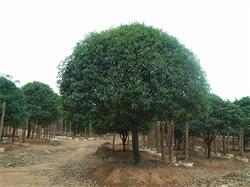
Question: What is the planting value of the osmanthus tree?
Answer: Landscape use
The osmanthus is evergreen all year round, with luxuriant branches and leaves, blooming in autumn and filling the air with fragrance, so it can be described as "dominating the three autumn months and outshining all other flowers." It is widely used in landscaping, often as a garden feature tree, planted singly, in pairs, or in clumps and groves. In Chinese classical gardens, osmanthus is often combined with buildings, mountains and rocks, with clump-forming shrub-type plants set near pavilions, terraces, towers and chambers. Old-style courtyard gardens often used paired planting, called in ancient times "two osmanthus trees in the courtyard" or "two osmanthus trees leaving fragrance." Planting osmanthus trees on all four sides of a residence or in front of a window can achieve the effect of "the golden wind delivering fragrance." On school campuses, for the meaning of "plucking the osmanthus in the moon palace" (passing the imperial examination), osmanthus is also planted in large quantities. Osmanthus has a certain resistance to the harmful gases sulfur dioxide and hydrogen fluoride, and is also a fine flowering tree for greening industrial and mining areas. Osmanthus has a pungent fragrance and contains various aromatic substances, and can be used for food or for extracting fragrance. At present, China has formed concentrated osmanthus-growing regions including Xianning in Hubei, Taoyuan in Hunan, Lu'an in Anhui, Guilin in Guangxi, Zunyi in Guizhou, and Wu County in Suzhou, Jiangsu. Because "gui" (osmanthus) is homophones with "gui" (noble), people believe the osmanthus is a "tree of wealth and honor." In recent years it has been hyped in various places, with a single tree selling for as much as tens of thousands, or even over a hundred thousand yuan. Small saplings can also sell for anywhere from a few yuan.
Medicinal value
Osmanthus: family Oleaceae. Evergreen tree, 3-15 m tall, branches gray. Leaves opposite, leathery, long elliptic, 6-12 cm long, 2-4.5 cm wide, entire. Flowers clustered in leaf axils, pale yellowish white, 4-lobed. Drupe elliptic, purple-black when ripe. Flowers fragrant, used to extract aromatic oil and make osmanthus concrete, which can be used in food and cosmetics, can be made into cakes and candies, and can also be used to brew wine. It is also an ornamental plant. Osmanthus is pungent in taste and can be used as medicine.
Osmanthus has edible and health-promoting effects, and osmanthus tea has the effect of clearing fragrance and refreshing the mind. After briefly blanching osmanthus in boiling water, take it out and dry it, preserve it with white sugar, and seal it in a bottle to maintain the color and aroma; it can be used as a food flavoring. Mixing osmanthus and pure lotus root starch with white sugar and brewing it makes osmanthus lotus root starch, which is delicious and appetizing. Take top-grade small jujubes, cook them with sugar, and when the liquid is nearly gone, add osmanthus to make osmanthus candied jujubes that strengthen the spleen and stimulate the appetite. Traditional Chinese medicine holds that osmanthus is warm in nature and pungent in taste; taken internally as a decoction, tea or infused liquor, it can resolve phlegm and dissipate stasis, and has a certain therapeutic effect on poor appetite, phlegm-fluid cough and asthma, intestinal wind and bloody dysentery, and abdominal pain from amenorrhea. Osmanthus twigs, seeds and roots can all be used as medicine. Guizhi Tang, prepared from osmanthus twigs, peony, ginger, jujube and licorice, specifically treats conditions such as externally contracted wind pathogen, fever and headache. The osmanthus root is sweet in taste and slightly astringent.
Click to get more osmanthus planting techniques
Click to get more flower planting techniques