How to manage young chestnut trees well? Mastering these management points is key
How to manage young chestnut trees well? Please provide an introduction to the methods. Young chestnut trees can be managed by referring to the following methods: 1. Management after chestnut grafting: After the scion of a newly grafted young tree survives, first remove the sprouts on the rootstock so that all nutrients are concentrated in the new shoots; for large chestnut trees undergoing top grafting replacement, some sprouts may be appropriately retained...
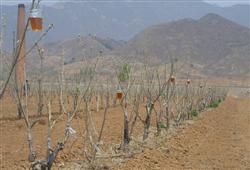
How to manage young chestnut trees well? Please provide an introduction to the methods
Young chestnut trees can be managed by referring to the following methods:
1. Management after chestnut grafting: After the scion of a newly grafted young tree survives, first remove the sprouts on the rootstock so that all nutrients are concentrated in the new shoots; for large chestnut trees undergoing top grafting replacement, some sprouts may be appropriately retained to disperse the tree's nutrients, and when the new shoots grow to 20-30 cm, combine this with tying windbreak support posts and remove all sprouts. Second is tying windbreak support posts; for scions that survive by bark insertion side grafting, the new shoots can be tied directly to the living support post; for scions that survive by the heading bark insertion method, a support stick 70-80 cm long and 1.5-2 cm thick must be firmly tied to the rootstock, and then the new shoots tied to the support stick. While tying the new shoots, loosen the binding material at the graft union at the same time to avoid the new shoots developing a gourd shape and breaking. Third is pinching; when the new shoots grow to 40-50 cm, pinch from the semi-mature leaves and remove the top 2 leaves (be careful to retain the petioles); when the 40-50 cm section of the new shoot is entirely male flowers, pinch from 4-5 leaves above the male flower section (same method as above) to promote new shoots.
2. Summer pruning: (1) Branch bending: for upright-growing young trees, branches can be bent from the bud break to leaf expansion stage, with a bending angle of 40-50 degrees. (2) Bud removal: weak trees have poor nutrition in the mother branches and can hardly form female flowers; remove the weak branches and weak buds at the base of the mother branches so that all nutrients are concentrated in plump buds to form female flowers. (3) Sprout removal: remove sprouts on the main and lateral branches of mature trees; for positions with space, retain some sprouts, and pinch and remove leaves to promote branching.
3. Summer green manure: In summer, press green manure and weeds from the terraced slopes around the mountain and between rows under the tree canopy to increase soil organic matter. Green manure and weeds can also be mulched under the tree canopy.
4. Foliar topdressing: Spray once each at the early flowering stage and full flowering stage of chestnut with 0.3% potassium dihydrogen phosphate + 0.3% active boron to increase leaf photosynthesis and reduce the empty bur rate.
5. Pest and disease control: (1) In chestnut orchards with severe chestnut red spider mite, spray in mid-to-late May with 2000 times mite death net + 2000 times abamectin; in early-to-mid June spray 2000 times abamectin. (2) After the mulberry looper reaches older instars, it has a large appetite and strong pesticide resistance, and is one of the main pests harming chestnut leaves. Control should be early and at a young stage; in early-to-mid June when the mulberry looper is at the 1st-2nd instar, spray leaves with 1000 times cypermethrin + 2000 times diflubenzuron. (3) For control of scarab beetles, plant forage grass under the trees, and spray pesticide after the scarab beetles emerge from the soil; for newly grafted and newly planted young trees, use plastic bags to cover the scion and the upper part of the trunk to prevent damage to leaf buds by pests such as scarab beetles and large gray weevils; hang sugar and vinegar jars, mix sugar-vinegar liquid with water, sugar, vinegar, and pesticide in a ratio of 10:3:1:0.3, and hang it on the tree to simultaneously trap and kill adult scarab beetles and peach fruit borers.
Click to get more chestnut tree planting techniques
Click to get more fruit planting techniques