-
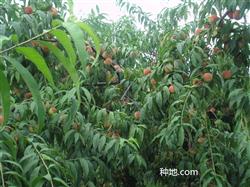
What are the peach tree planting techniques? A detailed explanation of cultivation and management methods
What planting techniques are there for peach trees? Peach tree planting has the following 6 technical points: 1. For graft propagation of peach trees, use wild peach as the rootstock, and the grafting method should be budding or cut grafting. 2. Peach trees are best planted in winter and spring, and can also be planted in autumn. The density is preferably 4×3 m on flat land and 3.5×2.5 m on mountain land. When they become too dense at maturity, thin them out gradually...
-
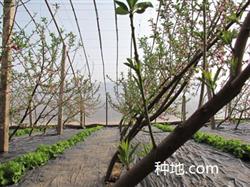
Detailed Explanation of Pollination Methods for Greenhouse Peach Trees During the Blooming Period
How should peach trees in greenhouses be pollinated when they bloom? When planting peach trees in greenhouses, in addition to configuring pollinator trees in a certain proportion, it is also necessary to release bees during the blooming period or use artificial supplementary pollination to improve fruit set and strive for high and stable yields. 1. Artificial pollination: First, collect pollen. 2-3 days before pollination...
-
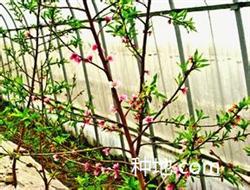
What temperature and humidity are suitable for growing peach trees in a greenhouse?
What temperature and humidity are suitable for growing peach trees in a greenhouse? Key points for growing peach trees in a greenhouse: 1. Temperature control: before flowering, the maximum is 25°C and the minimum is 5°C; during the flowering period, the suitable temperature is 20-23°C, with a minimum of 6°C. If bad weather occurs during the flowering period and frost may appear, heating treatment by burning charcoal should be adopted. From after flowering to the pit-hardening stage, the max...
-
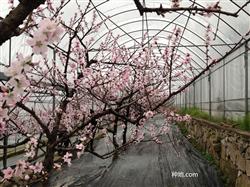
Peach Tree Summer Pinching Methods and Technical Key Points
Peach trees bloom very profusely; how should flower and fruit thinning be carried out? What should be noted? Peach trees bloom heavily and have a high fruit-setting rate, but too much fruit set can affect fruit quality, reduce commercial value, and can also weaken tree vigor and shorten lifespan. Flower and fruit thinning should be done in a timely manner, and earlier is better than later. First thin buds and flowers, then thin fruitlets 1-3...
-
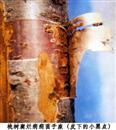
How to treat peach tree canker? Detailed prevention and control methods
How should peach tree canker be treated once it occurs? Peach tree canker mainly overwinters as mycelium and pycnidia in the trunk of diseased loquat trees and other diseased plant debris; the mycelium is generally spread by rain and infects the tree through wounds. Under normal management conditions, the tree's load is a key factor affecting the incidence of the disease...
-
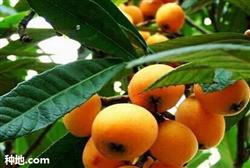
How to fertilize a loquat tree for high yields
How should you fertilize a loquat tree to achieve high yields? Key points for fertilizing loquat trees: Nitrogen is one of the elements loquat needs in the largest amounts for growth. Applying more nitrogen fertilizer can strengthen the tree's vigor, delay the flowering period, and also has a certain effect on preventing frost damage. When nitrogen is sufficient, the tree is vigorous, with thick branches and large leaves, a moderate number of flowers, and large fruit with high yields. When nitrogen is excessive, the shoots grow excessively...
-
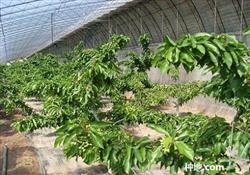
What causes cherry tree leaves to curl?
How do you fertilize cherry trees scientifically? Asking for advice: The cherry is the earliest fruit tree to ripen among deciduous fruit trees, and is a tree or shrub. The tree height is (2-7) m, and the crown diameter is (3-6) m. It begins to bear fruit at (3-6) years, enters full fruiting at (7-10) years, can last for about (15-20) years, and lives for several decades. Key points of fertilization technique: ...
-
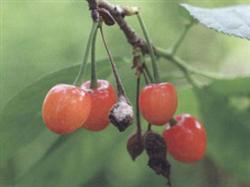
What to Do When Brown Rot Occurs in Cherry Trees? Detailed Control Methods
What to do when brown rot occurs in cherry trees? How to control it. Damage symptoms: Cherry brown rot is also called sclerotinia disease, gray rot, etc. It can attack flowers, leaves, shoots and fruit, but fruit suffers the most serious damage. After infecting the flower organs, the stamens and petals first develop brown water-soaked spots, after which the entire flower rapidly rots, with gray...
-
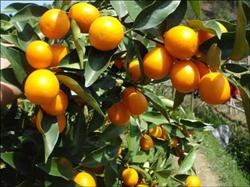
What are the commonly used types of organic fertilizer in fruit tree production?
Organic fertilizers, also known as farmyard manure, commonly used in fruit tree production include compost, pen manure, stable manure, green manure, cake fertilizer, river mud, poultry manure, human feces and urine, and miscellaneous soil manure. Most organic fertilizers need to be decomposed by microorganisms before they can be absorbed by the plant's root system, so they are also called "slow-release fertilizers" and can be applied as a base fertilizer...
-

条件筛选