-
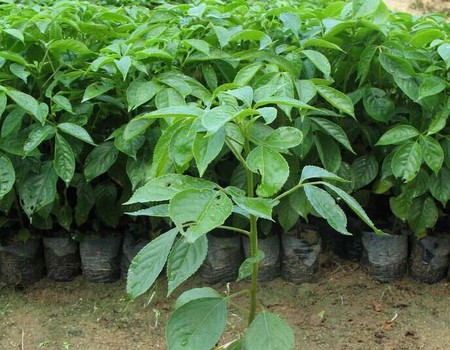
Flamboyant Tree Seed Propagation Methods and Key Technical Points Explained
Flamboyant tree, also known as flamboyant flower and fire tree, belongs to the Fabaceae family, genus Delonix. As an excellent garden ornamental tree and street tree species, the flamboyant tree is widely planted in southern regions. Its branches are elegant and leaves beautiful, with clusters of red flowers that are brilliant and eye-catching, making it beloved by landscaping departments everywhere. For this reason, we conducted observations on the growth patterns of the flamboyant tree
-
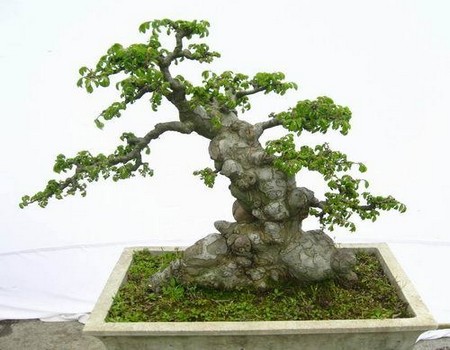
Detailed Explanation of the Key Points of Chinese Scholar Tree Bonsai Shaping and Pruning Techniques
The Chinese scholar tree (Sophora japonica) has a low branching rate, with no lateral branches on the middle and lower parts of the trunk, and the trunk thickens slowly. Moreover, most of these trees have hard wood but a slow lignification process, which makes the trunks of young seedlings thin and soft. Because the upper part of the seedling has a high water content and dense leaves, it easily sprouts branches during the second growth period, causing a top-heavy condition. After wind, rain and sun exposure, the seedling naturally bends.
-
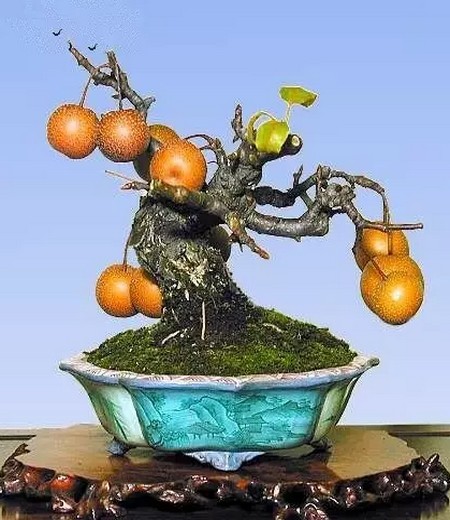
How to water a pear tree bonsai? These tips you need to master
Pear trees need a sufficient water supply throughout the entire growing period, and pear tree leaves are very sensitive to water; even slight water loss causes wilting, and if it lasts a little longer, the leaves become scorched and fall off. During the growing season, such as the early flowering stage, late flowering stage, and rapid fruit growth stage, if the water supply is insufficient
-
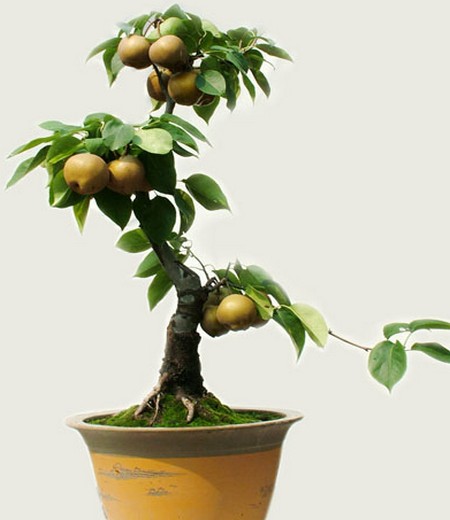
What are the fertilization methods for pear tree bonsai?
Once Awakening of Insects arrives, the weather begins to warm up, and spring thunder gradually appears. Awakening of Insects is the day when heaven awakens hibernating animals with thunder. Starting today, most regions of China begin to enter the spring plowing period. Today, many people are very interested in the topic of eating pears on Awakening of Insects.
-
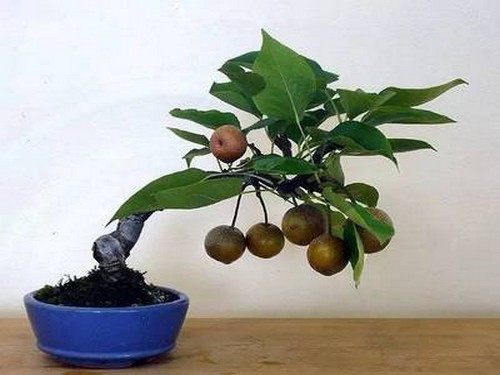
How to Shape a Pear Tree Bonsai? Detailed Practical Techniques
Pear trees are suitable for making many different styles of bonsai, such as formal upright, slanting, curved trunk, twin trunk, forest, semi-cascade, and lying trunk. Because the leaves are relatively large, the crown is mostly kept in a natural form rather than wired into pads. Since pear trees grow vigorously, with a large amount of annual growth, and the apical branches develop strongly
-
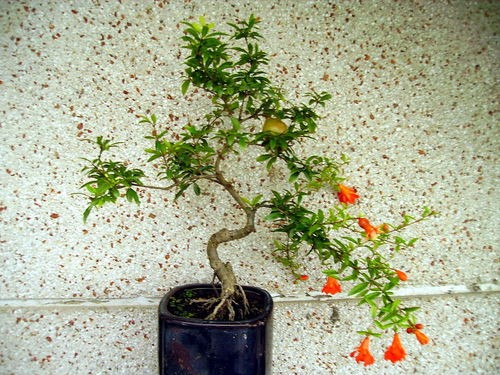
Detailed Guide to Shaping and Pruning Pomegranate Bonsai: Prune Your Way to a Beautiful Tree Form
Shaping and Pruning Because pomegranate branches are fine, dense and tangled, pruning is needed to achieve an attractive plant shape. Generally, pomegranate can be trained into a single-trunk round-headed or flat-topped form; it can also be trained into a clump-forming spreading shape; and it can also be made into bonsai pomegranate. Use thinning and heading cuts to remove dead branches, water sprouts, crossing branches, diseased and weak branches, and dense angular
-
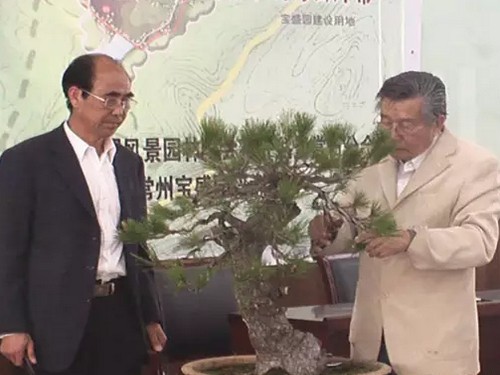
Pine Bonsai Styling Techniques: A Guide to Help You Create a Beautiful Tree Form
Every living thing in nature is influenced by other living things, and people intervening in the growth of pine trees through technical means is one expression of this influence. Even today, this phenomenon still exists, and this is the prevalence of potted plants. Pine trees hold a very good meaning in traditional Chinese culture, symbolizing a firm and resolute character
-
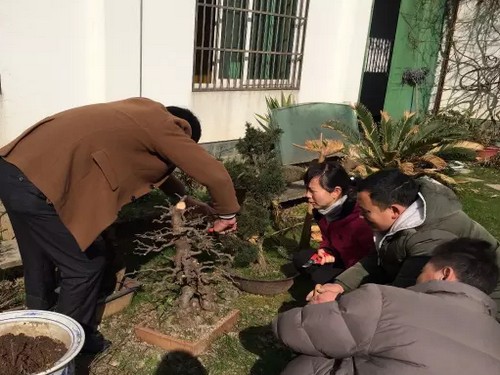
Detailed Explanation of Bonsai Pruning Techniques: Prune This Way for a More Beautiful Tree Shape
Bonsai pruning is synonymous with the means of shaping potted trees. Although there are also techniques such as wiring, pulling and hanging, guying, carving, and grafting, they are often conventionally grouped under pruning. As the main means of bonsai styling, it not only incorporates related techniques but also embodies styling concepts and compositional creativity within the "cut."
-
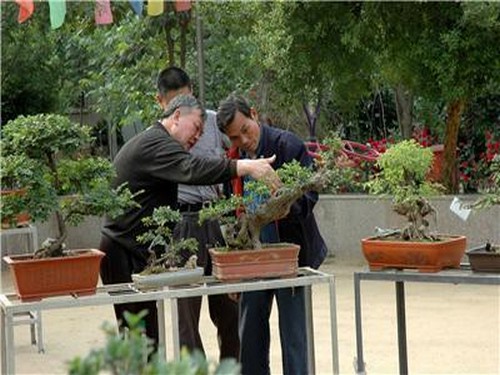
Detailed Introduction to Ligustrum quihoui Carved Tree Bonsai
The Ligustrum quihoui carved tree, shaped through artificial training and pruning, comes in various forms, mostly multi-spherical or cloud-layer types, with a height of 1.2 m to 3 m, growing in clumps or with a single trunk, and each plant can have several to a dozen or more spheres (or cloud layers). It has small leaves, is evergreen, tolerates pruning well, and grows rapidly; as a potted plant it can be made into large, medium, and small bonsai.
-

How to Prune Flowering and Tree Bonsai? A Detailed Guide to Practical Methods
Although bonsai trees have undergone deliberate shaping by people, they are still alive and will continue to grow. Without pruning, they will inevitably lose their shape and artistic value. Therefore, timely pruning is necessary. How should the branches of bonsai flowering plants and trees be pruned? What are the main pruning methods?
条件筛选