How to water a pear tree bonsai? These tips you need to master
Pear trees need a sufficient water supply throughout the entire growing period, and pear tree leaves are very sensitive to water; even slight water loss causes wilting, and if it lasts a little longer, the leaves become scorched and fall off. During the growing season, such as the early flowering stage, late flowering stage, and rapid fruit growth stage, if the water supply is insufficient, it can directly affect the fruit set rate, young fruit growth, and later fruit weight gain. Therefore, during the growing season, water should be given in a timely manner according to the moisture condition of the potting soil. When the temperature is high and the air humidity is low, spray water on the leaves at noon or in the afternoon. Pay attention to drainage during continuous rainy days. In early spring, water promptly according to the moisture condition to prevent the occurrence of shoot dieback.
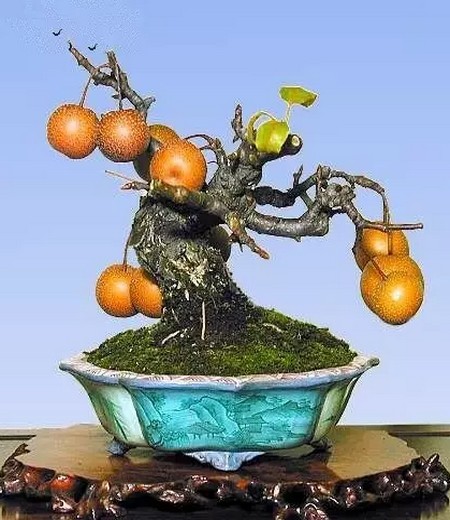
Pear tree leaves are relatively large and thin, and transpiration is high during the growing period, so they are more sensitive to water and averse to drought. During growth, water thoroughly to keep the potting soil moist. However, during the leaf expansion stage, water should be appropriately controlled to restrain vigorous growth of branches and leaves, avoiding large leaves and sparse nodes that affect the ornamental effect. Also, excessive vegetative growth is not conducive to the plant's reproductive growth, so during the flower bud differentiation stage (generally starting from mid-June), attention should be paid to reducing the amount of watering.
Control the amount of watering to the extent that the leaves wilt in the afternoon but recover to normal the next morning. If the leaves are still wilted the next morning, it means the amount of watering is too little and should be appropriately increased. In this way, after about 20 days of water control treatment, the plant's flowering and fruiting amount can increase significantly. However, during the flowering stage and fruit swelling stage, water thoroughly, which can help the tree stump bloom, set fruit, and grow larger fruit. In summer, when temperatures are high, water is consumed quickly, so increase the amount of watering and frequently spray water on the branches and leaves to increase air humidity. In winter, during leaf drop and dormancy, reduce watering to keep the potting soil slightly dry.
Because pear tree leaves are relatively sensitive to water supply, if the water supply is insufficient, the leaves often wilt, and if it lasts a little longer, they dry up and fall off, especially in the early flowering stage, late flowering stage, and rapid fruit growth stage. If there is no sufficient water supply, it can directly affect the fruit set rate, young fruit growth, and later fruit weight gain. Therefore, during cultivation, water as soon as the soil is dry, avoid the soil becoming too dry, and in summer when it is hot and dry, spray water on the leaves as appropriate.
Mid-to-late June is its flower bud differentiation stage, and a short period of drought treatment can be carried out to inhibit new shoot growth, increase the proportion of medium and short branches, and promote flower bud differentiation. The method is wilt-water-wilt-water, and about 20 days of such treatment is sufficient. In early to mid-June, you can also girdle or score the trunk or main branches to increase the proportion of medium and short fruit branches. In autumn, appropriately control watering, and in winter, frequently check the moisture condition of the potting soil and replenish water in time to avoid dry freezing.