-
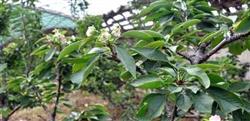
Detailed Explanation of Key Technical Points for Post-Bloom Management of Cherry Trees
Sweet cherries bloom in spring and fruit in summer. Recently, many cherry growers have called to ask about post-bloom management techniques for cherry trees. In response, the reporter visited Zhang Zhicheng, an expert on miscellaneous fruits at Northwest A&F University. Zhang Zhicheng reminds farmers that sweet cherries mature successively more than 30 days after bloom, and the period from post-bloom to fruit maturity is currently a critical stage for technical management...
-
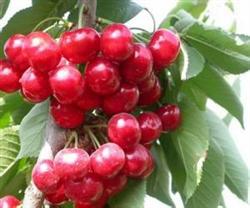
What are the key technical points for summer management of sweet cherry trees?
Summer is a critical period for the growth of sweet cherry trees, and pests and diseases are also very likely to occur, so fruit growers should pay attention to the summer management of sweet cherry trees. Doing the following points well will allow sweet cherry trees to smoothly pass through this growing season in summer. Pinching In summer, sweet cherry trees grow vigorously, and excessive leaves and branches have a certain impact on the fruiting of the following year...
-
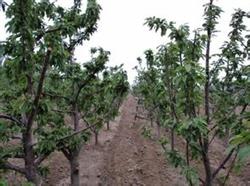
Key Points and Methods of Thinning Fruit on Sweet Cherry Trees
Technical management of sweet cherry trees after harvest is very important, because at this time the tree has gone through the earlier processes of leaf expansion, shoot growth, flowering, fruit set and fruit growth and development, consuming a large amount of the nutrients stored in the tree, and after fruit harvest it enters the nutrient accumulation stage of photosynthesis. Management during this period [affects] yield. Its techniques...
-
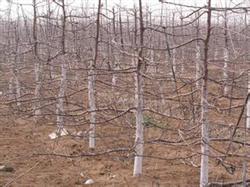
Detailed Explanation of Spring Planting Time and Methods for Cherry Trees
Currently, in protected cultivation of sweet cherries, the main tree forms are the natural open-center form, the improved central-leader form, the central-leader stratified form, and the slender spindle form. The natural open-center form has a trunk height of 30-40 cm, 3-5 main branches, each main branch with 6-7 side branches, and an angle of 30-45 degrees between the main branches and the trunk. Tree height is controlled at 1.5-1.8 m, ...
-
What to do if a mango tree gets sooty mold? Key points of integrated control techniques
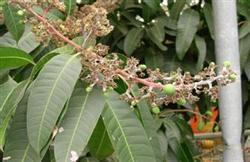
I. Causes of mango flower and fruit drop 1. If the mango flowering period and young fruit period encounter low-temperature rainy weather (temperature below l1.5°C) and it lasts a long time, flower and fruit drop will be severe. The flower spikes are damaged and die, a large number of deformed fruits and abortive fruits appear, and they easily fall off naturally. 2. Pests and diseases damage Pests that harm mango...
-
Golden Shower Tree blossoms like gold, roadside trees bloom with new business opportunities
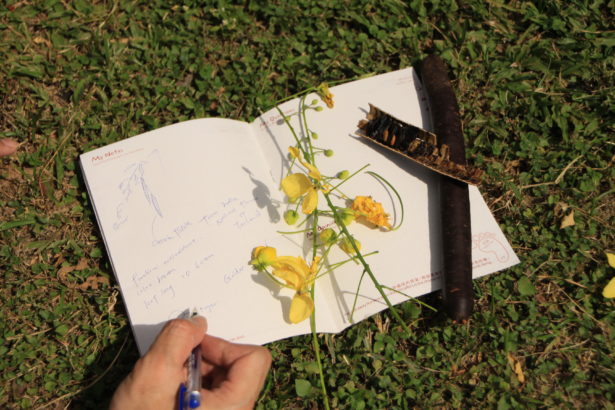
Roadside trees turn to gold as Golden Shower Tree blooms with new business opportunities
-
What are the remedies for mango trees that fail to bear fruit?
The mango stem borer belongs to the order Coleoptera, family Cerambycidae, and occurs in all mango-producing areas of southern China. Its larvae bore into and feed on the branches and trunk, weakening the affected plants and, in severe cases, causing them to die; infested branches break easily in the wind. This insect has 1 generation per year and overwinters mainly as larvae, while a small number of pupae or adults can also overwinter inside the tunnels. The following year...
-
For mature loquat trees, apply spring shoot fertilizer in time in spring
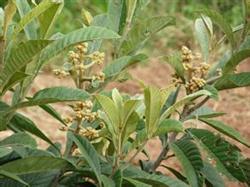
Loquat trees prefer a warm and humid climate, bloom in autumn and winter, and their fruit ripens in late spring and early summer. Since last autumn, various parts of Guangdong have experienced drought with little rain. Fruit growers should actively water and fertilize loquat trees, especially mature trees, which should be given spring shoot fertilizer in time to strive for a bumper harvest this year. 1. Fertilizing young trees (1-3 years) Loquat young trees...
-
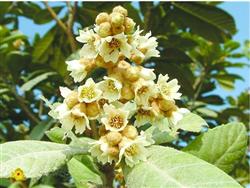
How to manage loquat trees after they finish flowering in early spring
1. Apply fruit-setting fertilizer. When the young fruit appears after the loquat has finished flowering, apply fruit-setting fertilizer, mainly a quick-acting, fast-dissolving complete nitrogen-phosphorus-potassium fertilizer. For bearing trees over five years old, apply 1.5-2 kg of nitrogen-phosphorus-potassium compound fertilizer per tree, or 40-50 kg of decomposed and rotted human and livestock manure water. 2. Prevent and control pests and diseases. When the young fruit appears after the loquat has finished flowering, ...
-
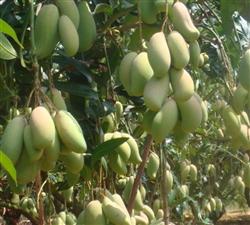
Detailed explanation of key points of fertilization techniques for fruiting mango trees
Fertilization of fruiting mango trees should be based on the principle of reasonably adjusting the contradiction between vegetative growth and reproductive growth. It is necessary both to promote flowering and fruiting in the current year and to control excessive summer shoot growth, and also to promote the sprouting and robust growth of autumn shoots, laying a good foundation for continued high yields the following year. The types of fertilizer applied are still mainly nitrogen, phosphorus, and potassium fertilizers, especially...
条件筛选