Detailed explanation of key points of fertilization techniques for fruiting mango trees
Fertilization of fruiting mango trees should be based on the principle of reasonably adjusting the contradiction between vegetative growth and reproductive growth. It is necessary both to promote flowering and fruiting in the current year and to control excessive summer shoot growth, and also to promote the sprouting and robust growth of autumn shoots, laying a good foundation for continued high yields the following year. The types of fertilizer applied are still mainly nitrogen, phosphorus, and potassium fertilizers, especially...
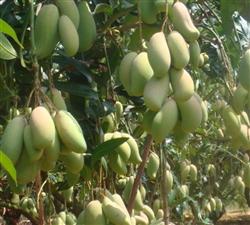
Fertilization of fruiting mango trees should be based on the principle of reasonably adjusting the contradiction between vegetative growth and reproductive growth. It is necessary both to promote flowering and fruiting in the current year and to control excessive summer shoot growth, and also to promote the sprouting and robust growth of autumn shoots, laying a good foundation for continued high yields the following year. The types of fertilizer applied are still mainly nitrogen, phosphorus, and potassium fertilizers. In particular, the application rates of potassium and calcium should be increased, and a small amount of trace elements such as manganese, boron, zinc, copper, and iron should also be supplemented.
I. Pre- and post-harvest fertilizer: Mango trees bear many fruits and have high yields. After the tree bears fruit, its nutritional level is at its lowest period of the year. If fertilizer is not applied in time, the tree vigor will weaken, making it difficult to restore growth, which affects the cultivation of fruiting mother branches and the fruiting and yield of the following year. Pre- and post-harvest fertilizer is the key fertilization of the whole year, accounting for 60%-80% of the annual fertilizer application.
Pre-harvest fertilization of mango is generally based on foliar topdressing. 30-45 days before harvest, it can be combined with pesticide spraying for disease control by mixing in some foliar fertilizer containing high phosphorus and potassium. In addition, spraying fruit tree harvest spirit 60 days before harvest can inhibit the plant's photorespiration consumption, increase the accumulation of photosynthetic products, and improve quality and yield.
Post-harvest fertilization of mango can be carried out in two applications: The first fertilization is generally completed in mid-to-late August, mainly with quick-acting fertilizer, in order to help the tree recover as early as possible and sprout and produce autumn shoots as quickly as possible. Apply 0.5-1.0 kg of compound fertilizer and 0.3-0.5 kg of urea per tree. Dig a shallow ring-shaped trench on the inner side of the tree canopy drip line and apply the fertilizer. If the weather is dry, irrigate after fertilization. The second fertilization is combined with deep plowing and soil improvement, generally carried out from mid-November to December, mainly with farmyard manure. Apply 20-30 kg of decomposed farmyard manure, 1 kg of lime, 0.5-1 kg of compound fertilizer, and 0.3-0.5 kg of potassium fertilizer per tree. Apply an additional 10-15 kg of burned soil per tree, which can promote the tree to produce panicles and bloom.
II. Flower-strengthening fertilizer: Before or during the large-scale sprouting of flower buds in early spring, a certain amount of quick-acting fertilizer should be applied in time to promote the development of panicles and florets, improve flower quality, increase the proportion of bisexual flowers, enhance the plant's ability to resist adverse weather such as low temperature and continuous rain, and increase the fruit-setting rate. Apply 0.2-0.3 kg of compound fertilizer per tree, or 0.2 kg of peanut meal, 0.2 kg of potassium chloride or potassium sulfate, and 0.1-0.15 kg of urea. Before and during full bloom, spray 500-fold boric acid once each time. This can be combined with pest and disease control and mixed into pesticides for foliar spraying.
III. Fruit-strengthening fertilizer: From April to mid-June after mango fruit set is the period when young fruits rapidly enlarge, and it is also the period when summer shoots sprout. Fertilization at this stage directly supplies nitrogen and potassium, and also helps coordinate the contradiction in nutrient distribution between branches and fruits. Fertilization should be used to meet the nutritional requirements of fruit development, but it should also be determined according to tree vigor, fruit load, and leaf color. For trees with strong vigor and few fruits, less or no fertilizer may be applied; otherwise, it will promote summer shoot sprouting and intensify fruit drop. For weak trees with many fruits, quick-acting fertilizer should be applied as topdressing, with 0.2-0.3 kg of compound fertilizer and 0.15-0.2 kg of potassium fertilizer per tree, and foliar fertilizer may be sprayed 2-3 times. Generally, Lvwang series foliar fertilizer or 0.2% monopotassium phosphate is used, and it can be sprayed in combination with insect control.