-
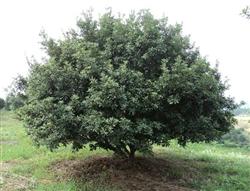
How should bayberry trees be managed to increase yield?
How can bayberry trees be made to increase yield? What methods can achieve this? Please give an introduction. The main reasons for low yield in bayberry trees are low production caused by stunted young trees, excessively vigorous trees, aging trees, low-yielding trees in mixed forests, and trees of inferior varieties. The following methods can be used to renovate the fruit trees and increase yield. Bayberry...
-
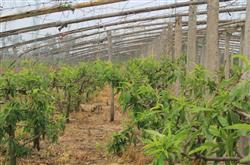
How to prune newly planted peach trees? A full breakdown of the key methods
How should newly planted peach trees be pruned? When is the best time to prune newly planted peach trees for the best results? Please provide guidance. Peach trees have a relatively large annual growth increment, and their buds have strong precocity, so a newly planted peach tree can sprout 3 to 4 flushes of shoots in the same year. Therefore, this characteristic of peach trees can be used, on the premise of strengthening fertilizer and water management, through summer pruning...
-
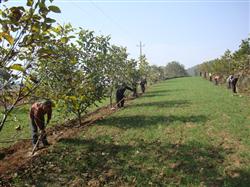
What are the key points of autumn management techniques for walnut trees?
How should walnut trees be managed in autumn? What should be noted about walnut trees in autumn? Please introduce them one by one. In autumn, during the fruiting period, walnut trees consume a large amount of tree nutrients due to the needs of the fruit, and the trees mostly show weakened vigor and a marked increase in pests and diseases; even the structure of the tree has changed. Therefore, after the walnuts...
-
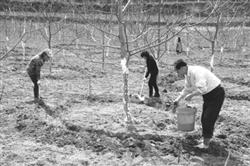
What are the key technical points for managing walnut trees in autumn and winter?
How should walnut trees be managed well in autumn and winter? Please give guidance. Autumn and winter management of walnut trees mainly includes soil, fertilizer and water management, as well as pruning and freeze protection. For detailed operations, you can refer to the following methods: Soil, fertilizer and water management for walnut trees in autumn and winter: For non-bearing trees, after leaf fall and before the soil freezes, deep-till the soil and build tree basins, generally to a depth of 20-25 cm. The base fertilizer should mainly be decomposed organic fertilizer, with an application rate of 25-50 kg per tree, and 2-5 kg of superphosphate can also be added. When fertilizing, the ring trench method can be used, that is, dig a ring-shaped trench 20-40 cm wide and about 30 cm deep around the outer edge of the canopy, placing topsoil and subsoil separately. After digging, put the fertilizer in, then fill in topsoil and mix evenly, and finally fill in an appropriate amount of subsoil to level with the original ground surface.
-
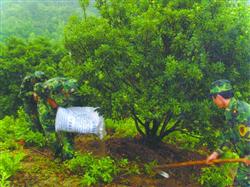
Management Methods for High Yields of Bayberry Trees the Following Year
How can you make bayberry trees produce high yields the following year? What methods can prevent alternate bearing in bayberry trees? Please introduce the methods. To make bayberry trees produce high yields the following year and avoid alternate bearing, you can refer to the following management methods: After harvesting the bayberries, while carrying out pest and disease control, promptly increase the application of organic fertilizer, supplement with micronutrients, and balance...
-
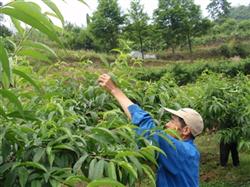
Detailed Explanation of Key Techniques for Autumn Management of Peach Trees
How should peach trees be managed in autumn? Please introduce the autumn management methods for peach trees. Autumn management of peach trees mainly includes pruning, pest and disease control, and water and fertilizer management. The following detailed operating methods are provided for reference: 1. Timely pruning. The high altitude and strong sunlight of the peach's place of origin gave the peach its particularly light-loving characteristics...
-
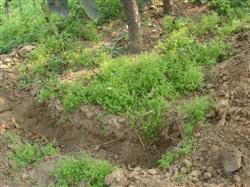
How effective is autumn basal fertilization for peach trees?
How effective is autumn basal fertilization for peach trees? Why should basal fertilizer for peach trees be applied in autumn? Please explain the reasons. Reasons for applying basal fertilizer to peach trees in autumn: In autumn, temperatures are high, there is plenty of rain, soil moisture is high, and soil temperature is high. Applying fertilizer to fruit trees at this time means the fertilizer decomposes quickly in the soil, has a long-lasting effect, and is easily absorbed by peach trees; at the same time...
-
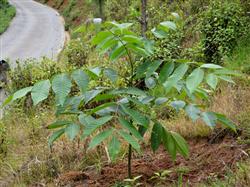
How do you prune a walnut tree? Detailed pruning methods and techniques
How do you prune a walnut tree? Please explain the methods. Walnut tree pruning methods generally vary with tree age; for details, refer to the following: 1. Pruning young trees: this should vary according to the growth and development characteristics of each variety, mainly cutting out weak branches, crossing branches, overlapping branches, parallel branches and diseased branches, in order to...
-
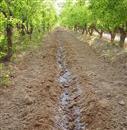
Why do jujube trees need basal fertilizer in autumn? An analysis of the reasons
Why do jujube trees need basal fertilizer in autumn? Here is an introduction to the reasons. The reasons for applying basal fertilizer to jujube trees in autumn are as follows: 1. Applying basal fertilizer in autumn is conducive to the rotting and decomposition of organic fertilizer. Around the time of fruit harvest in autumn, the air temperature and soil temperature are still relatively high, which is suitable for the reproduction and activity of microorganisms. This can accelerate the decomposition of organic matter in the soil and release the various nutrients needed by winter jujube trees...
-
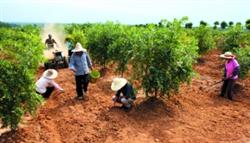
Pest Control Tips and Management Methods for Jujube Trees in Autumn and Winter
How to control pests on jujube trees in autumn and winter? Please provide methods. Pest control on jujube trees in autumn and winter can be carried out with reference to the following methods: 1. Deep plowing of the soil. After the jujube fruit is harvested, promptly deep-plow the soil beneath the trees, generally to a depth of 10-50 cm. This measure can reduce the damage caused by more than 20 species of pests, including the jujube slug moth, jujube gall midge, red spider mite, and peach fruit borer...
条件筛选